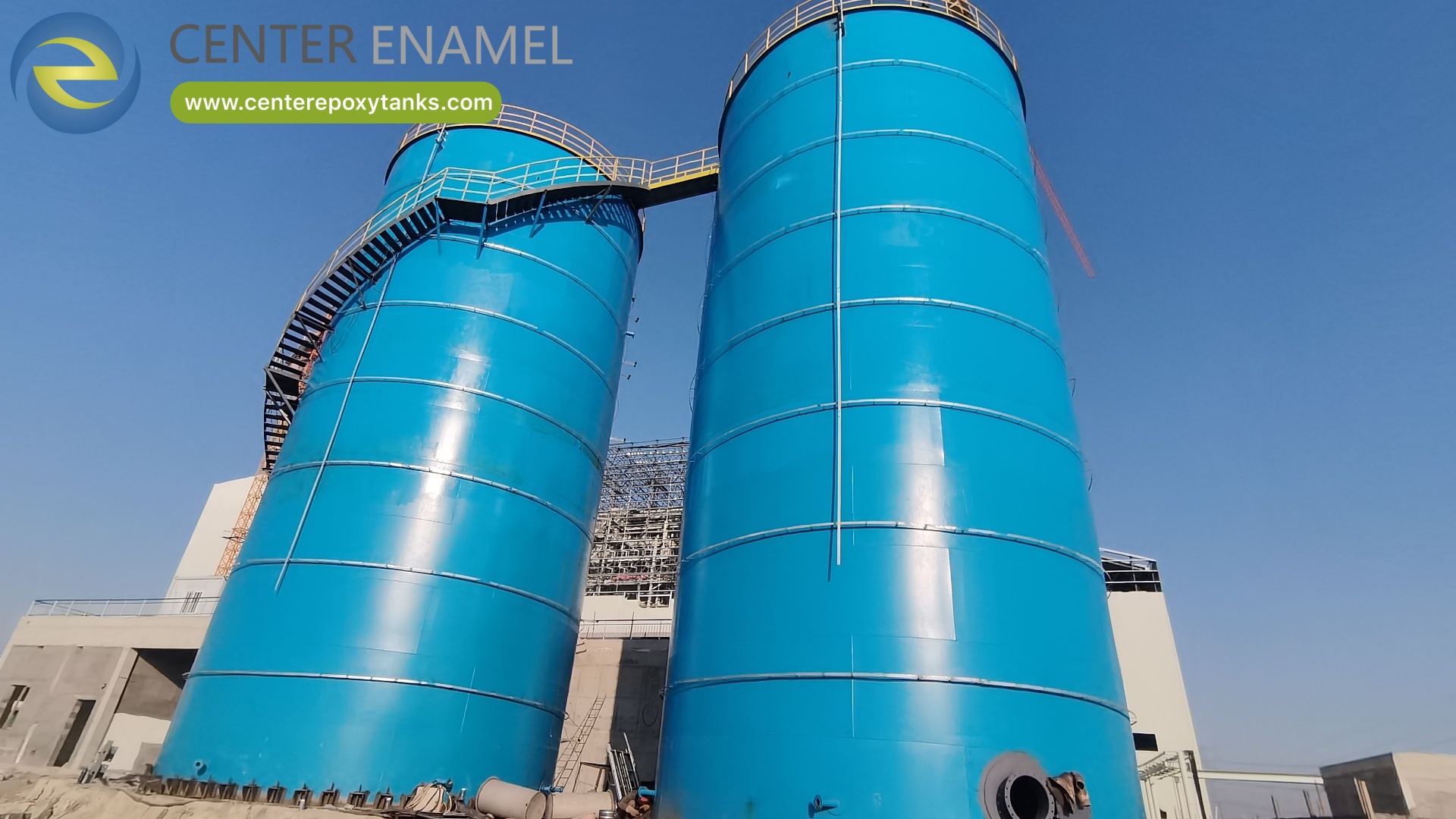
Welded Carbon Steel Light Fuel Oil Storage Tanks: The Engineering Standard for 2026
Center Enamel manufactures API-compliant Welded Carbon Steel tanks that reduce maintenance costs by 20% through precision-sloped drainage and automated NDT-verified welds.
Light Fuel Oils (LFOs)—including diesel, gasoline, and jet fuel—are high-throughput assets that demand more than just "containment." They require a proactive defense against Microbiologically Influenced Corrosion (MIC), vapor loss, and structural fatigue. As a premier Welded Carbon Steel Light Fuel Oil Storage Tanks Manufacturer, Shijiazhuang Zhengzhong Technology Co., Ltd (Center Enamel) delivers solutions engineered to API 650, UL 142, and NFPA standards.
Lessons from the Field: Preventing the 'Silent Failure' of LFO Tanks
The Challenge: During a recent audit of a major logistics hub, our engineers found localized pitting (MIC) in LFO tanks only 5 years old. Despite regular water draw-offs, moisture remained. The culprit was a standard 2-degree floor slope, which was insufficient to overcome fuel surface tension, leaving stagnant water pockets.
The Center Enamel Field Fix: We have upgraded our global design standard to a 3.5-degree precision slope combined with an engineered high-flow sump.
The Result: This ensures 100% water evacuation, extending internal coating life by 30% and starving microbes of the moisture they need to thrive.
Comparative Defense: Internal Coating vs. Bare Carbon Steel
For 2026 projects, the "Total Cost of Ownership" (TCO) is the primary metric for procurement. Our Epoxy-Lined solution provides a significant operational delta over bare steel.
Feature | Bare Carbon Steel (Standard) | Center Enamel Epoxy-Lined | Impact on Fuel Quality |
Water Sensitivity | High (Pitting risk) | Negligible | Prevents rust from clogging filters. |
Microbial Resistance | Low (Biofilm growth) | High (Biostatic Surface) | Reduces "engine stall" from fuel sludge. |
Inspection Cycle | 3-5 Years | 8-10 Years | Reduces downtime and man-entry risk. |
Total Cost (15 yrs) | Baseline | 15% Lower | Offset by eliminated cleaning/repair fees. |
Precision Engineering & NDT Assurance
Our fabrication process focuses on monolithic integrity—ensuring the tank behaves as a single, leak-proof unit.
1. Automated Welding & NDT Verification
LFOs have lower surface tension than water, meaning they can leak through microscopic pores that survive standard hydrostatic tests.
● 100% Monolithic Seams: We utilize automated girth and vertical welding for consistent penetration.
● Rigorous NDT: Every critical weld undergoes Radiographic (RT) and Ultrasonic (UT) examination. This provides the verifiable quality documentation required for high-tier insurance and regulatory approval.
2. Volatility & Emission Control
For volatile products like gasoline or Avgas, we integrate:
● Internal Floating Roofs (IFR): Drastically reducing evaporative losses and vapor ignition risks.
● Precision Venting: Calibrated P/V relief valves prevent rupture or collapse during high-speed pumping or temperature swings.
Key Applications for Center Enamel LFO Tanks
● Emergency Power (Data Centers/Hospitals): Ensuring 100% diesel purity for mission-critical backup.
● Aviation Fuel Farms (Jet A-1): Utilizing "Non-Ferrous" internal environments to prevent surfactant-driven corrosion.
● Retail Terminals: High-throughput gasoline storage compliant with EPA air quality mandates.
● Regional Distribution: Large-scale diesel depots engineered for high-seismic and wind loads.
Frequently Asked Questions
Q: Why is NDT critical if the tank passes a hydrostatic test?
A: LFOs are "searcher" liquids. Their low surface tension allows them to find microscopic weld defects that water cannot. RT and UT testing are the only ways to guarantee 100% containment for thin-viscosity fuels.
Q: Can these tanks store Jet A-1 Aviation Fuel?
A: Yes. However, Jet A-1 requires a specific internal environment. We provide specialized linings that prevent fuel-to-steel contact, ensuring the product meets JIG/EI purity standards and prevents the degradation of aviation-grade additives.


