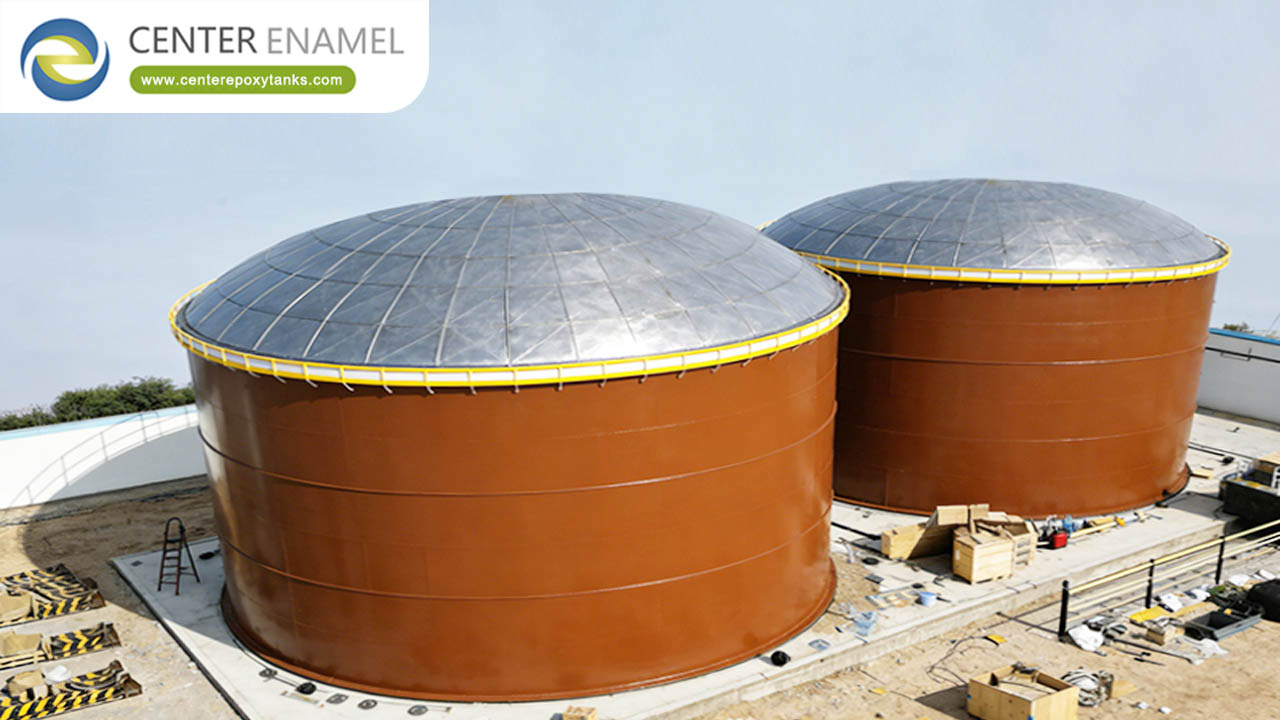
Welded Carbon Steel Blended Crude Oil Tanks: Engineering & Procurement Guide
The blending of crude oil—a process essential for refinery feedstock optimization and product specification—introduces significant complexities in storage infrastructure. Blended crudes can vary drastically in sulfur content, acidity, viscosity, and sediment load. Consequently, storage tanks must be engineered to handle this variable chemical profile while ensuring absolute environmental containment.
Welded carbon steel tanks remain the industry standard for these applications. When properly engineered and lined, they provide the optimal balance of structural strength, thermal resilience, and cost-efficiency required for terminal operations. This guide outlines the engineering specifications and procurement rigors required to source high-performance storage assets that meet international life-safety and environmental standards.
1. Engineering Parameters & Structural Dynamics
Crude oil blending tanks are not merely "containers"; they are pressure-managed vessels that must sustain enormous hydrostatic loads. Compliance with API 650 (Welded Tanks for Oil Storage) is the minimum requirement for any global project.
Shell Thickness Calculation
To ensure structural integrity against hydrostatic pressure, the shell plate thickness ($t_d$) must be determined for each course. For tanks handling crude oil with a specific gravity ($G$) potentially higher than 1.0 (due to sediment or heavy fractions), the minimum shell thickness is calculated using the following API 650 formula:
Sour Service Considerations
Blended crude often involves "sour" grades (high $H_2S$ content). For these tanks, engineering teams must specify HIC (Hydrogen Induced Cracking) Resistant Steel and SSC (Sulfide Stress Cracking) Resistant welding procedures. Failure to account for sour service chemistry in the steel specification is a leading cause of premature structural fatigue in crude storage terminals.
2. Advanced Anti-Corrosion Systems
Crude oil is rarely "clean." It contains water, salts, and dissolved gases that facilitate severe localized corrosion.
● Internal Linings: For blended crude storage, the tank floor and bottom shell course must be protected by high-build, multi-coat phenolic epoxy or glass-flake epoxy linings. These materials are specifically formulated to resist the aggressive combination of crude oil fractions and brine water.
● Vapor Space Protection: The "headspace" of the tank is often more corrosive than the liquid zone due to $H_2S$ condensation. Manufacturers must apply high-performance, chemical-resistant coatings to the tank roof and the upper 1.5 meters of the shell wall.
● Cathodic Protection: Every welded steel tank farm must integrate an impressed current or sacrificial anode cathodic protection system to mitigate exterior soil-side corrosion, especially in environments with high groundwater salinity.
3. Procurement Vetting Matrix
Sourcing for crude oil terminals requires moving beyond price-per-ton metrics. High-performing manufacturers distinguish themselves through certified process controls.
Quality Vector | Tier-1 Tank Manufacturer | Standard Steel Workshop |
Material Verification | Mill Test Reports (MTR) with HIC/SSC testing. | Standard commercial grade steel. |
Welding Technology | Automated Submerged Arc Welding (SAW). | Manual SMAW (stick) welding. |
Weld Testing | 100% Radiographic Testing (RT) of T-joints. | Spot checks only. |
Engineering Rigor | Full Finite Element Analysis (FEA). | Basic structural dimensioning. |
Code Compliance | API 650 / API 653 / ASME. | "Built-to-print" without code certification. |
4. Operational Maintenance & Safety
In modern crude oil blending, the tank is part of a larger dynamic system.
● Anti-Vortex Systems: High-throughput blending tanks require sophisticated anti-vortex plates at the suction nozzle to prevent gas entrainment into the downstream pumps.
● Mixing Systems: To maintain a consistent blend, tanks are often fitted with side-entry propeller mixers or jet-mixing nozzles. The tank shell must be reinforced at these points to withstand the mechanical vibrations induced by the mixers.
● Automated Gauging: Modern terminals require SIL-rated (Safety Integrity Level) radar level gauges and overfill protection systems that integrate directly with the tank farm control system.
Frequently Asked Questions (FAQ)
Q: Can a blended crude tank be retrofitted for cleaner products later?
A: Yes, but it requires a full internal inspection, cleaning, and likely a re-application of the internal lining. Crude oil leaves significant paraffin and sludge deposits that require high-pressure cleaning to remove before the tank can be certified for lighter products like gasoline or diesel.
Q: How do we handle sediment buildup at the bottom of the tank?
A: Strategic placement of clean-out doors (manways) and the use of automated tank cleaning systems (which circulate oil to keep solids in suspension) are standard for modern crude terminals.
Q: What is the recommended frequency for API 653 out-of-service inspections?
A: API 653 suggests an interval based on the rate of corrosion, typically ranging from 10 to 20 years for well-maintained tanks. However, if the crude is highly acidic (sour), more frequent internal inspections (every 5–10 years) are strongly advised.
What specific sulfur content or temperature range does the blended crude in your proposed facility typically reach?


