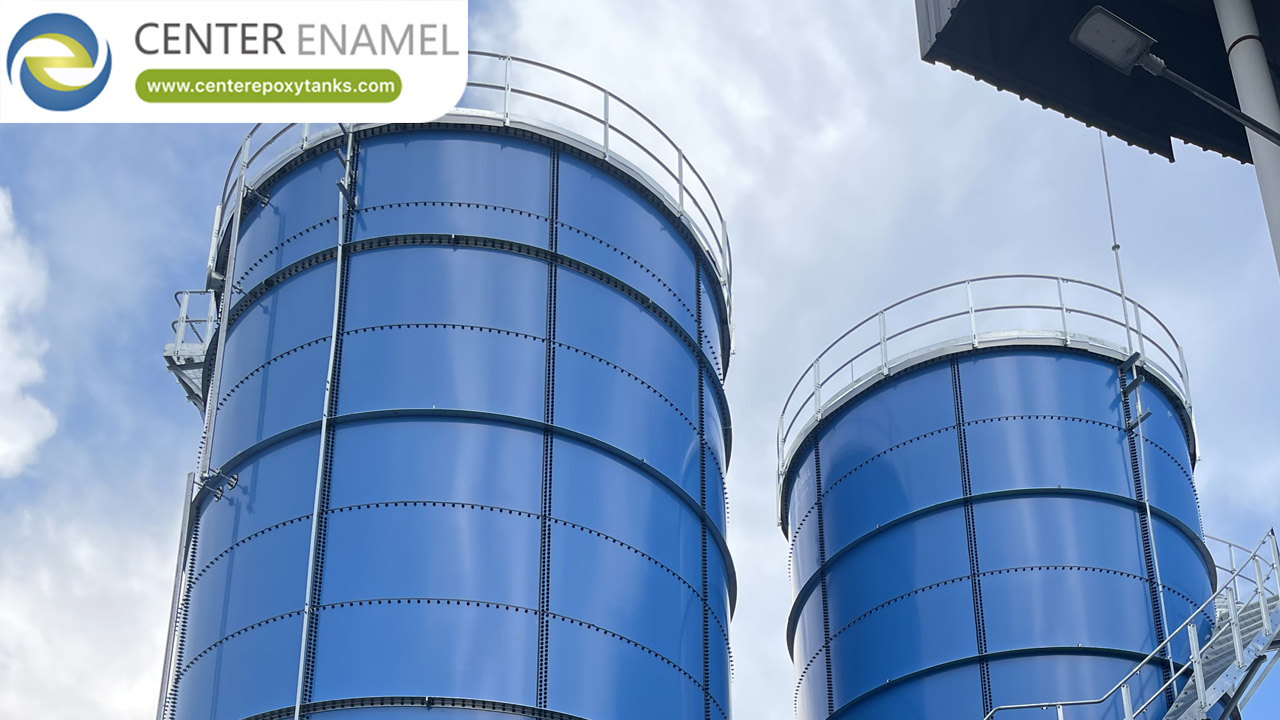
Desalinated Water Storage Tanks: Engineering Challenges, Material Selection, and Storage Solutions
As global water scarcity intensifies across arid and coastal regions, seawater desalination—primarily driven by Reverse Osmosis (RO) and Multi-Stage Flash (MSF) distillation—has become an indispensable lifeline for municipal water supplies and industrial complexes. However, storing desalinated water presents unique and formidable engineering challenges. Unlike natural surface water or groundwater, newly produced desalinated water (permeate) is chemically active, highly unstable, and virtually devoid of dissolved minerals. This ultra-low mineralization makes the water aggressive, causing it to aggressively leach metals from unprotected metallic storage structures. Simultaneously, coastal desalination plants are subjected to harsh, salt-laden marine atmospheres that accelerate exterior corrosion.
To withstand this dual threat of internal aggressiveness and external marine oxidation, water authorities require specialized containment infrastructure. Shijiazhuang Zhengzhong Technology Co., Ltd. (Center Enamel) delivers world-class desalinated water storage tanks—including advanced Glass-Fused-to-Steel (GFS) and Fusion Bonded Epoxy (FBE) systems—engineered specifically to guarantee water purity, structural integrity, and decades of corrosion-free service.
The Dual Engineering Challenge: Aggressive Permeate and Coastal Atmospheres
Desalination storage infrastructure must conquer two distinct chemical and environmental obstacles:
Internal Aggressiveness (Leaching & Low Mineralization): Pure RO permeate has a very low buffering capacity and low hardness. In search of mineral balance, it tends to dissolve metals and minerals from its containment boundary. Standard carbon steel tanks without high-integrity barriers will suffer rapid corrosion, while unsealed concrete can leach calcium carbonate, altering water chemistry and raising pH levels beyond acceptable potable standards.
External Marine Corrosion: Desalination plants are predominantly located directly on coastlines. Airborne sea salt, high humidity, and coastal winds create an aggressive electrolytic environment that rapidly rusts unprotected external steel surfaces, structural brackets, and roof components.
To resolve these challenges, modern desalination projects utilize factory-engineered bolted steel tanks lined with chemically inert, non-toxic barriers that isolate the water completely from structural steel substrates.
Advanced Tank Technologies for Desalination Infrastructure
Glass-Fused-to-Steel (GFS) Tanks
Glass-Fused-to-Steel tanks represent the gold standard for municipal desalination storage. By fusing specialized silicate glass to high-strength structural steel plates at temperatures exceeding 850°C, the resulting material combines the strength and flexibility of steel with the inert chemical resistance of glass.
Absolute Chemical Inertness: The glass surface is entirely non-porous, preventing any interaction with aggressive permeate water and ensuring zero heavy metal leaching.
Superior Exterior Durability: The outer glass coating provides complete resistance against coastal UV radiation, salt fog, and marine weathering.
Fusion Bonded Epoxy (FBE) Tanks
Utilizing factory-controlled electrostatic thermal fusion, FBE tanks provide a tough, uniform thermoset epoxy barrier over precision-engineered steel panels. Certified to NSF/ANSI 61 standards for drinking water safety, Center Enamel's FBE tanks offer excellent resistance against chemical immersion and are widely deployed in post-treatment remineralization mixing and storage basins.
Data Table: Desalinated Water Storage Tank Technology Matrix
Technical Parameter | Center Enamel Glass-Fused-to-Steel (GFS) Tanks | Center Enamel Fusion Bonded Epoxy (FBE) Tanks | Poured-in-Place Concrete Reservoirs |
Internal Permeate Resistance | Exceptional; fused glass is completely inert to aggressive low-mineral water | High; NSF/ANSI 61 certified epoxy prevents metal leaching | Prone to calcium leaching and surface degradation from pure water |
External Marine Defense | Superior; glass coating resists salt-fog and coastal humidity | High-performance exterior coatings resist coastal oxidation | Vulnerable to chloride penetration and rebar corrosion |
Installation Velocity | Rapid modular bolted assembly completed in days or weeks | Fast modular bolted erection independent of weather | Extremely slow formwork, pouring, and multi-week curing |
Modularity & Expansion | Easily expanded or relocated as municipal water demand grows | Highly modular and adaptable to facility layout changes | Permanent monolithic structure; impossible to expand or relocate |
Governing Standards | AWWA D103-09, ISO 28765, NSF/ANSI 61 | AWWA D103-09, NSF/ANSI 61, ISO 9001 | ACI Structural Concrete Standards |
Frequently Asked Questions (FAQ)
Q: Why can standard carbon steel tanks not be used for desalinated water storage?
A: Standard unlined carbon steel is highly susceptible to rapid oxidation in coastal salt-air environments. Furthermore, ultra-pure reverse osmosis (RO) permeate water lacks mineral content and acts aggressively, leaching metals from unprotected steel and compromising water quality.
Q: What makes Glass-Fused-to-Steel tanks ideal for desalination plants?
A: GFS tanks combine the structural strength of steel with the chemical inertness of glass fused at high temperatures. The glass surface does not react with aggressive permeate water, prevents heavy metal leaching, and withstands harsh coastal marine weather without rusting.
Q: Are Center Enamel's desalination tanks certified for potable drinking water?
A: Yes. All interior tank linings and glass-fused surfaces comply strictly with international public health standards, including NSF/ANSI 61 and AWWA D103-09, ensuring safe storage for municipal drinking water supplies.
Q: Can desalination storage tanks be expanded if municipal water demand increases?
A: Yes. Because Center Enamel's GFS and FBE tanks feature a modular bolted design, water authorities can easily increase storage capacity by adding extra rings of panels or reconfiguring the structure as community needs grow.


