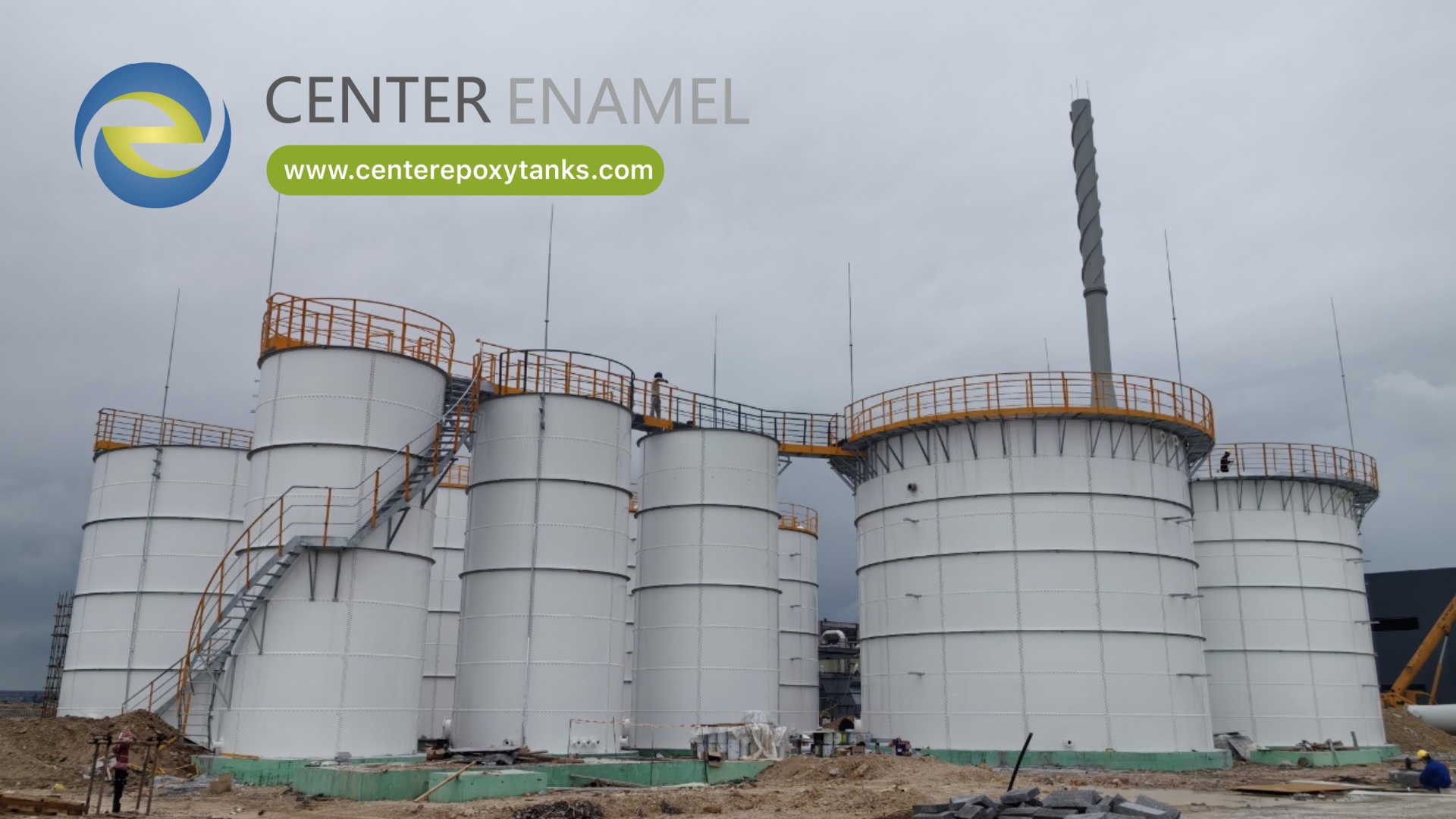
Water Tanks for Biological Wastewater Tank

Water Tanks for Biological Wastewater Tank.jpg


The global landscape of industrial and municipal wastewater management has shifted toward sustainable, nature-based solutions. At the core of this movement is the Biological Wastewater Tank, a highly specialized reactor designed to host microbial ecosystems that break down organic pollutants. Unlike simple sedimentation basins, these tanks are active environments where biological processes—either aerobic or anaerobic—transform hazardous effluent into clean water and valuable byproducts like biogas.

Shijiazhuang Zhengzhong Technology Co., Ltd (Center Enamel), a leading China Biological Wastewater Tank manufacturer, provides the advanced infrastructure required to sustain these delicate biological reactions. With a successful track record in more than 100 countries, Center Enamel combines its proprietary Epoxy Coated Tanks with high-performance Aluminum Dome Roofs to deliver the most durable and efficient biological treatment solutions on the market today.

The Evolution of Biological Water Treatment

Biological treatment is not a new concept, but the technology used to contain these processes has evolved significantly. Historically, concrete lagoons and open basins were the standard. However, these traditional methods suffer from high maintenance costs, potential groundwater seepage, and a lack of odor control. Modern engineering demands a more controlled environment.

The modern Biological Wastewater Tank is designed to maximize the contact time between microorganisms and organic pollutants. Whether the system is designed for a small-scale food processing plant or a massive municipal facility, the structural integrity of the tank is the foundation of the entire treatment process. If the tank fails, the biological culture dies, and untreated waste enters the environment.

The Core Mechanisms of Biological Treatment

A Biological Wastewater Tank acts as a controlled habitat for microorganisms. The design of the tank must account for the specific metabolic requirements of the bacteria used in the process.

Aerobic Biological Processes

Aerobic treatment relies on the presence of oxygen to allow bacteria to oxidize organic matter. These systems are highly effective for reducing Biochemical Oxygen Demand (BOD) and Chemical Oxygen Demand (COD).

Activated Sludge: The most common process where air is pumped into the tank to keep microorganisms in suspension as they consume pollutants.

MBBR and IFAS: These technologies use specialized media within the Water Tanks to provide a larger surface area for biofilm growth, increasing the treatment capacity without increasing the tank's footprint.

Anaerobic Biological Processes

Anaerobic treatment occurs in an oxygen-free environment. This is preferred for high-strength industrial waste and offers the benefit of energy recovery.

Anaerobic Digestion: Bacteria break down organic solids, producing methane gas. This requires a completely sealed Biological Wastewater Tank to maintain an oxygen-free state and capture gas.

UASB Reactors: High-rate systems that utilize a dense blanket of anaerobic sludge to treat wastewater as it flows upward through the tank.

Technical Superiority of Epoxy Coated Tanks

Biological reactors present a uniquely aggressive environment. The metabolic activity of bacteria creates fluctuating pH levels and produces organic acids such as lactic and acetic acid during the fermentation phases. Furthermore, the presence of sulfur compounds can lead to the formation of sulfuric acid through biogenic corrosion in the headspace. As a premier China Biological Wastewater Tank manufacturer, Center Enamel utilizes Fusion Bonded Epoxy (FBE) technology to protect the structural integrity of the vessel.

The Fusion Bonded Epoxy Barrier

The coating on our Epoxy Coated Tanks is a high-performance polymer that is molecularly bonded to the steel substrate. This process ensures several critical advantages for biological service:

The FBE coating is inert to the organic acids produced during fermentation and the chemicals used for pH adjustment. This chemical resilience is superior to traditional paint systems which can blister or peel when exposed to the acidic environments common in anaerobic stages.

Every panel, including the edges and bolt holes, is coated in a factory-controlled environment. This eliminates the weak spots common in field-painted or lined tanks. Because the coating is applied under strict temperature and humidity controls, the result is a consistent, high-density barrier that resists mechanical damage and chemical penetration.

The glass-like finish prevents the uncontrolled buildup of dead biomass and scale. In biological treatment, "dead zones" or scale buildup can harbor harmful pathogens or reduce the effective volume of the tank. The smooth surface of our Epoxy Coated Tanks ensures that mixing remains efficient and maintenance is minimized.

Strategic Integration of Aluminum Dome Roofs

The headspace of a Biological Wastewater Tank is often the most corrosive area due to the accumulation of moisture and gases like Hydrogen Sulfide (H2S). Center Enamel addresses this by integrating Aluminum Dome Roofs into its containment systems.

Advantages of Aluminum Geodesic Domes

Aluminum is naturally resistant to the corrosive vapors produced during biological decomposition. While steel roofs require constant maintenance and repainting, aluminum domes remain maintenance-free for decades. This is particularly important for tanks involved in anaerobic digestion where the roof is constantly exposed to high-humidity biogas.

Maintaining a stable temperature is vital for microbial health. Aluminum Dome Roofs provide excellent thermal reflection, helping to maintain the mesophilic or thermophilic temperatures required for anaerobic digestion. By reflecting solar heat, the domes prevent the liquid temperature from spiking, which could otherwise kill the sensitive biological culture.

These domes provide a superior seal, preventing the release of odorous gases into the environment. This is a critical requirement for municipal facilities located near residential areas. Additionally, the seal allows for the efficient capture of biogas, which can be scrubbed and used as a renewable fuel source.

Global Experience and Manufacturing Excellence

As a dedicated China Biological Wastewater Tank manufacturer, Center Enamel has built its reputation on precision engineering and global reliability. Our products are exported to more than 100 countries, serving diverse industries from food processing to municipal sanitation.

Rigorous Quality Standards

Our Water Tanks are manufactured in accordance with international standards, including AWWA D103-09, ISO 28765, and NSF/ANSI 61. We utilize automated production lines to ensure that every panel meets strict quality benchmarks. Every panel undergoes high-voltage spark testing to confirm that the epoxy coating is continuous and free of microscopic defects.

Rapid Deployment and Modular Design

The bolted design of our tanks allows for simplified logistics and fast installation. All components are packed into standard containers for international shipping and assembled on-site using specialized jacking systems. This significantly reduces construction time compared to concrete or welded steel, which is critical for meeting environmental deadlines.

Industry-Specific Applications of Biological Tanks

The versatility of the Biological Wastewater Tank allows it to be adapted for various industrial sectors. Each industry has unique waste characteristics that require specific tank configurations.

Wastewater from breweries, dairies, and fruit processing plants is high in sugars and proteins. These substances ferment rapidly, creating highly acidic conditions. The chemical resistance of Epoxy Coated Tanks is essential here to prevent the tank walls from dissolving over time. Furthermore, the ability to store vast quantities of liquid in a small footprint makes these tanks ideal for urban food processing facilities.

Pharmaceutical waste often contains complex organic molecules that require specialized microbial strains for degradation. These processes often require precise temperature control and an environment free from external contamination, which is facilitated by the hermetic sealing provided by our Water Tanks and Aluminum Dome Roofs.

In urban settings, the primary goal is the removal of nitrogen and phosphorus. Large-scale Water Tanks acting as aeration basins or clarifiers must be durable enough to operate for decades years without major structural overhauls. Our modular design allows municipal authorities to expand their treatment capacity easily by adding more tanks as the population grows.

Comparing Bolted Steel with Reinforced Concrete

In the field of biological treatment, engineers must choose the most reliable material for containment. While reinforced concrete has been a traditional choice, it presents several long-term challenges. Concrete is inherently porous, and under the acidic conditions of a Biological Wastewater Tank, the cement paste can be etched away. This exposes the internal steel rebar to moisture and chemicals, leading to rust and structural failure.

Conversely, Epoxy Coated Tanks provide a factory-applied barrier that prevents any contact between the wastewater and the structural steel. The assembly speed of bolted steel is also a major factor; while a concrete tank may take months to cure and require complex formwork, a bolted tank can be erected in a matter of weeks. This speed of deployment allows facilities to begin treating waste and meeting compliance standards much faster.

Furthermore, bolted tanks offer scalability. If a farm or factory needs to increase its biological treatment capacity, the height of a bolted tank can often be increased by adding additional rings. Reinforced concrete structures are static and cannot be modified once they are cast, making them less flexible for growing industrial operations.

Proven Project Cases

Center Enamel’s solutions have been successfully implemented in some of the world's most demanding biological wastewater projects.

This project involved treating complex textile effluent with high organic loads. Center Enamel provided 20 units of tanks to support the biological treatment stage, ensuring the industrial park met strict environmental discharge standards. The success of this project in a developing region highlights our ability to provide high-quality infrastructure that is easy to transport and assemble.

Chemical waste streams require robust biological treatment to remove specific toxins. We delivered 11 units of tanks for this project. The chemical immunity of our Epoxy Coated Tanks was a primary factor in the selection process, as the waste contained volatile organic compounds that would have degraded other coating types.

To manage the oily wastewater and organic matter in a petroleum refinery, Center Enamel supplied 3 units of tanks. This project demonstrates the durability of our containment systems in heavy industrial applications where both chemical resistance and structural strength are required.

Economic and Environmental Sustainability

Choosing a Biological Wastewater Tank from Center Enamel is an investment in long-term operational efficiency. Our systems provide a lower total cost of ownership through several key factors. The high-durability coating and Aluminum Dome Roofs eliminate the need for periodic structural patching or expensive re-coating projects that are common with other materials.

Designed for a service life exceeding decades years, our tanks provide a stable foundation for the facility's environmental infrastructure. By ensuring 100% containment of hazardous waste and facilitating the recovery of clean water and energy, we help our clients achieve their green goals and comply with increasingly strict international environmental laws.

Engineering for a Greener World

The Biological Wastewater Tank is the heart of the modern water treatment facility. Its reliability directly impacts the efficiency of the biological process and the safety of the surrounding environment. As global regulations tighten and the cost of water increases, having a high-performance containment system becomes a competitive advantage for any industrial or municipal entity.

As the leading China Biological Wastewater Tank manufacturer, Shijiazhuang Zhengzhong Technology Co., Ltd (Center Enamel) remains committed to engineering excellence. By combining the resilience of Epoxy Coated Tanks with the structural innovation of Aluminum Dome Roofs, we provide the global market with the most advanced, sustainable, and cost-effective Water Tanks for biological treatment. With installations in more than 100 countries, our expertise ensures that your wastewater project will stand the test of time and contribute to a more sustainable future for the planet.


Chat with us


