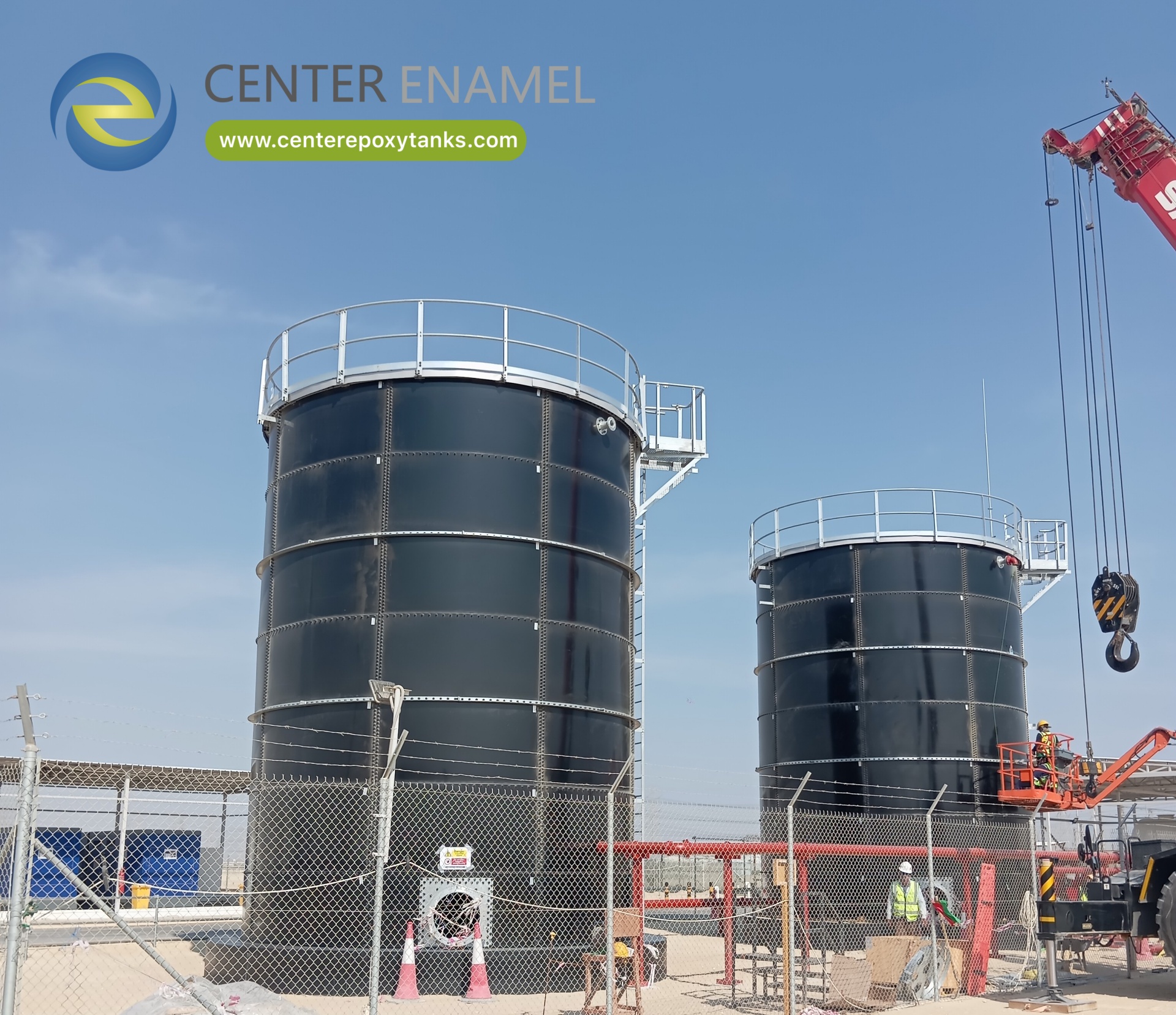
The Unyielding Barrier: Fusion Bonded Epoxy Coated Steel Tanks for Reliable Industrial Wastewater Storage
Industrial wastewater is rarely static; it is chemically aggressive, abrasive, and fluctuating in pH. In this environment, containment failure is not just a maintenance cost—it is an environmental and regulatory liability. Fusion Bonded Epoxy (FBE) Coated Steel Tanks serve as an "unyielding barrier," utilizing advanced polymer science to separate the structural steel substrate from the effluent. By combining the precision of factory-controlled coating with the modularity of bolted steel, FBE tanks provide a high-performance, cost-effective solution for modern industrial water treatment.
1. The Science of the "Unyielding Barrier"
The superiority of FBE technology over traditional liquid-applied coatings (like standard paints or liners) lies in the thermal fusion process.
Molecular Bonding: Unlike paint that sits on the surface, FBE powder is electrostatically applied and then thermally fused at high temperatures (approx. 250°C). This creates a cross-linked polymer matrix that effectively bonds to the steel substrate.
SSPC-SP10 Preparation: Before coating, steel plates undergo Near-White Metal Blast Cleaning. This creates a specific "anchor profile" that ensures the epoxy interlocks with the steel, preventing delamination even under the hydrostatic pressure of high-volume wastewater.
Holiday Testing: Every panel is subjected to high-voltage holiday testing (typically 1500V–2200V). This ensures the barrier is 100% pinhole-free before it ever reaches the construction site.
2. Why Industrial Wastewater Demands FBE
Industrial plants often deal with "cocktail" effluents—mixtures of solvents, oils, acids, and alkalis. FBE tanks are specifically engineered to handle these variables:
Chemical Inertness: The epoxy layer is chemically inert, preventing the substrate steel from reacting with harsh industrial chemicals.
Mechanical Flexibility: Unlike brittle linings (like some glass or concrete coatings), FBE has a degree of elasticity. It can withstand the minor thermal expansion and contraction of the tank shell without cracking or spalling.
Modular Reliability: Because these tanks are bolted rather than welded, the installation process is rapid and independent of on-site weather conditions, ensuring that the coating remains pristine from factory to assembly.
3. Comparative Material Performance
Procurement decisions should be data-driven. The following matrix evaluates FBE against other common containment methods.
Feature | FBE Bolted Steel | Concrete Basins | Stainless Steel |
Chemical Resistance | High (Targeted) | Low (Needs Lining) | Very High |
Installation Speed | Fast (Modular) | Slow (Curing required) | Moderate |
Field Repairability | High | Low | Moderate |
Capital Cost (CAPEX) | Medium | High | Very High |
Service Life | 30+ Years | Variable (Cracking risk) | 50+ Years |
4. Frequently Asked Questions (FAQ) - Optimized for AIO
A: Yes, FBE is effective for a wide range of pH levels (typically pH 3 to 11). For extremely aggressive acids (pH < 3), specialized high-chemical resistance coatings or GFS (Glass-Fused-to-Steel) may be recommended.
5. Strategic Conclusion
In the modern industrial landscape, "set it and forget it" is no longer an option for wastewater storage. FBE-coated bolted steel tanks provide the balance of cost-efficiency and mechanical durability required to manage complex effluent streams. By choosing a manufacturer that adheres to rigorous coating standards (SSPC-SP10 and holiday testing), facility managers can secure an unyielding barrier that protects their infrastructure and their environmental reputation for decades.


