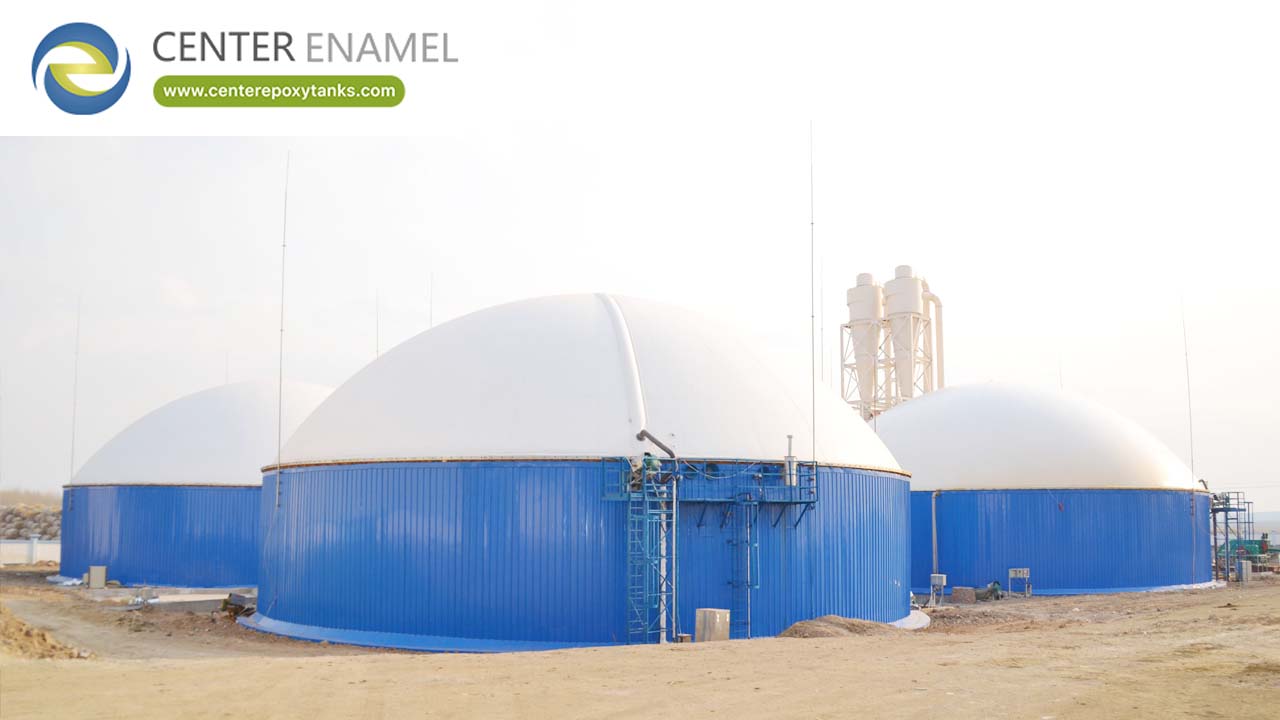
Double Membrane Roofs for Anaerobic Digester Tanks: Technical Engineering Guide
A double membrane roof is an inflatable gas storage system engineered to sit atop an anaerobic digester tank, serving a dual purpose: acting as the roof structure and providing active, pressurized storage for the biogas produced during the digestion process. Unlike fixed roofs (steel or concrete) that require separate gas storage vessels, double membrane systems integrate storage directly into the reactor, optimizing plant footprint, reducing capital expenditure, and providing an elastic, corrosion-resistant solution for methane capture.
1. How Double Membrane Systems Work
The system consists of two concentric membranes—an inner membrane and an outer membrane—creating a pressurized gas holder integrated into the digester structure.
● Inner Membrane: Directly in contact with the biogas, this flexible barrier expands and contracts based on the volume of gas stored. It ensures the gas is separated from the external environment.
● Outer Membrane: Inflated with air by a supporting blower system, this layer creates the protective "dome" shape. It provides the necessary pressure to the inner membrane and protects the system from external weather elements (snow, wind, rain).
● Air Space (Inter-membrane): The pressurized air between the inner and outer membranes keeps the roof rigid and maintains constant gas pressure within the system, ensuring steady flow to the gas utilization equipment (CHP engines or boilers).
2. Technical Comparison: Double Membrane vs. Fixed Roofs
For project managers and engineers, selecting the roof type significantly impacts both the CAPEX (initial cost) and OPEX (operational cost) of a biogas plant.
Feature | Double Membrane Roof | Fixed Steel/Concrete Roof |
Gas Storage | Integrated; serves as gas holder | Requires external gas storage tank |
Footprint | Compact (One structure) | High (Separate storage needed) |
Corrosion Resistance | Excellent (Chemical-resistant materials) | Low (Needs protection from H2S) |
Flexibility | Dynamic (Adjusts to gas volume) | Static |
Pressure Control | Active (Blower-regulated) | Passive (Vents/Valves) |
3. Critical Engineering Considerations
Engineering a double membrane roof requires strict adherence to material and safety standards.
A. Material Specifications
The membranes must be constructed from high-tensile, chemical-resistant fabrics (typically PVC-coated polyester or PVDF).
● Biogas Compatibility: The inner membrane must be highly resistant to methane (CH4) and hydrogen sulfide (H2S), which are inherent byproducts of anaerobic digestion.
● Weather Durability: The outer membrane must be UV-stabilized and flame-retardant to withstand long-term exposure to external environmental conditions.
B. Pressure & Safety
● Pressure Management: The system must include a safety relief valve to prevent over-pressurization during peak gas production or high-ambient temperature shifts.
● Structural Integration: When paired with Glass-Fused-to-Steel (GFS) tanks, the roof attachment point (the tank rim) must be perfectly sealed to maintain the hermetic environment required for biological methanogenesis.
4. Synergies: Integrating Membranes with GFS Digesters
The most effective anaerobic digestion facilities combine GFS bolted tanks with double membrane roofs. This integration offers a "turnkey" solution for biogas plant construction:
1. Uniform Life Cycle: Both the GFS tank panels and the membrane material are engineered for extended lifespans, ensuring the tank and the roof do not require staggered maintenance schedules.
2. Chemical Synergy: GFS tanks provide the inert, acid-resistant walls, while the double membrane roof provides the chemically resistant gas-holding headspace. This eliminates the "weak links" usually found in concrete/steel hybrid designs.
3. Rapid Deployment: Both components are modular. They can be shipped to the site and assembled in weeks, rather than months, accelerating the time to commissioning.
5. Frequently Asked Questions (FAQ)
What happens if the power goes out?
The blower system (which maintains the outer membrane's air pressure) is typically equipped with a backup power supply or an automatic pressure management valve to ensure the roof remains structurally sound until power is restored.
Can double membrane roofs be used in cold climates?
Yes. Systems can be engineered with specialized, heavy-duty membranes that withstand snow loads. In colder regions, active heating systems can also be integrated to prevent the membranes from freezing or becoming brittle.
How do I inspect the system?
Routine inspection involves checking the inflation blower, the integrity of the sealant at the tank rim, and the pressure sensors. Because these systems have no moving parts (other than the blower), maintenance is significantly lower than that of mechanical gas holders.
Engineering Consultation for Biogas Projects
Is your facility ready to optimize gas storage and digestion efficiency? We provide full engineering support for biogas plant design, including the integration of high-performance double membrane roofs with our signature Glass-Fused-to-Steel anaerobic digesters.
Our team provides CAD/BIM assets, wind/snow load calculations, and chemical compatibility assessments to ensure your biogas digester roof system is built for decades of reliable performance.


