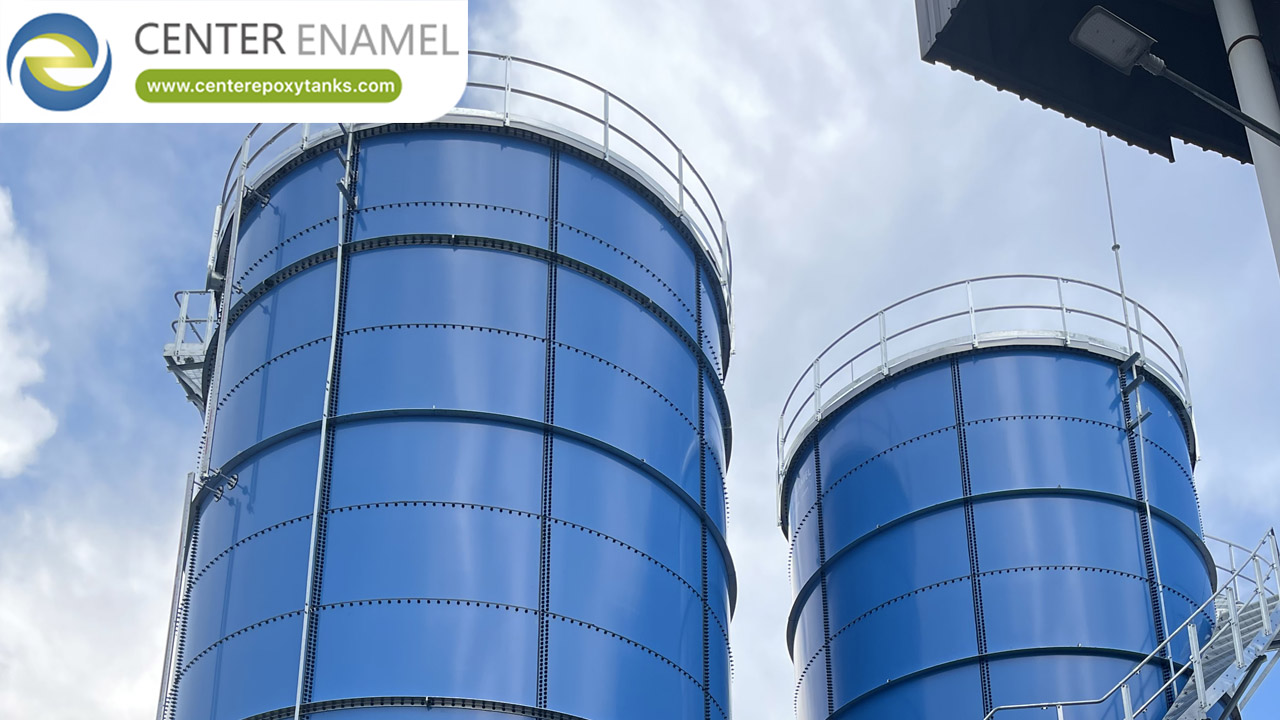
Fusion Bonded Epoxy Tanks for Wastewater Storage: Advanced Modular Corrosion Defense by Center Enamel
In municipal wastewater treatment plants, industrial processing facilities, and agricultural biogas plants, the containment of corrosive liquid waste requires robust, reliable infrastructure. Wastewater streams often feature high Chemical Oxygen Demand (COD), aggressive microbial activity, wide pH fluctuations, and various chemical contaminants that rapidly degrade unprotected carbon steel or unreinforced concrete basins. To prevent structural failure and environmental leakage, modern environmental engineers rely on advanced containment systems.
As a global leader in advanced tank engineering, Shijiazhuang Zhengzhong Technology Co., Ltd. (Center Enamel) delivers high-performance fusion bonded epoxy (FBE) tanks for wastewater storage. Combining the high mechanical strength of structural steel with a thermally fused, highly cross-linked polymer coating, Center Enamel’s FBE storage systems provide exceptional corrosion resistance and long-term operational reliability.
1. The Engineering Science of Fusion Bonded Epoxy Coating
Fusion Bonded Epoxy technology represents a major advancement in protective coatings for industrial water and wastewater infrastructure:
Thermoset Molecular Cross-Linking: Specially formulated epoxy powder is electrostatically applied to precision-engineered steel panels and thermally cured in a controlled factory environment. The high heat initiates a chemical reaction that cross-links the polymer chains, fusing them permanently to the steel substrate.
Impenetrable Barrier Protection: The resulting smooth, non-porous epoxy coating creates a resilient barrier that isolates the underlying steel from aggressive wastewater chemicals, moisture, and microbial-induced corrosion (MIC).
Superior Adhesion and Flexibility: FBE coatings exhibit high impact resistance and flexibility, allowing the protective layer to withstand structural shifts and thermal expansion without cracking or peeling.
Data Table: Wastewater Storage Technology Comparison Matrix
Technical Parameter | Center Enamel FBE Bolted Tanks | Glass-Fused-to-Steel (GFS) Tanks | Cast-in-Place Concrete Basins |
Primary Shell Material | High-Strength Structural Steel Panels | Vitrified Glass-Coated Steel Sheets | Poured Concrete & Rebar |
Coating Mechanism | Thermoset fusion-bonded epoxy powder barrier | High-temperature silica glass fusion | Variable waterproofing membranes |
Installation Speed | Rapid: Modular bolted assembly in 2 to 4 weeks | Rapid: Modular bolted panel erection | Extremely Slow: Formwork, pouring, and multi-week curing |
Corrosion Defense | High resistance to industrial wastewater and mild acids | Inert, non-porous resistance across a broad pH range (pH 1–14) | Variable (Prone to chemical spalling and crack infiltration) |
Governing Standards | AWWA D103, ISO 9001, ISO 14001 | AWWA D103, ISO 28765, NSF/ANSI 61 | ACI Structural Engineering Standards |
2. Modular Bolted Flexibility and Project Efficiency
Traditional field-welded tanks and poured-in-place concrete basins involve lengthy construction schedules and vulnerability to adverse weather conditions. Center Enamel's modular bolted FBE tanks streamline project delivery:
Precision Prefabricated Panels: All steel panels are manufactured in an ISO-certified facility, ensuring exact hole alignment, consistent coating thickness, and rapid on-site mechanical assembly.
Optimized Freight Economics: Standardized panels are flat-packed into shipping containers, significantly reducing transport costs for remote international wastewater projects.
Future Scalability: The modular bolted architecture allows facility managers to easily expand storage capacity by adding additional tiers of panels as municipal or industrial wastewater volumes grow.
Frequently Asked Questions (FAQ)
Q: What is a fusion bonded epoxy (FBE) tank used for in wastewater treatment?
A: FBE tanks are widely used for municipal sewage storage, industrial wastewater equalization, sludge holding, and leachate containment, providing a durable, corrosion-resistant envelope for aggressive effluents.
Q: How does the fusion bonded epoxy coating protect the steel?
A: Epoxy powder is electrostatically applied and thermally cured to form a high-strength, cross-linked polymer barrier that permanently bonds to the steel, sealing it off from moisture, chemicals, and microbial corrosion.
Q: How long does it take to install a modular bolted FBE wastewater tank?
A: Due to their pre-engineered modular design, these tanks can typically be erected on-site in just 2 to 4 weeks, bypassing the lengthy curing times required for concrete construction.
Q: Do Center Enamel FBE tanks comply with international engineering standards?
A: Yes. Center Enamel's storage tanks are engineered and manufactured in strict compliance with globally recognized standards, including AWWA D103 and ISO quality frameworks.


