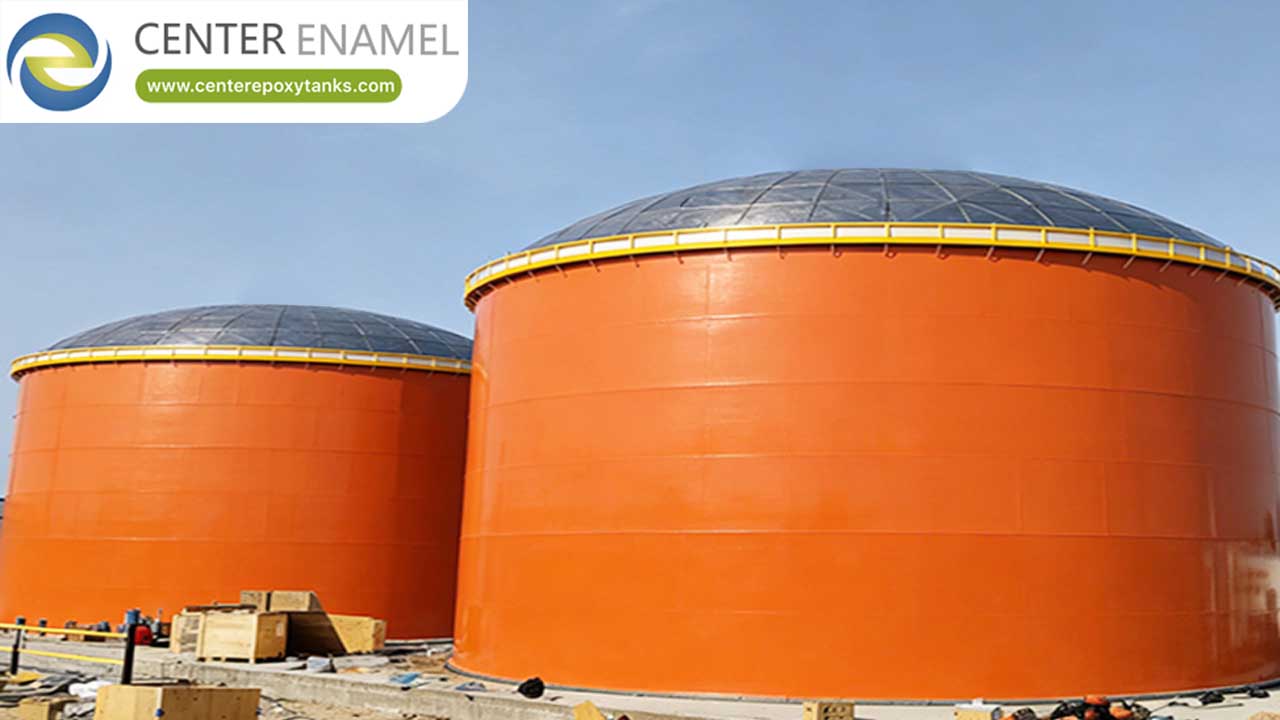
Welded Steel Tanks for Long-Term Fuel Storage: The Industry Gold Standard
Why Welded Steel is the Gold Standard for Fuel Storage
Welded steel tanks are the industry benchmark for the long-term, bulk storage of fuels, including crude oil, diesel, and biofuels. Unlike bolted or concrete alternatives, welded steel tanks provide a monolithic, seamless structure that minimizes leak paths and maximizes structural longevity.
1. Monolithic Structural Integrity
Welded steel tanks are constructed as single units, significantly reducing the risk of leaks compared to bolted designs, which rely on thousands of individual gaskets and fasteners [1.1.1, 1.2.1]. This seamless construction ensures that high-value fuel remains contained and protected from external contamination [1.1.1, 1.2.1].
2. Compliance with Global Standards (API 650 & 620)
For industrial and petrochemical applications, safety and regulatory compliance are non-negotiable. Most professional welded tanks are engineered to API 650 standards for atmospheric storage or API 620 for low-pressure requirements [1.1.1, 1.1.2, 1.3.1]. These standards dictate strict requirements for wall thickness, welding procedures, and foundation loads, ensuring the tank can safely hold volatile products for decades [1.1.2, 1.3.1].
3. Durability and Lower Life-Cycle Costs
Steel is an exceptionally durable material, and when combined with advanced protective coatings—such as epoxy, polyurethane, or zinc-rich primers—it can withstand harsh environmental conditions [1.2.1]. While the initial investment may be higher than plastic or fiberglass alternatives, the long service life, minimal maintenance, and recyclability of steel make it the most cost-effective solution over the long term [1.2.2].
Technical Performance Matrix
Feature | Welded Steel Tanks | Bolted Steel Tanks | Concrete Tanks |
Leak Resistance | Superior (Monolithic) | Moderate (Gasket-dependent) | Low (Crack prone) |
Installation | Field-Erected/Shop-Built | On-site Assembly | Poured on-site |
Lifespan | Very High (30–50+ years) | Moderate | High (with repairs) |
Compliance | API 650/620 | AWWA/General Codes | Regional Codes |
Key Considerations for Long-Term Storage
Corrosion Allowance: API 650 designs include a "sacrificial layer" of extra steel thickness to account for internal and external corrosion over time [1.3.1].
Secondary Containment: For environmental safety, modern fuel storage often utilizes self-bunded (double-skin) designs or external containment barriers to prevent soil and groundwater contamination [1.5.2].
Maintenance: Regular inspection for rust, seal integrity, and coating degradation is vital to extending the tank’s service life [1.2.1].
Frequently Asked Questions (FAQ)
Q: Why are welded tanks preferred over bolted tanks for fuel?
A: Welded tanks offer a seamless, gasket-free structure, significantly reducing potential leak points. This is crucial for volatile or hazardous fuels where even a small leak can have major safety and environmental consequences [1.2.1].
Q: What is API 650?
A: API 650 is the international standard for the design, fabrication, and testing of welded atmospheric storage tanks. It is the foundational standard for the oil and petrochemical industry to ensure safety and structural integrity [1.1.2, 1.3.1].
Q: How often do fuel tanks need to be replaced?
A: There is no fixed age for replacement, provided the tank is well-maintained and not leaking [1.5.1]. With regular inspections, protective coatings, and proper adherence to API 653 standards (for existing tanks), welded steel tanks can last for decades [1.1.2, 1.2.1].
Q: How do I prevent fuel theft from my storage tank?
A: Steel tanks are significantly harder to break into or vandalize than plastic alternatives. High-quality steel tanks with secure locking mechanisms are the best deterrent against unauthorized access [1.2.2].
Q: Do I need secondary containment for my fuel tank?
A: In most jurisdictions, compliance is mandatory for bulk fuel storage. Secondary containment (such as a double-skin tank or a concrete bund) is essential to catch leaks before they reach the environment [1.5.2].


