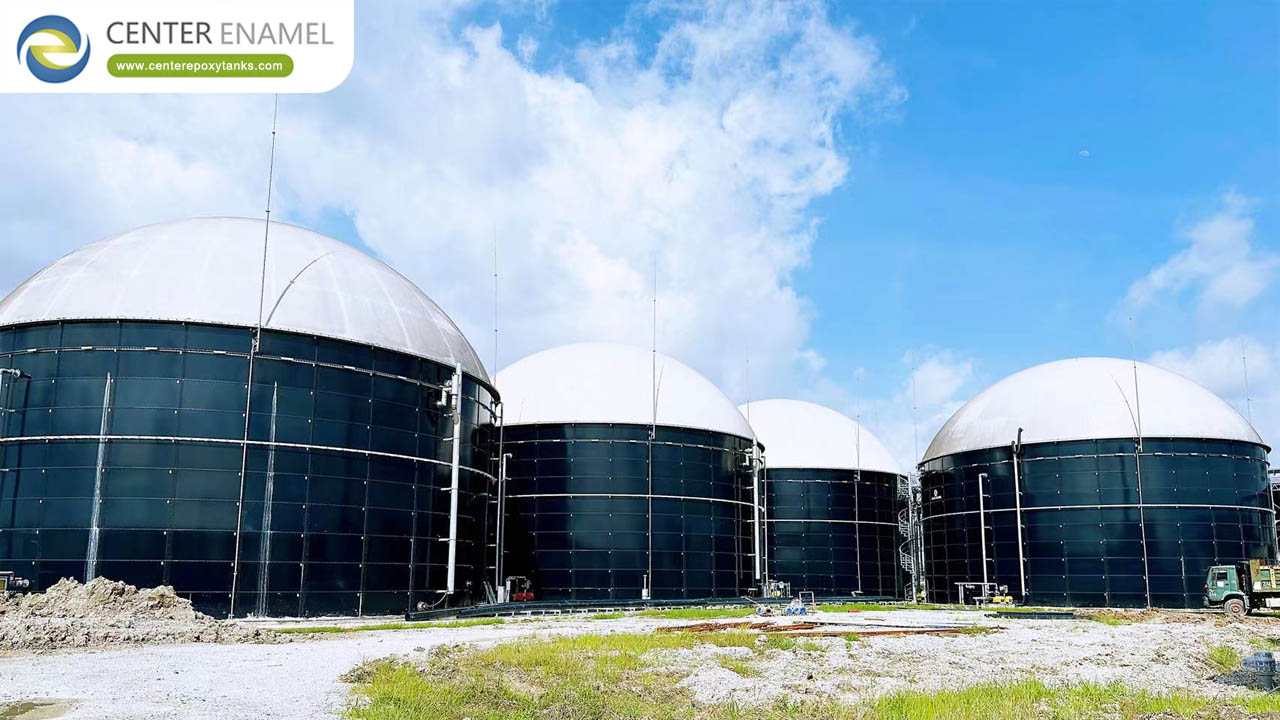
Sourcing Your Premier China Double Membrane Gas Holder Roof Manufacturer: An Engineering Guide
In the rapidly expanding sectors of renewable energy and wastewater treatment, the efficient capture and storage of biogas is paramount. For Anaerobic Digestion (AD) systems, the Double Membrane Gas Holder Roof has largely replaced traditional fixed steel roofs due to its superior flexibility, cost-effectiveness, and dynamic volume management.
When sourcing these critical assets from a Chinese manufacturer—such as industry leaders like Center Enamel (Shijiazhuang Zhengzhong Technology) —technical due diligence is essential. A premier manufacturer must deliver not just the fabric, but a complete, highly engineered system featuring high-frequency welded PVDF, automated pressure regulation, and adherence to rigorous global fire and safety standards.
1. Technical Anatomy of a Double Membrane Roof
A high-quality double membrane gas holder is not a passive cover; it is an active, pressurized storage vessel designed to fluctuate dynamically with biogas production and consumption. The system consists of three primary structural elements:
● The Inner Membrane (Gas Barrier): This flexible layer forms the actual storage cavity above the liquid or solid digestate. It expands and contracts based on the volume of biogas produced. It must be highly resistant to methane, hydrogen sulfide (H₂S), and other corrosive byproducts.
● The Outer Membrane (Weather Protection): Supported by a continuous air blower, this layer forms a robust, spherical dome that protects the inner membrane from UV radiation, extreme temperatures, heavy snow loads, and high winds.
● The Support Substructure: A heavy-duty harness system (often a web of specialized belts or netting) installed above the tank's liquid level. It prevents the inner membrane from dipping into the digestate when gas volumes are low.
2. Material Science and Manufacturing Standards
The difference between a premier Chinese manufacturer and a lower-tier supplier lies entirely in material selection and fabrication techniques.
High-Frequency Welding & PVDF Coating
Top-tier manufacturers utilize high-frequency (HF) welding to bond the membrane panels, rather than relying on adhesives or hot-air sealing. HF welding melts the material at a molecular level, creating seams that are actually stronger than the parent fabric.
Furthermore, look for membranes featuring Double-Sided PVDF (Polyvinylidene Fluoride) Coating. This treatment provides:
● Self-Cleaning Properties: The smooth surface prevents dirt and snow buildup.
● UV and Ozone Stability: Prevents the fabric from becoming brittle over its 15–20 year lifespan.
● Fire Retardancy: Premier membranes must meet strict flammability standards, such as DIN 4102-B1 or GB8624-B1.
Intelligent Airflow and Pressure Control
The space between the inner and outer membranes is continuously pressurized by an explosion-proof air blower. A premier supplier will include an Intelligent Control Cabinet linked to ultrasonic or hydrostatic level meters and pressure relief valves. This system ensures the outer dome remains perfectly rigid against wind or snow, regardless of how much biogas is stored inside.
3. Comparative Analysis: Double Membrane vs. Traditional Steel Roofs
Feature | Double Membrane Gas Holder Roof | Fixed Steel Dome Roof |
Gas Volume Management | Dynamic: Expands/contracts to store variable gas amounts. | Static: Requires separate external gas holders. |
Corrosion Resistance | Excellent: PVDF/PVC is inert to H₂S and biogas condensates. | Moderate/Low: Steel is highly susceptible to corrosive biogas unless heavily coated. |
Capital Expenditure | Low: Lightweight materials reduce shipping and tank shell load. | High: Heavy steel requires robust foundations and expensive logistics. |
Installation Speed | Fast: Typically installed in days without heavy cranes. | Slow: Requires weeks of on-site assembly and welding. |
4. Procurement Due Diligence: Vetting a Chinese Manufacturer
To ensure you are partnering with a premier factory, verify the following capabilities during your procurement process:
1. Custom Engineering & Sizing: The manufacturer should offer custom volume sizing (from100m3 to over 5000m3) tailored strictly to your digester's diameter and required storage capacity.
2. Regulatory Compliance: Ensure their designs comply with international biogas safety regulations, such as Germany's TRAS-120 guidelines for biogas plants.
3. Comprehensive Component Supply: A trusted manufacturer provides a full turnkey kit, including the explosion-proof blowers, over/under-pressure safety valves, stainless steel anchoring rings, and the electronic level measurement systems.
5. Frequently Asked Questions (FAQ)
Q: How does the roof handle extreme snow and wind loads?
A: The outer membrane is continuously pressurized by the air blower. The intelligent control system monitors external weather conditions; if atmospheric pressure drops or wind increases, the blower automatically increases the pressure between the membranes, turning the outer dome into a rigid, highly stable structure capable of withstanding heavy snow and hurricane-force winds.
Q: Can a double membrane roof be installed on an existing tank?
A: Yes. Double membrane roofs are the preferred choice for retrofitting existing Glass-Fused-to-Steel (GFS), concrete, or welded steel tanks. The manufacturer will supply a custom stainless steel anchoring profile that bolts directly to the existing tank wall crown.
Q: What is the expected lifespan of these membranes?
A: When manufactured with premium European-grade PVC/PVDF materials and properly maintained, a high-quality double membrane roof has an operational lifespan of 15 to 20 years.
Are you currently designing a new anaerobic digestion facility, or are you looking to retrofit an existing biogas tank with a double membrane roof?


