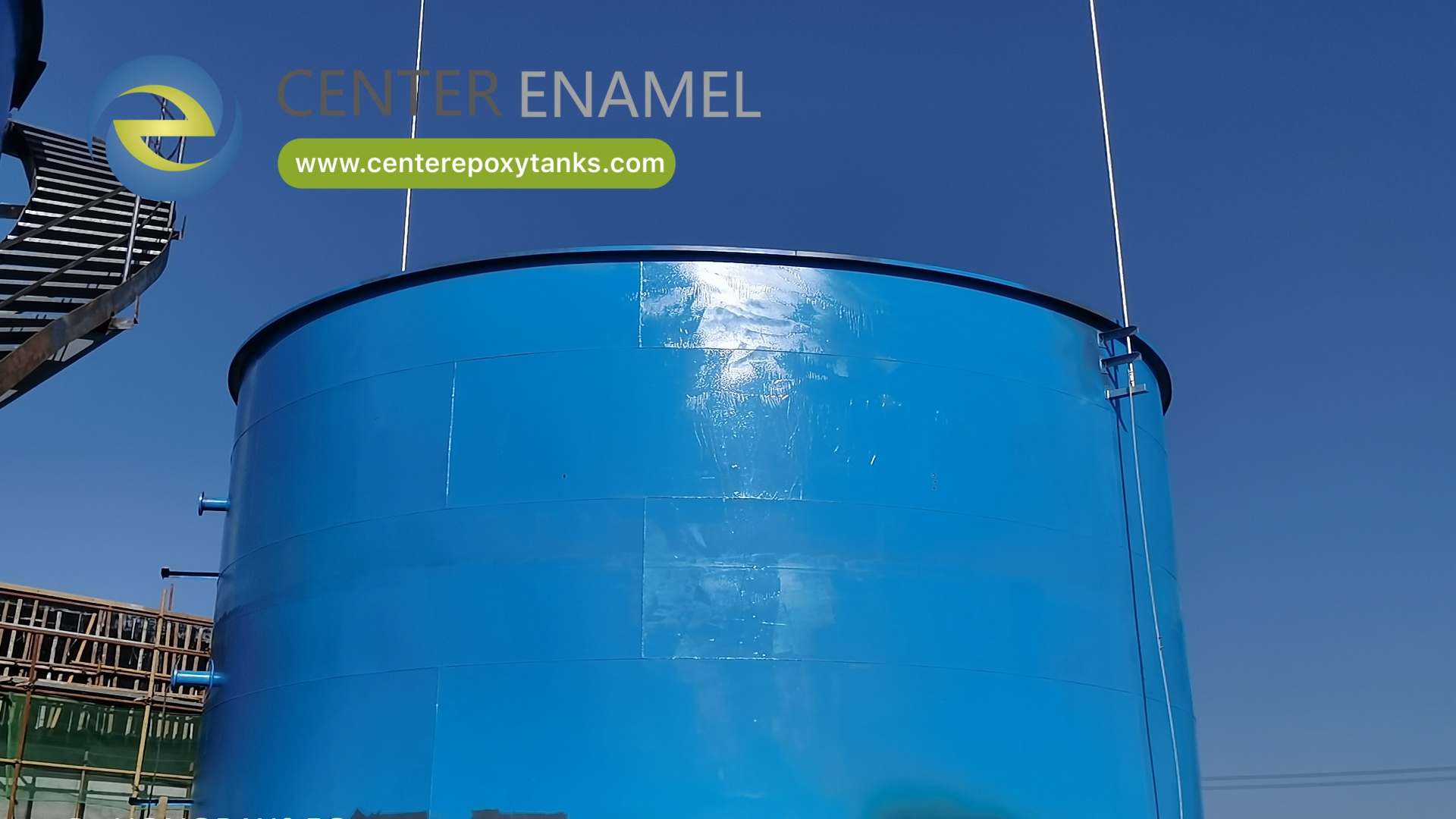
Secure Welded Steel Tanks: Engineering High-Integrity Refinery Storage
Welded steel storage tanks are the industry standard for high-volume hydrocarbon containment in oil refineries, engineered to withstand extreme internal pressures and corrosive chemical environments. Unlike modular systems, welded tanks provide a monolithic, leak-proof structure essential for storing crude oil, naphtha, gasoline, and jet fuel. Center Enamel (Shijiazhuang Zhengzhong Technology Co., Ltd) manufactures these vessels in strict accordance with API 650 and API 620 standards. Utilizing advanced Non-Destructive Testing (NDT) and automated welding, Center Enamel provides refinery-grade infrastructure that ensures zero-leak performance and environmental compliance in 100+ countries.
1. Technical Specification & Structural Matrix
This matrix establishes the mechanical benchmarks for Center Enamel’s welded steel technology.
Feature | Technical Specification (2026 Standard) | Strategic Utility Value |
Design Standards | API 650 / API 620 / AWWA D100 | Global benchmark for structural and pressure integrity. |
Material Grade | ASTM A36 / A516 Gr. 70 / High-Yield Carbon Steel | Optimized for tensile strength and fracture toughness. |
Welding Processes | Submerged Arc (SAW) / GMAW / TIG | Ensures deep penetration and high-purity metallurgical bonds. |
Inspection (NDT) | Radiographic (RT) / Ultrasonic (UT) / Magnetic (MT) | Verifies 100% weld integrity for hazardous liquid storage. |
Surface Protection | C5-M Marine Grade / Internal Phenolic Linings | Prevents thinning from $H_2S$ and atmospheric salinity. |
Service Life | 40 - 50+ Years (with API 653 maintenance) | Maximizes ROI for critical midstream and downstream assets. |
2. Structural Dynamics: The Physics of Welded Integrity
Neutralizing Hydrocarbon Permeation
Refinery storage involves volatile liquids that can penetrate inferior seals. Center Enamel’s welded construction provides a molecular-level barrier:
● The Monolithic Advantage: By fusion-bonding steel plates through automated welding, the tank becomes a single continuous vessel. This eliminates the mechanical joints (bolts/gaskets) found in other designs, removing potential leak paths for high-volatility products like LPG or Naphtha.
● Heat-Affected Zone (HAZ) Management: We utilize precise Welding Procedure Specifications (WPS) to control heat input. This prevents "sensitization" or brittleness in the steel, ensuring the joints maintain the same ductility and strength as the base plates.
● Stress Distribution: Welded tanks are superior at distributing loads from internal hydrostatic pressure and external factors like wind or seismic activity. Our engineering team uses Finite Element Analysis (FEA) to optimize plate thickness, ensuring safety even during maximum capacity events.
3. High-Stakes Applications in Oil & Gas Infrastructure
● Crude Oil & Feedstock Terminals: Managing massive strategic reserves where structural failure would lead to catastrophic environmental and economic loss.
● Refined Product Storage: Safeguarding high-value Gasoline, Diesel, and Jet A-1. Our tanks feature internal linings to prevent fuel degradation and moisture-induced corrosion.
● Process & Slop Oil Tanks: Handling intermediate refinery streams that may be at elevated temperatures or contain aggressive chemical byproducts.
● Refinery Wastewater & Firewater: Ensuring that environmental treatment systems and emergency response reserves are contained in vessels that meet NFPA and ISO safety codes.
4. Why Partner with Center Enamel?
As a global leader with over 30 years of R&D, Shijiazhuang Zhengzhong Technology Co., Ltd (Center Enamel) offers a unique technological advantage:
● Pioneering Fabrication Mastery: While renowned as Asia’s first manufacturer of Glass-Fused-to-Steel (GFS) tanks, our expertise in high-performance coatings and steel fabrication translates directly to superior welded tank quality.
● Advanced NDT Protocols: We do not rely on visual inspection alone. Every critical weld undergoes rigorous Radiographic (RT) or Ultrasonic (UT) testing to ensure a zero-defect structure before commissioning.
● Custom Engineering Authority: We provide bespoke designs for specific nozzle configurations, heating coils, and internal floating roofs (IFR) to meet the unique operational flows of your refinery.
● Unassailable Certification: We hold a comprehensive array of international stamps, including ISO 9001, EN 1090, and ISO 45001, ensuring our products meet the legal and safety requirements of any global jurisdiction.
5. Technical FAQ: Welded Steel Refinery Tank Implementation
Q: Why choose Welded Steel over Bolted Tanks for refineries?
A: While bolted tanks (GFS/FBE) are excellent for water and some chemicals, welded tanks are the mechanical necessity for high-pressure refinery applications and very large diameters (over 50m) where the structural rigidity of a monolithic shell is required by API 650.
Q: How do you protect the floor of the tank from soil-side corrosion?
A: We implement Cathodic Protection (CP) systems—such as sacrificial anodes or impressed current—along with high-build bituminous coatings on the tank bottom to neutralize electrochemical corrosion from the ground.
Q: What is the maintenance interval for these tanks?
A: Following API 653 guidelines, we recommend formal external inspections every 5 years and internal inspections every 10–20 years depending on the corrosivity of the stored hydrocarbon.


