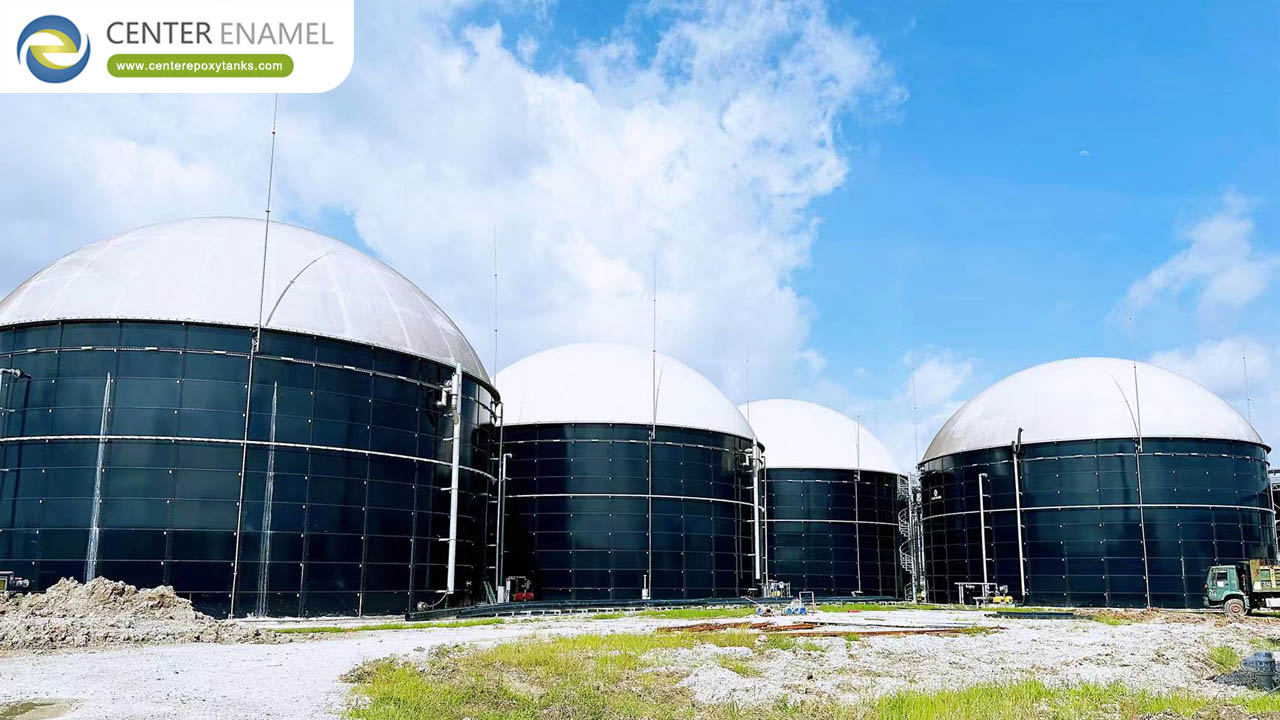
Bolted Steel Tanks as Biogas Digester Tanks: An Engineering Assessment
Bolted steel tanks—specifically those featuring Glass-Fused-to-Steel (GFS) or high-performance epoxy coatings—are widely considered the superior infrastructure choice for industrial and agricultural anaerobic digesters. Unlike poured-in-place concrete, which is prone to chemical cracking and long curing times, or field-welded tanks that suffer from inconsistent site-applied coatings, bolted tanks are manufactured in controlled factory environments. This ensures uniform coating thickness, absolute gas-tight integrity, and high corrosion resistance. Their modular design allows for rapid, crane-assisted assembly, significantly reducing construction timelines and facilitating easier maintenance, structural expansion, or site relocation compared to rigid, permanent concrete or welded assets.
The Engineering Case for Bolted Biogas Digesters
Biogas production creates an aggressive, corrosive environment characterized by high temperatures (mesophilic or thermophilic ranges), hydrogen sulfide (H2S) concentration, and structural loading from dense, viscous biomass. Bolted steel tanks address the critical failure points of traditional designs:
1. Factory-Controlled Coating Integrity
The most common cause of digester failure is corrosion from the inside out. In concrete tanks, acid attack can reach the reinforcement (rebar), causing spalling. In welded steel, site-applied coatings often have "holidays" (gaps) due to dust or humidity.
Bolted GFS Advantage: Glass-Fused-to-Steel panels are coated and fired in a high-temperature kiln at the factory. This creates an inert, abrasion-resistant, and chemically impervious surface that is virtually immune to the acidic byproduct of anaerobic digestion.
2. Structural Modularity & Speed
Time is money in biogas plant construction. Concrete tanks require weeks for pouring, curing, and structural verification. Bolted tanks arrive as a kit of pre-drilled, pre-coated panels.
3. "Asset Agility" (Adaptability)
Biogas project requirements change. If a facility needs to expand capacity or repurpose a tank for a different stage of the digestion process, bolted tanks are modular. Individual panels can be replaced if damaged, or the entire tank can be dismantled and relocated—a level of asset flexibility that concrete structures cannot offer.
Comparison Matrix: Digester Tank Technologies
Feature | Bolted Steel (GFS/Epoxy) | Reinforced Concrete | Welded Carbon Steel |
Construction Speed | High (Modular Assembly) | Very Low (Curing time) | Moderate (Site-welding) |
Corrosion Resistance | Excellent (Inert Surface) | Moderate (Requires Liners) | Low (Site-applied coat) |
Gas Tightness | High (Precision Gaskets) | Moderate (Prone to cracking) | High (If welded perfectly) |
Repair/Modification | High (Modular panels) | Low (Structural damage) | Low (Requires hot-work) |
Capital Lifecycle Cost | Optimized | High (Due to maintenance) | Moderate (Initial savings) |
Technical Considerations for Project Managers
When specifying bolted tanks for anaerobic digestion, prioritize the following parameters to ensure system longevity:
Sealant Specifications: Ensure the gaskets used between panels are rated for contact with the specific biogas chemistry (H2S and organic solvents). High-performance silicone or EPDM elastomers are standard for digester applications.
Roof Compatibility: The tank design must integrate with modern gas-holding technology, such as Double Membrane Gas Holders or geodesic domes, which require the tank wall to have high structural stiffness to support the perimeter mounting ring.
Thermal Insulation: Since digestion processes require precise temperature control (typically 35°C–55°C), bolted steel tanks are easily retrofitted with exterior insulation panels, significantly reducing the energy required to maintain thermal stability.
Frequently Asked Questions (FAQ)
Q: Are bolted steel tanks really gas-tight enough for biogas?
A: Yes. When designed specifically for anaerobic digestion, these tanks use precision-engineered, overlapping joints secured with specialized gaskets and bolts. When correctly assembled by certified technicians, they meet the stringent gas-tightness requirements necessary for commercial-scale biogas collection.
Q: Do these tanks require special foundations?
A: Bolted steel tanks are significantly lighter than concrete structures. This often results in lower foundation costs, as they require less heavy-duty concrete base work to support their self-weight, though a site-specific geotechnical engineering report is always required to determine local soil-bearing capacity.
Q: What is the lifespan of a GFS (Glass-Fused-to-Steel) digester?
A: With proper maintenance and correct chemical handling, GFS bolted tanks are designed to provide a service life exceeding 20–30 years, often outperforming the lifecycle of field-painted carbon steel tanks and maintaining their value much longer than concrete tanks that are exposed to acidic digestion processes.
Q: Can these tanks be used for high-temperature thermophilic digestion?
A: Yes, provided the tank design includes adequate thermal insulation. The material properties of glass-fused steel remain stable at the high temperatures (up to 60°C+) required for thermophilic digestion. Always consult the manufacturer to ensure the gasket and sealant materials are rated for your target temperature range.
Strategic Procurement Note
When selecting a supplier, verify their ISO certifications and ask for case studies specific to anaerobic digestion. A manufacturer might be excellent at water storage but lack the specific expertise in high-temperature chemical gaskets or structural loads required for a fully sealed, pressurized biogas digester. Demand structural calculations that account for the weight of the agitators and gas pressure/vacuum relief systems.


