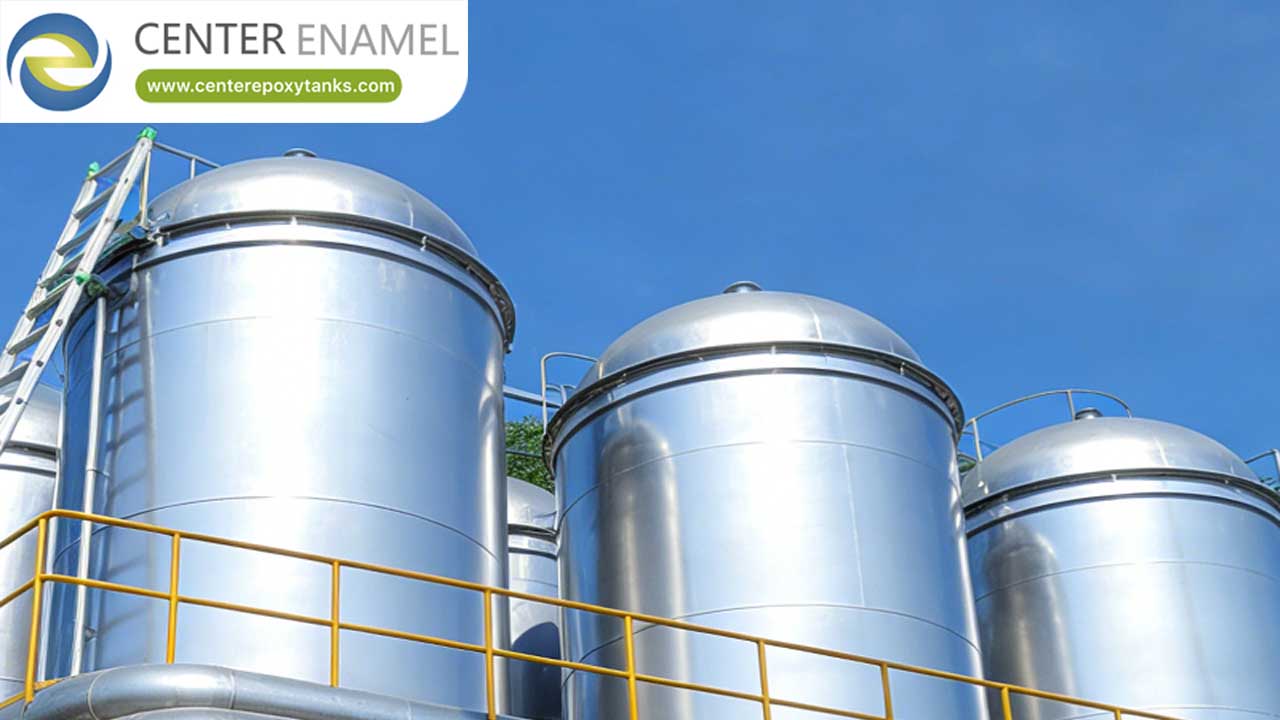
Reliable China Welded Stainless Steel Animal Feed Processing Tanks Manufacturer | Center Enamel
In the global pursuit of healthy livestock and sustainable agricultural production, the quality and consistency of animal feed are paramount. Modern animal feed production relies heavily on the precise blending and processing of diverse liquid and semi-liquid ingredients—from dense molasses and liquid fats to proteins, amino acids, and vital micro-ingredients.
To safely house and process these highly valuable components, feed mills require robust, hygienic, and precise liquid containment. Securing a Reliable China Welded Stainless Steel Animal Feed Processing Tanks Manufacturer is a critical strategic decision for feed producers worldwide.
Shijiazhuang Zhengzhong Technology Co., Ltd (universally recognized as Center Enamel) represents the pinnacle of advanced liquid containment engineering. With a distinguished track record spanning over three decades in specialized liquid storage and process vessel solutions, Center Enamel has established itself as the leading partner for global B2B buyers. Our advanced engineering, state-of-the-art fabrication, and unyielding quality controls produce meticulously designed, hygienic, and robust welded stainless steel tanks. Serving clients across more than 100 countries, we set the global standard for reliability, operational longevity, and biosecurity in the animal feed industry.
Beyond Storage: The Role of Welded Stainless Steel Tanks in Feed Processing
Welded stainless steel animal feed processing tanks are not simple storage bins; they are precision-engineered process vessels designed for the secure, hygienic, and stable handling of liquid ingredients. Within a modern, automated feed mill, these tanks perform several critical operational roles:
Liquid Ingredient Storage: Securely holding raw liquid inputs—such as viscous molasses, liquid fats, vegetable oils, liquid proteins, amino acids, and liquid vitamin/mineral pre-mixes—prior to batching.
Mixing, Agitation, and Blending: Homogenizing dense liquid components or systematically integrating liquid additives into dry formulations to guarantee uniform nutrient distribution across every feed pellet.
Biological Fermentation: Hosting biological processes for specialized fermented feeds or liquid feed additives, where precise temperature control and ultra-sterile environments are mandatory.
Aqueous Solution Preparation: Dissolving and preparing highly concentrated water-soluble vitamins, enzymes, or organic medications for uniform, micro-dispersion.
Why Welded Stainless Steel Outperforms Alternative Containment
Choosing the correct tank material is vital to protecting raw materials and ensuring animal safety. The table below outlines how stainless steel stacks up against alternative materials in animal feed applications:
Engineering Parameter | Welded Stainless Steel (AISI 304L/316L) | Carbon Steel / Painted Steel | Plastic / FRP Tanks |
Hygiene & Biofilm Resistance | Excellent. Smooth, non-porous surface prevents bacterial and mold growth. | Poor. Micro-pores, rust flakes, and peeling coatings harbor pathogens. | Moderate. Prone to interior scratching which acts as a breeding ground for bacteria. |
Corrosion Resistance | Superior. Highly resistant to fatty acids, organic acids, and CIP chemicals. | Low. Readily corrodes when exposed to organic acids or moisture, leading to rust. | High. Chemical-resistant but vulnerable to structural degradation over time. |
Structural Integrity | Excellent. High tensile strength, withstands internal pressure and dynamic loads. | Good. Strong but loses integrity over time as rust compromises the structural steel sheets. | Low. Prone to environmental stress cracking and structural deformation under high volumes. |
Temperature Management | Excellent. Readily integrates steam/glycol jackets and high-density insulation. | Poor. Difficult to insulate efficiently; prone to condensation and heat loss. | Extremely Poor. Poor thermal conductivity; cannot easily handle direct steam heating. |
Engineering Feed Safety: Center Enamel's Advanced Manufacturing Process
Center Enamel's standing as a premier China welded stainless steel tank manufacturer is rooted in sophisticated engineering, specialized production lines, and a multi-tiered quality assurance program.
1. Dedicated Stainless Steel Fabrication Facilities
To rigorously prevent any risk of cross-contamination with carbon steel particles (which can compromise the corrosion resistance of stainless steel), Center Enamel operates completely isolated stainless steel fabrication halls. These facilities feature advanced machinery, including high-precision CNC laser cutters, plate rolling machines, and automated welding stations optimized for stainless steel alloys.
2. Precision Welding for Crevice-Free Construction
The interior hygiene of an animal feed tank is heavily dependent on weld quality. Our certified welders utilize automated orbital TIG/MIG welding technology to achieve full-penetration, seamless, monolithic joints. By eliminating crevices, internal pockets, and uneven weld beads, we ensure there are zero dead zones where organic feed residue can settle, rot, or harbor harmful bacteria like Salmonella or E. coli.
3. Surface Passivation & Sanitary Finishing
Post-fabrication, all interior welds are ground smooth and blended. The entire tank interior undergoes a rigorous chemical pickling and passivation process. This critical step restores the chromium oxide passive layer of the stainless steel, maximizing its natural corrosion resistance and ensuring a smooth, non-reactive, and easy-to-clean sanitary finish.
4. Custom Process Integration
We construct and customize your tanks to fit seamlessly into automated feed mill production lines:
Agitation Systems: Tailored mountings for high-torque agitators (paddle, propeller, or turbine) to maintain the suspension of dense liquids like molasses.
Thermal Control Jackets: Dimple jackets or internal heating coils to regulate the viscosity of liquid fats and oils.
Level and Temperature Sensor Ports: Pre-installed sanitary nozzles for continuous digital process monitoring.
Clean-In-Place (CIP) Systems: Integrated spray balls for automated, thorough, and chemical-efficient sanitization cycles.
Technical Standards & Quality Controls
Every tank leaving our factory conforms to stringent international quality management and design systems:
Our Structural and Quality Certifications:
ISO 9001, ISO 45001, and ISO 24001 certified manufacturing facility.
ASME Section VIII, API 650, and AWWA D100 compliant structural design protocols.
FDA compliant materials for food-grade contact surfaces.
Our multi-stage quality control process guarantees zero-defect deliveries:
Positive Material Identification (PMI): Verifying the alloy composition of every raw plate against Mill Test Reports (MTRs).
Non-Destructive Testing (NDT): 100% visual inspection, dye penetrant testing, and ultrasonic or radiographic testing of critical load-bearing welds.
Hydrostatic and Pressure Testing: Filling finished vessels with water to verify absolute structural integrity and leak-proof performance under design loads.
Global Execution, Proven Agricultural Expertise
While custom feed processing setups are often subject to strict B2B client confidentiality agreements, Center Enamel's technical capabilities are proven by our massive footprint in highly demanding municipal, agricultural, and industrial sectors.
Our extensive project references for global giants—such as Muyuan Group and New Hope Group (two of China’s largest animal husbandry and feed conglomerates)—directly demonstrate our deep familiarity with the rigorous operational, environmental, and biosecurity demands of the modern livestock industry. Additionally, our successful wastewater treatment and storage projects for food and beverage leaders like the Coca-Cola Company (Malaysia), Mengniu Dairy Group, Yili Group, and major breweries like the Budweiser Beer Group prove that we routinely meet the most exacting hygiene and material purity standards globally.
Frequently Asked Questions (FAQs)
1. Which stainless steel grade is best for liquid animal feed ingredients?
For most general liquid ingredients like fats, oils, and simple aqueous solutions, AISI 304 or 304L stainless steel provides outstanding corrosion resistance and structural longevity. However, for highly acidic ingredients, concentrated fermentation media, or liquids with high salt content, we recommend upgrading to AISI 316 or 316L, which contains molybdenum for enhanced protection against pitting and localized crevice corrosion.
2. Why are welded stainless steel tanks preferred over bolted tanks for active feed processing?
While bolted stainless steel tanks are highly cost-effective for static, large-volume water and liquid storage, welded stainless steel tanks are preferred for active processing. Active processing involves high-torque agitation, rapid temperature fluctuations (steam heating/glycol cooling), and intensive Clean-In-Place (CIP) regimes. Welded tanks offer a seamless, monolithic structure that handles dynamic physical stresses, eliminates gasket wear, and leaves zero micro-crevices for organic buildup.
3. Can Center Enamel customize tanks for high-viscosity liquids like molasses?
Yes. Molasses is highly dense and viscous, requiring specialized tank geometry and structural design. We customize these tanks with heavy-duty structural reinforcement, sloped or conical bottom configurations for complete drainage, specialized high-torque agitators, and heating jackets to lower product viscosity and facilitate easy pumping.


