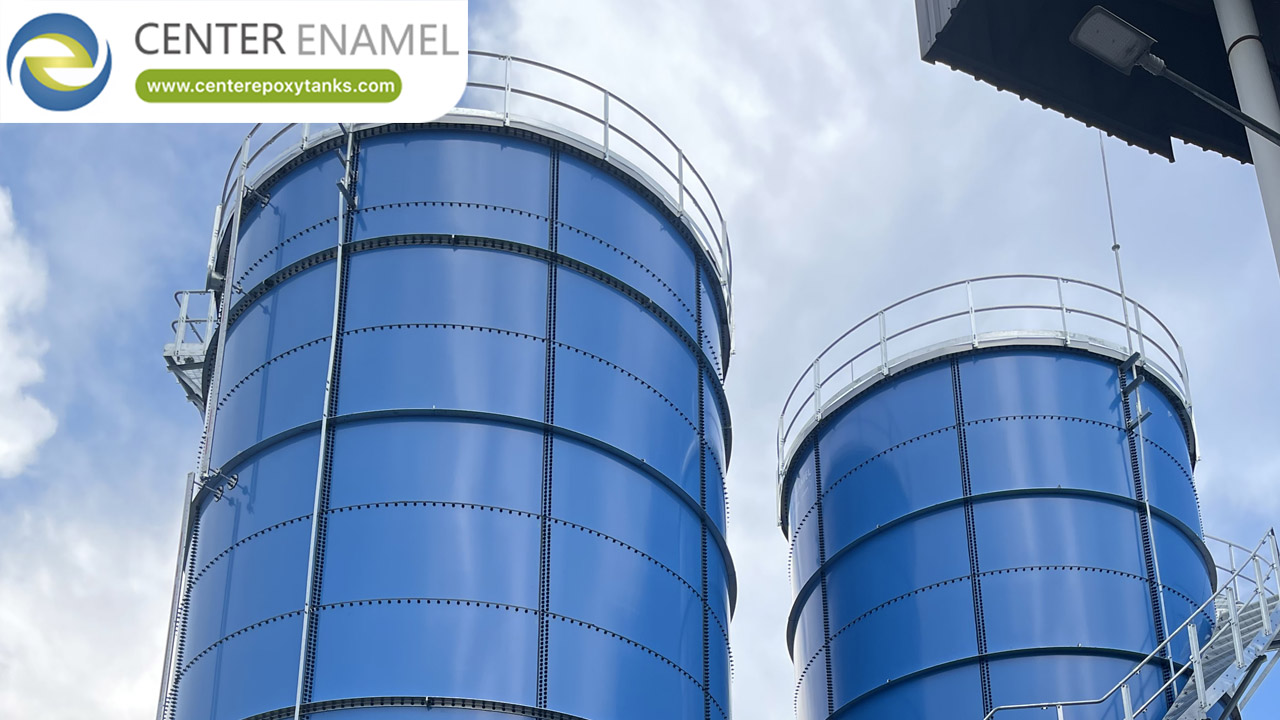
Fusion Bonded Epoxy (FBE) Steel Tanks: Engineering, Compliance, and Longevity Guide
Fusion Bonded Epoxy (FBE) steel tanks have become a premier choice for industrial and municipal storage due to their unique balance of structural strength and chemical durability. As a leading China-based manufacturer, Center Enamel (Shijiazhuang Zhengzhong Technology Co., Ltd) utilizes advanced thermoset coating technology to create a seamless, chemically inert barrier. These tanks offer a high-performance alternative to traditional field-welded or concrete structures, providing rapid installation, excellent impact resistance, and a significantly lower total cost of ownership (TCO).
1. How It Works: The Fusion Bonded Epoxy Process
The integrity of an FBE tank is defined by a rigorous, factory-controlled application process that transforms raw steel panels into highly resilient storage components.
Substrate Preparation: Steel panels are grit-blasted to a "near-white" condition (meeting SSPC-SP 10 standards), ensuring the surface profile is perfectly prepped for mechanical bonding.
Electrostatic Application: Epoxy resin powder is electrostatically applied to the steel, ensuring uniform coverage over complex bolt holes and edges—the critical areas where liquid-applied paints typically fail.
Thermoset Curing: Panels are cured in high-temperature ovens. The powder melts and undergoes a chemical cross-linking reaction, forming a permanent, hard, and flexible barrier that is chemically bonded to the steel substrate.
2. Strategic Advantages of FBE Tanks
For project managers and engineers, FBE tanks offer distinct operational advantages that outperform traditional coating methods.
Superior Impact Resistance: Unlike glass-lined coatings, which can be brittle and prone to chipping, FBE coatings are inherently flexible. They can withstand physical impacts, seismic shifts, and structural deflection without cracking, making them ideal for high-traffic or dynamic environments.
Repairability: In the rare event of surface damage, FBE tanks are easily inspected and touched up in the field using specialized repair kits. This ensures the integrity of the corrosion barrier is maintained for decades without requiring structural intervention.
Compliance & Safety: Our FBE storage systems meet or exceed rigorous international standards, including AWWA D103-19, ISO 28765, and NSF/ANSI 61 (for potable water), ensuring your facility remains compliant with local environmental and health regulations.
3. Comparative Overview: Storage Technology
Feature | Fusion Bonded Epoxy (FBE) | Glass-Fused-to-Steel (GFS) | Reinforced Concrete |
Coating Flexibility | High (Resists cracking) | Low (Brittle) | N/A |
Impact Resistance | Excellent | Moderate | N/A |
Field Repair | Easy (Touch-up kits) | Difficult | Requires Structural Work |
Installation Speed | Rapid (Bolted) | Rapid (Bolted) | Very Slow |
Best Use Case | Industrial Liquids & Wastewater | High-Purity Water / Digesters | Large Capacity / Underground |
4. Frequently Asked Questions (FAQ)
Q: How do FBE tanks perform in coastal or humid environments?
A: Excellent. Because the epoxy is fusion-bonded to the steel, it creates a completely airtight and watertight seal that resists oxidation, even in high-salinity or high-humidity regions.
Q: Can these tanks be used for drinking water?
A: Yes. We offer FBE tanks that are NSF/ANSI 61 certified, meaning they are rigorously tested and safe for potable water storage, ensuring no harmful substances leach into the supply.
Q: What is the typical service life of an FBE tank?
A: With proper maintenance and scheduled inspections, FBE tanks are engineered to provide a service life of 20 to 30+ years, offering a compelling return on investment compared to concrete or field-welded steel tanks that require constant repainting.
Q: Why choose FBE over Glass-Fused-to-Steel (GFS)?
A: While GFS is excellent for extreme chemical inertness, FBE offers superior impact resistance and flexibility. If your tank is in an area subject to physical stress or requires frequent maintenance and repair accessibility, FBE is often the more pragmatic, durable choice.
Global Manufacturing Excellence
Center Enamel bridges the gap between high-tech manufacturing and site-specific project needs. Our "Smart Factory" offers end-to-end management, including Finite Element Analysis (FEA) for structural design, automated powder-coating lines, and rigorous high-voltage (holiday) testing to ensure zero-defect panel delivery.
Whether you are building a municipal wastewater plant or an industrial buffer tank, we ensure your infrastructure is built to last.
Are you evaluating storage solutions for a specific industrial application, or would you like to discuss compliance standards like seismic resistance and fire-suppression capacity for your region?


