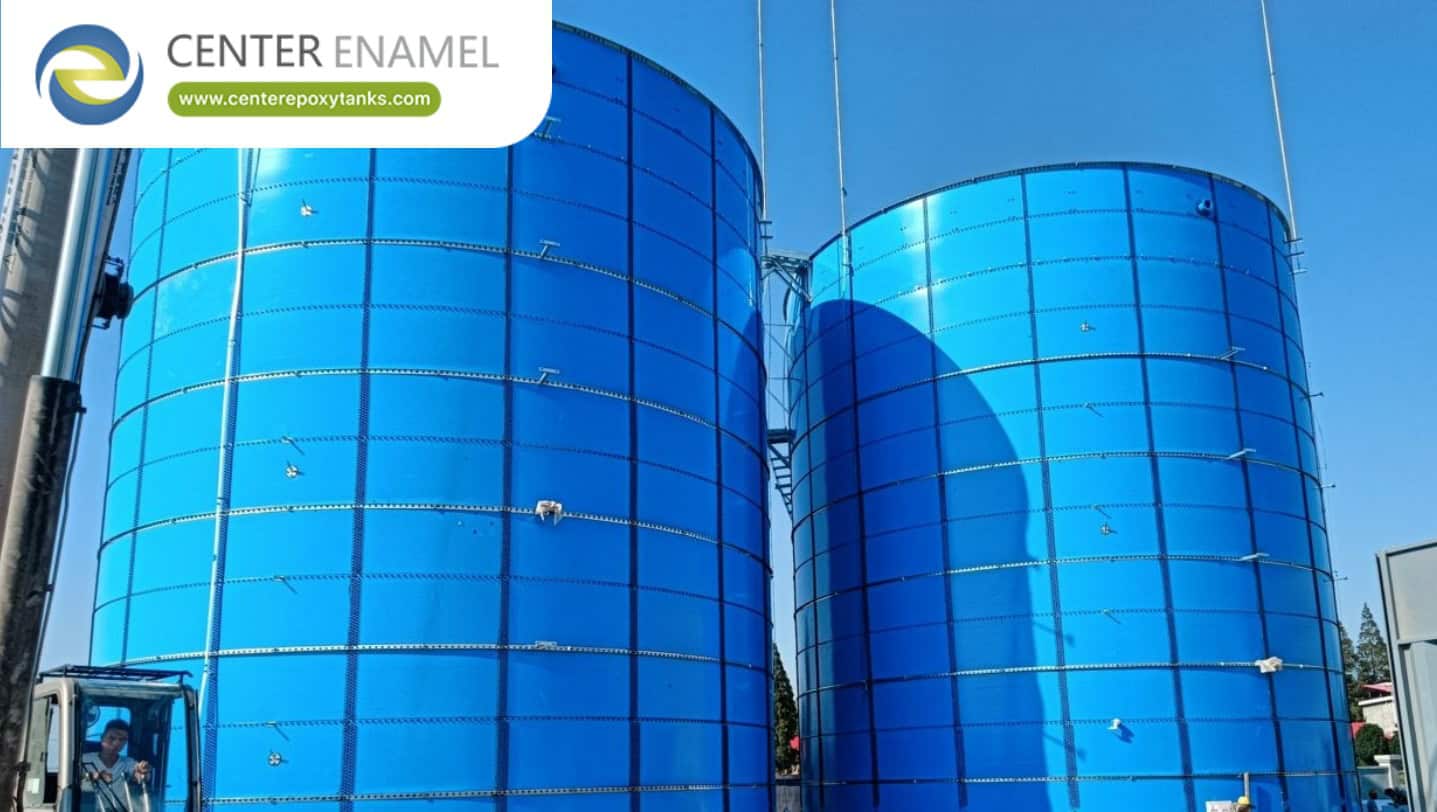
Epoxy Coated Steel Tanks for Palm Oil Mill Effluent (POME) Treatment
Palm Oil Mill Effluent (POME) is notoriously difficult to manage due to its extremely high chemical oxygen demand (COD), acidic pH, and high organic solids content. Traditional open-lagoon systems are increasingly being replaced by closed-loop, high-efficiency treatment systems to meet strict environmental regulations and capture methane for energy. Epoxy Coated Steel Tanks—specifically those utilizing Fusion Bonded Epoxy (FBE) technology—have emerged as the gold standard for POME containment, offering superior corrosion resistance and structural longevity compared to concrete or conventional painted steel.
1. Technical Challenges of POME Containment
POME treatment presents unique engineering hurdles that require highly specialized storage infrastructure:
● Highly Corrosive Environment: POME contains volatile organic acids and fluctuating pH levels that rapidly degrade standard carbon steel and crack conventional concrete.
● High Organic Loading: With COD/BOD levels often exceeding 60,000–70,000 mg/L, tanks must be structurally designed to handle high-density sludge and aggressive anaerobic digestion processes.
● Environmental Compliance: As global sustainability audits become more rigorous, palm oil mills must move toward "Zero Liquid Discharge" (ZLD) or methane-capture biogas systems, necessitating leak-proof, gas-tight containment.
2. The Fusion Bonded Epoxy (FBE) Advantage
Modern FBE-coated bolted steel tanks provide a "chemical fortress" for POME treatment:
Why FBE Outperforms Traditional Coatings:
● Molecular Bonding: Unlike liquid-applied paints, FBE powder is thermally fused to the steel surface at high temperatures, creating an inseparable, continuous molecular bond.
● Pinhole-Free Assurance: Factory-controlled electrostatic application, followed by high-voltage "holiday testing," ensures a non-porous barrier that prevents localized chemical attack.
● Abrasion Resistance: The cured FBE film is exceptionally hard, providing the resilience needed to withstand the mechanical wear caused by circulating grit and sludge within anaerobic digesters.
● Modular Construction: The bolted, pre-fabricated panel design allows for rapid deployment on remote palm oil mill sites. It also facilitates easier expansion or even relocation if the mill’s processing capacity changes.
3. Procurement Checklist for POME Tanks
When sourcing tanks for POME treatment, ensure your manufacturer demonstrates the following capabilities:
Feature | Importance for POME Treatment |
Coating Standards | Must adhere to high-temperature curing to ensure FBE chemical immunity. |
Seismic/Structural Design | Must account for high-density sludge loads and local wind/seismic requirements. |
Leak-Proof Certification | Essential for preventing groundwater contamination in environmentally sensitive regions. |
Integration Readiness | Ability to integrate with biogas recovery, pH control, and automated monitoring systems. |
4. Frequently Asked Questions (FAQ)
Q: Are epoxy coated tanks suitable for anaerobic digesters (USR/UASB reactors)?
A: Yes. FBE-coated tanks are ideal for Upflow Anaerobic Sludge Blanket (UASB) and Upflow Sludge Reactor (USR) configurations because they provide a smooth, chemically inert surface that prevents sludge buildup and resists the acids generated during digestion.
Q: How do these tanks compare to concrete tanks?
A: Epoxy coated steel tanks offer a lower total cost of ownership. They are installed in a fraction of the time, are more resistant to the acidic nature of POME, and allow for easier site inspection and maintenance.
Q: How does FBE coating perform in tropical climates?
A: High-quality FBE is UV-resistant and designed to maintain its structural integrity and color consistency under extreme temperatures, making it perfectly suited for the tropical environments where palm oil mills are typically located.
Engineering Your POME Treatment Strategy
Transitioning from traditional lagoons to modular FBE-coated tanks is a strategic investment in the future of your facility. By selecting a manufacturer with a proven history in international industrial water treatment, you ensure regulatory compliance, reduce operational downtime, and maximize the energy recovery potential of your POME.
Are you currently planning to upgrade an existing lagoon-based system to an automated biogas recovery plant, or are you designing a new processing mill?


