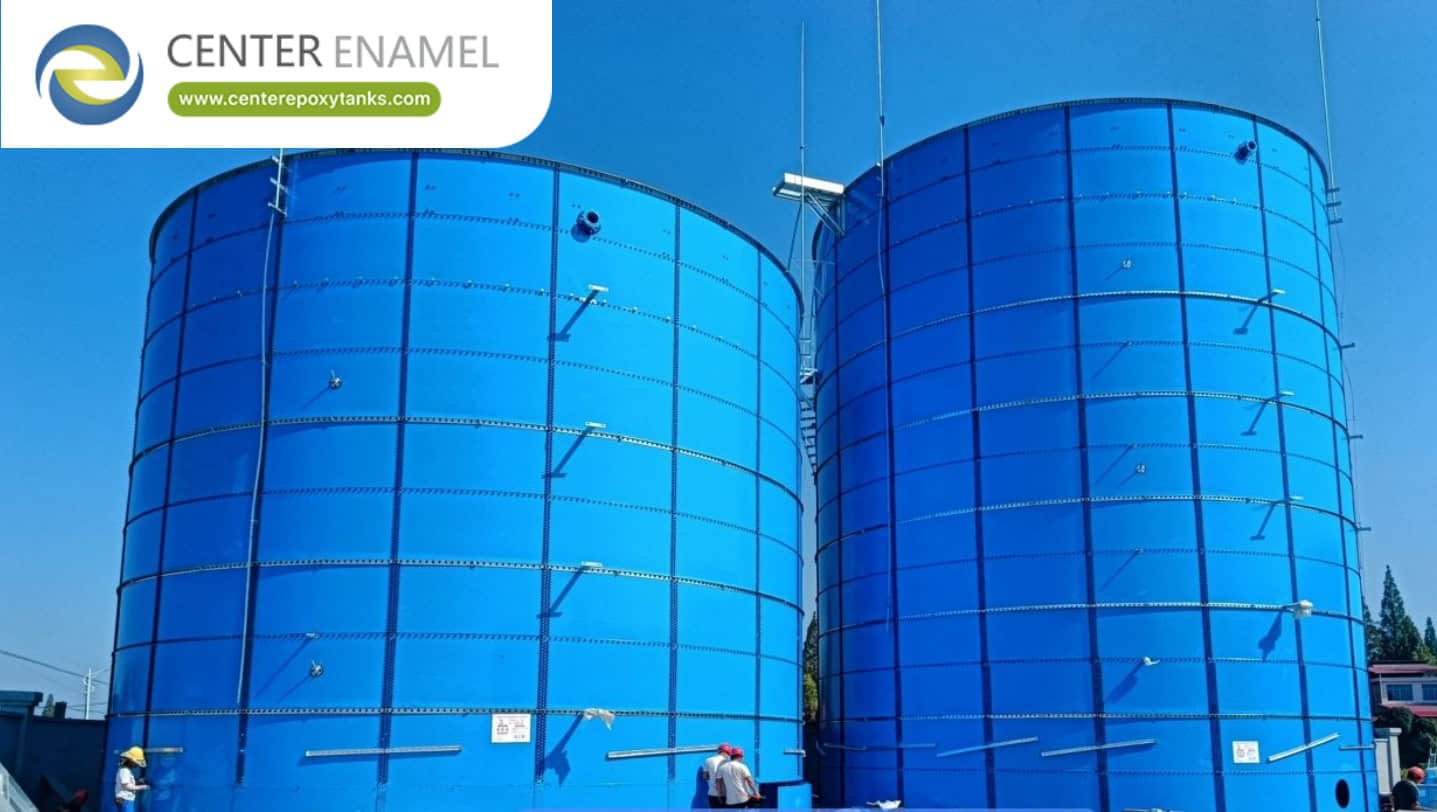
China’s Epoxy Coated Steel Anaerobic Digesters: An Engineering & Procurement Guide
The anaerobic digestion (AD) industry is witnessing a shift toward modular, factory-coated steel solutions. As global demand for renewable energy and industrial wastewater treatment grows, China has emerged as the global hub for manufacturing high-performance epoxy-coated steel tanks. These systems provide the structural integrity required for large-scale biogas projects while eliminating the variability of on-site construction.
1. Technical Edge of Chinese-Manufactured Epoxy Tanks
Unlike traditional concrete digesters that are prone to cracking and require extensive on-site labor, epoxy-coated steel tanks produced in China are engineered for precision and longevity.
● Advanced Coating Technology: Leading manufacturers use automated spraying lines followed by controlled high-temperature curing. This process ensures a uniform, chemically inert coating that withstands the variable pH levels typical of methane-producing bacteria.
● Modular Assembly: The bolt-together design allows the tank components to be shipped efficiently in standard containers. This modularity reduces total project costs and accelerates site commissioning.
● Structural Engineering: Tanks are designed using advanced CAD/CAE software to meet specific seismic and wind load requirements for diverse global climates, from the humid tropics of Southeast Asia to the arid regions of the Middle East.
2. Comparison: Storage Technology for Anaerobic Digestion
For project managers and engineers, selecting the right tank material is critical to the ROI of the biogas facility.
Feature | Epoxy Coated Steel | Glass-Fused-to-Steel (GFS) | Concrete |
Corrosion Resistance | Excellent | Superior | Moderate (requires lining) |
Construction Speed | Fast (Bolted) | Fast (Bolted) | Slow (Cast-in-place) |
Flexibility | High (Thermoset) | Low (Ceramic-like) | Zero |
Initial CAPEX | Optimized | Premium | Variable/High |
Ideal Process | CSTR, UASB, Landfill Leachate | Wastewater, Biogas | Municipal Sewage |
3. Why Global Procurement Chooses China
The Chinese manufacturing sector for environmental infrastructure has matured into a global leader due to several key factors:
1. Integrated Supply Chain: Manufacturers have localized access to high-grade steel, advanced resins, and logistical hubs, allowing for competitive pricing without compromising quality.
2. Turnkey Engineering Support: Top-tier firms provide more than just the tank; they offer comprehensive project design, including structural calculations, layout optimization, and on-site assembly supervision.
3. Certification & Quality Control: ISO-certified manufacturing environments ensure that every panel is tested for holidays (pinholes), adhesion, and thickness before leaving the factory.
4. Key Applications in Waste-to-Energy
Epoxy-coated steel tanks serve as the containment heart for various anaerobic technologies:
● CSTR (Continuously Stirred Tank Reactor): Ideal for processing agricultural waste and manure.
● UASB (Upflow Anaerobic Sludge Blanket): Used for treating high-strength industrial wastewater.
● Leachate Treatment: Engineered to withstand the aggressive and complex chemistry of landfill leachate.
● Municipal Sewage: Reliable storage for large-scale municipal sludge digestion projects.
5. Procurement Checklist for International Buyers
When sourcing from a Chinese manufacturer, ensure your vendor can verify the following:
● Coating Testing: Request standard reports for adhesion and high-voltage holiday testing.
● Structural Verification: Ensure they can provide design calculations stamped by a qualified engineer (P.E.) suitable for your local building codes.
● Assembly Experience: Inquire about their track record for international projects—specifically their ability to provide assembly manuals or on-site supervision teams.
● Warranty: Verify terms for both the steel structure and the integrity of the epoxy coating.
Frequently Asked Questions (FAQ)
Why choose epoxy-coated steel over glass-fused-to-steel?
Epoxy coatings offer superior impact resistance and flexibility. In processes where structural vibration or minor ground movement is expected, the thermoset properties of epoxy are often preferred over the rigid nature of glass-fused systems.
Are these tanks suitable for acidic biogas environments?
Yes. Modern industrial epoxy formulations are specifically engineered to remain inert in pH-aggressive environments, preventing the corrosion that typically occurs in standard painted steel tanks.
Can these tanks be shipped internationally?
Absolutely. The bolted design is specifically optimized for shipping via standard 20ft/40ft containers, making them highly cost-effective to transport globally.
Do you provide installation support?
Leading manufacturers typically offer three levels of support: (1) Detailed assembly manuals and drawings, (2) Virtual technical assistance, and (3) On-site assembly supervision services for complex projects.
Are you currently in the design phase for an anaerobic digestion project, or are you looking to replace an aging, high-maintenance concrete digester? I can help refine your technical specifications or compare cost-benefit ratios for your specific project scale.


