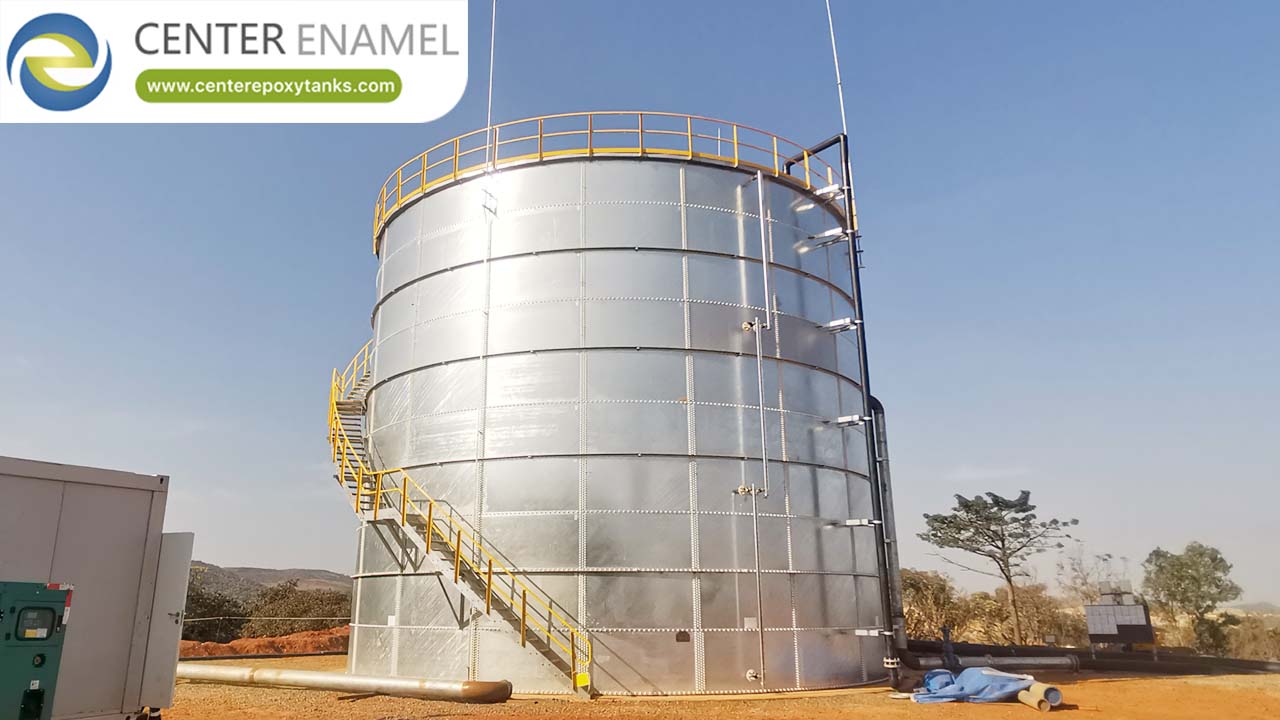
Galvanized Steel Silos for Bulk Storage: Structural Engineering & Procurement Guide
Industrial storage for bulk particulate solids—such as grains, animal feed, cement, biomass pellets, and mineral aggregates—demands containment infrastructure capable of resisting extreme dynamic loads and environmental weathering. Galvanized steel silos represent the modern engineering baseline for these applications.
Unlike liquids, bulk granular materials exert asymmetric forces on silo walls that are highly dependent on friction, internal shear, and discharge discharge flow profiles (funnel flow versus mass flow). Sourcing galvanized steel silos requires moving beyond simple volumetric pricing to evaluate the exact underlying structural mechanics, material steel grades, and coating longevity.
1. Structural Engineering & Bulk Pressure Mechanics
A common mistake in silo procurement is applying standard hydrostatic fluid pressure math to granular bulk solids. Granular materials transfer a significant portion of their vertical mass directly into the silo shell through wall friction.
The Janssen Pressure Model
To determine the design wall thicknesses and prevent structural buckling under fully loaded conditions, engineering teams utilize Janssen’s classical theory (codified under EN 1991-4). The lateral horizontal pressure acting against the cylindrical shell at any given depth is calculated using the following thermodynamic equilibrium:
● is the absolute vertical depth measured from the top surface of the material bed (m).
As depth approaches infinity, the term inside the bracket approaches 1.0, meaning the lateral pressure reaches a asymptotic maximum value—completely unlike liquids, where pressure scales linearly without limit. This high frictional force exerts a massive vertical compressive load on the silo walls, making the thin steel shell highly vulnerable to axial compressive buckling (often referred to as "elephant's foot" failure near the base).
Regulatory Structural Design Compliance
To guarantee structural integrity against wind loads, seismic events, and dynamic emptying pressures, premium manufacturers engineer their silos strictly according to the latest global codes:
● EN 1993-4-1:2026 (Eurocode 3): Design of Steel Structures - Part 4-1: Silos. This mandates precise calculation loops for buckling resistance across varying aspect ratios.
● ANSI/ASAE EP433: Loads Exerted by Irish/Agricultural Grains on Bins.
2. Material Science & Galvanization Engineering
The operational life of a steel silo is dictated by the chemical composition of the substrate steel and the thickness of its sacrificial zinc layer. Top-tier global manufacturers shift away from commodity structural steels to dedicated high-tensile, hot-dip galvanized sheet profiles.
Steel Grade Selections
Silo walls utilize structural steel sheets rolled to tight geometric tolerances. Typical material specifications include:
● S350GD+Z to S550GD+Z: High-strength structural steel grades common in European and international procurement, offering yield strengths from 350 to 550 MPa.
● Q235B to Q355B / Q420: Standard high-strength carbon steels utilized by Chinese manufacturers for structural stiffeners, support columns, and compression rings.
Zinc Coating Densities & Environmental Lifecycle
The notation "Z" followed by a number indicates the total mass of zinc applied to both sides of the steel sheet measured in grams per square meter (textg/m2). Selecting the correct density is a critical cost-to-performance calculation:
● Z275 (275g/m2): Baseline industry standard. Suitable for dry, inland agricultural regions with low ambient humidity and non-corrosive atmospheric profiles. Standard lifecycle: 10 to 15 years before first major maintenance.
● Z450 (450g/m2): Industrial performance grade. Recommended for high-humidity agricultural zones, industrial manufacturing clusters, and moderate coastal installations. Standard lifecycle: 20 to 30 years.
● Z600 (600g/m2): Heavy duty/Marine grade. Deployed in immediate coastal ports, chemical processing plants, or where storing highly corrosive materials (e.g., specific synthetic fertilizers or high-moisture processed proteins).
3. Structural Typologies: Bolted vs. Spiral (Lipp) Silos
When evaluating a manufacturing partner, procurement managers must choose between two distinct mechanized assembly typologies for circular cylindrical steel walls.
Engineering Attribute | Assembled Bolted Steel Silos | Spiral Continuous (Lipp) Silos |
Mechanical Joints | High-strength structural bolts (Grade 8.8 or 10.9) paired with EPDM liquid-tight washers. | Continuous double-seam mechanical folding using a specialized onsite rolling machine. |
Material Flexibility | Can utilize variable steel plate thicknesses up to 4mm or higher at the high-stress bottom rings. | Restricted to the mechanical bending limits of the forming machine (typically limited to le 4mm). |
Logistics & Freight | Factory pre-fabricated, punched, and nested. Flat-packs highly efficiently into standard sea containers. | Requires shipping massive coils of raw steel plus heavy specialized forming machineries directly to the site. |
Deconstruction / Scalability | Fully Modular. Panels can be unbolted to replace damaged zones, increase height, or relocate entirely. | Permanent mechanical seal. Cannot be altered or modularly expanded after folding is complete. |
Onsite Labor Profile | Demands basic systematic assembly labor; high reliance on torque verification logs. | Demands highly skilled machine operators; rapid vertical erection speeds once set up. |
4. Technical Procurement & Vetting Checklist
When drafting a Request for Proposal (RFP) for international bulk containment assets, utilize this technical scorecard during the vendor auditing phase:
● External Vertical Stiffener Profile: Ensure the silo utilizes external vertical stiffeners with a closed hat-channel or heavy omega profile. These columns carry the high vertical compressive load down to the foundation ring, preventing shell plate wrinkling.
● Hardware and Sealing Protocols: All panel-to-panel joints must be sealed using a continuous, non-aging butyl rubber sealant strip. Fasteners must be hot-dip galvanized to match or exceed the shell's zinc rating, utilizing integrated rubber caps to eliminate localized galvanic corrosion at the bolt heads.
● Aeration and Temperature Monitoring: For grain and biomass storage, verify the inclusion of automated temperature cable arrays suspended from the roof beam framework and a high-volume under-floor aeration system to eliminate localized hot-spots and moisture migration.


