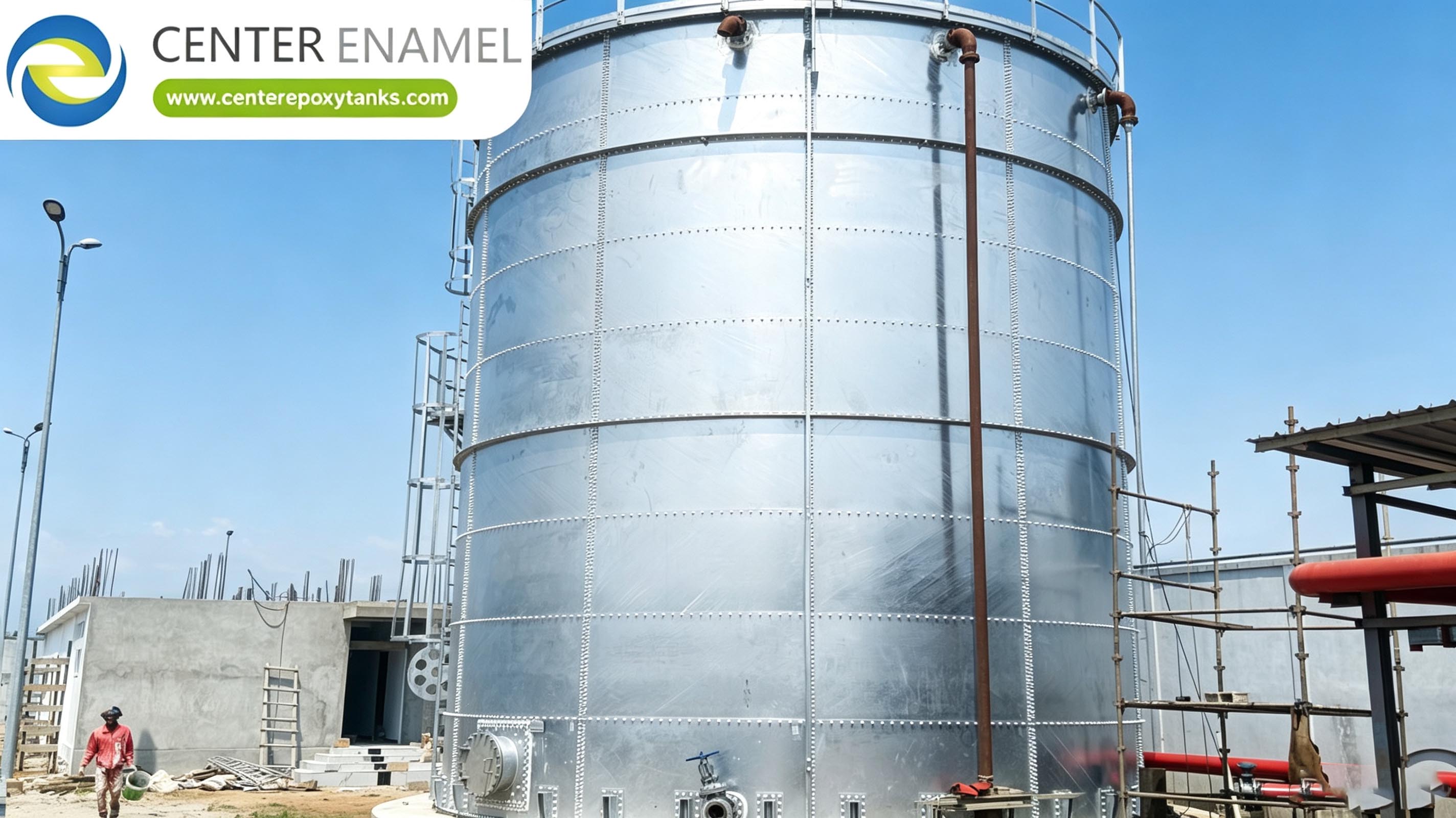
What is a Galvanized Steel Bulk Material Storage Tank?
A galvanized steel bulk material storage tank (frequently referred to as a bulk storage silo or dry-material hopper bin) is a heavy-duty, engineered cylindrical container designed for the large-scale, secure containment of dry granular solids, powders, pellets, and agricultural commodities. Unlike liquid storage tanks, these structures are specifically built to handle the unique physics of dry bulk solids—such as angle of repose, wall friction, and dynamic discharge pressures during mass flow.
Constructed from high-tensile structural steel sheets treated with a heavy, protective layer of zinc via hot-dip galvanization, these tanks provide exceptional structural strength and long-term resistance to environmental weathering and abrasive wear.
Core Engineering and Structural Characteristics
The performance and reliability of a galvanized steel bulk storage tank stem from several advanced engineering features:
Hot-Dip Galvanized Protection: Individual steel panels are coated with a thick layer of zinc (often meeting specifications like G115 or G145, or conforming to ASTM standards), which acts as a physical barrier and a sacrificial anode to completely prevent rust.
Corrugated or Stiffened Wall Profiles: To handle the immense outward lateral pressures exerted by tons of stored bulk material, tank walls utilize precision-rolled corrugations or external vertical stiffeners that maximize vertical load-bearing capacity without requiring excessively thick steel plates.
Modular Bolted Construction: Rather than relying on complex field welding, modern bulk tanks are fabricated in factory-controlled environments, shipped in modular panels, and bolted together on-site with high-tensile hardware and specialized weather-tight seals.
Specialized Discharge Hoppers: The base of the tank is typically engineered with a conical hopper or structural discharge cone designed to facilitate smooth, gravity-fed material outflow (mass flow or funnel flow) for grains, plastics, minerals, or chemicals.
Data Table: Comprehensive Comparison of Bulk Storage Tank Options
Technical Parameter | Galvanized Steel Bulk Storage Tanks | Cast-in-Place Concrete Silos | Smooth-Wall Carbon Steel Bins |
Corrosion Defense | Heavy sacrificial zinc hot-dip coating prevents rust for decades | Susceptible to carbonation, micro-cracking, and chemical spalling | Requires periodic repainting and field-applied coatings |
Installation Speed | Rapid modular bolting completed in weeks with minimal heavy equipment | Slow civil construction requiring weeks of framing and concrete curing | Moderate installation speed; heavy rigging required |
Modularity & Scalability | High; bolted panel design allows straightforward future capacity expansion | Permanent monolithic structure; impossible to expand without rebuilding | Rigid welded structure; difficult to alter safely |
Internal Surface Friction | Smooth galvanized panels minimize material bridging and hang-ups | Textured concrete surfaces can trap powders and require frequent cleaning | Moderate; smooth if lined, but prone to wear over time |
Frequently Asked Questions (FAQ)
Q: What materials can be stored in a galvanized steel bulk storage tank?
A: They are widely used for storing agricultural grains (wheat, corn, soy), animal feed, plastic pellets, chemical powders, cement, minerals, wood chips, and various dry industrial bulk products.
Q: How does galvanization protect the bulk storage tank from wear and rust?
A: Hot-dip galvanization fuses a robust layer of zinc to the underlying carbon steel. This zinc coating acts as a sacrificial barrier; even if the surface is scratched, the surrounding zinc corrodes preferentially, protecting the structural steel underneath from rust.
Q: Why are bolted modular tanks preferred over welded silos for bulk storage?
A: Bolted modular tanks offer faster installation times, lower freight costs, precise factory quality control, and the unique flexibility to expand, disassemble, or relocate the tank as facility needs change.
Q: Do galvanized bulk tanks require specialized foundations?
A: Yes. Because they support heavy dead loads and live material loads, they require a properly engineered reinforced concrete ringwall or slab foundation designed in accordance with local seismic and wind load codes (such as ASCE 7).


