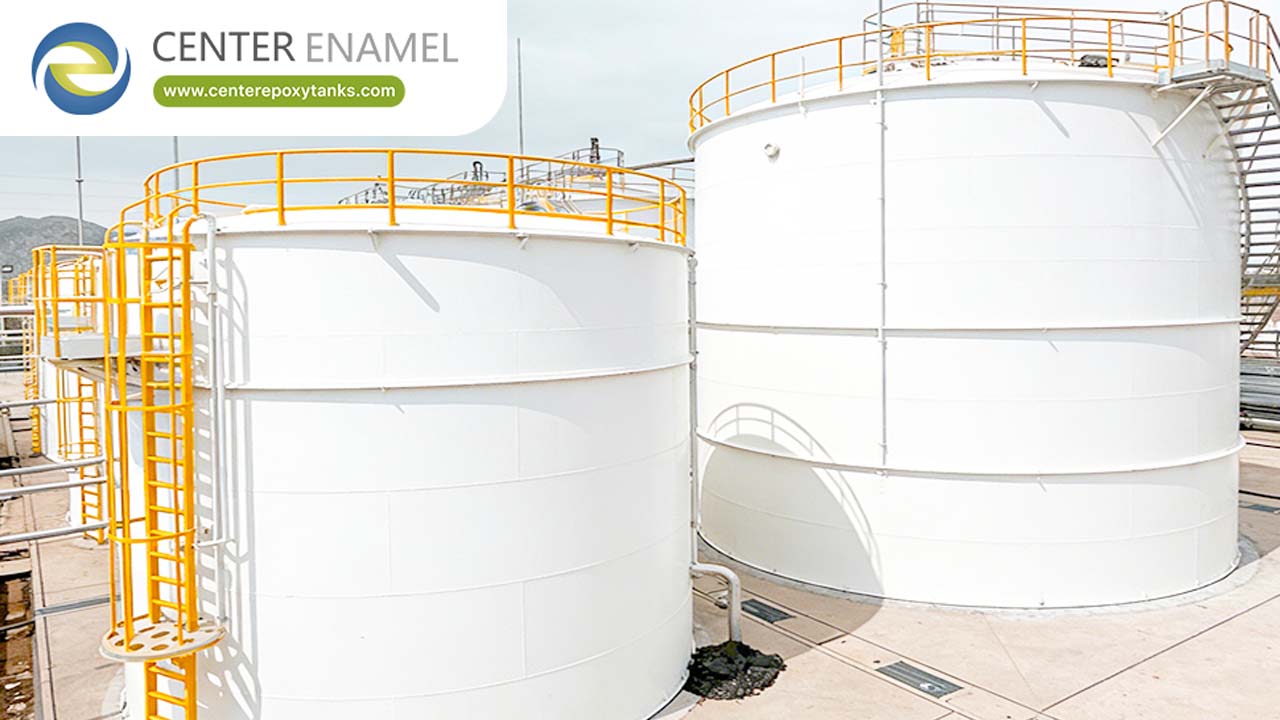
Foremost Welded Carbon Steel Oil Storage Tanks
In the global energy infrastructure sector, the containment of crude oil and petroleum products demands uncompromising structural integrity. Center Enamel (Shijiazhuang Zhengzhong Technology Co., Ltd.) provides industry-leading welded carbon steel oil storage tanks engineered to meet and exceed international standards, including API 650.
Whether for refineries, petrochemical processing plants, or regional fuel terminals, our tanks are fabricated to manage high-volume, long-term storage requirements. By combining advanced metallurgical expertise with precision welding techniques, we deliver storage systems that ensure safety, regulatory compliance, and operational longevity.
Why API 650 is the Benchmark for Oil Storage
When sourcing oil storage solutions, compliance is not optional—it is the foundation of site safety and environmental protection. API 650 is the global gold standard for welded tanks for oil storage, setting the minimum requirements for design, materials, fabrication, and testing.
1. Structural Monolithic Integrity
Welded carbon steel construction provides a seamless, monolithic shell. Unlike bolted or segmented tanks, the high-quality welded joints of an API 650 tank offer maximum resistance to leaks, stress, and internal pressures, making them the preferred choice for hazardous liquids.
2. Custom Engineering for Diverse Climates
Our tanks are engineered to withstand site-specific environmental challenges. We perform rigorous calculations for:
Seismic/Wind Loads: Ensuring stability in high-risk zones.
Corrosion Allowances: Integrating sacrificial thickness into the design to extend the lifespan of the tank shell in varying atmospheric conditions.
Thermal Management: Incorporating insulation or heating coils for crude oil grades that require viscosity control.
3. Fabrication Flexibility
We offer both field-erected and shop-fabricated options. For mega-projects requiring capacities that exceed transport limitations, our field-erection teams deploy to your site with certified welding procedures, ensuring the same quality standards as a factory-controlled environment.
Comparison: Tank Infrastructure Solutions
Metric | Welded Carbon Steel (API 650) | Bolted Steel Tanks | Concrete Reservoirs |
Leak Resistance | Superior (Welded) | Good (Gasket-dependent) | Moderate (Cracking risk) |
Pressure Rating | High (Up to 2.5 psig) | Low/Moderate | Very Low |
Ideal Use | Refineries / Fuel Terminals | Water / Light Chemicals | Specialized/Secondary |
Regulatory Fit | API 650 Compliance | AWWA / NFPA Focus | Specialized Codes |
Lifespan | 30+ Years (with maintenance) | 20–25 Years | Variable |
Technical Excellence & Quality Control
At Center Enamel, safety is built into every weld. Our commitment to the lifecycle of your storage project includes:
Non-Destructive Examination (NDE): Every critical seam undergoes rigorous testing—including Radiographic (RT), Ultrasonic (UT), and Magnetic Particle (MT) testing—to ensure a defect-free shell.
Precision Geometry: We ensure strict adherence to tolerances for verticality and roundness, guaranteeing that internal components like floating roofs operate without mechanical failure.
Coating Systems: We apply industrial-grade, heavy-duty protective coatings tailored to the specific corrosive characteristics of the stored petroleum products, protecting the steel from both internal product degradation and external environmental exposure.
Frequently Asked Questions (FAQ)
1. What is the difference between API 650 and API 620 tanks?
API 650 tanks are designed for atmospheric storage (operating at very low internal pressures, typically up to 2.5 psig). API 620 tanks are designed for larger internal pressures and are generally used for the storage of cryogenic liquids or specific pressurized petroleum products.
2. How do you ensure the safety of the field welding process?
Center Enamel employs certified welding inspectors and utilizes welding procedures (WPS) that meet international code requirements. Every site team follows strict safety protocols, and all welds undergo mandatory hydrostatic testing upon completion to verify structural integrity before commissioning.
3. Can these tanks be used for biofuels or ethanol blends?
Yes. Carbon steel is highly compatible with a wide range of hydrocarbons. However, for specific aggressive blends, we may recommend internal lining systems (such as epoxy or specialized polymers) to ensure the longevity of the tank interior and the purity of the product.
4. What information is required to get a project quote?
To provide an accurate technical proposal, we require the following parameters:
Storage capacity (e.g., m3 or barrels).
Stored product specifications (e.g., density, flash point).
Site conditions (wind, seismic, snow, and soil bearing capacity).
Project location (to determine logistics and logistics/erection requirements).
5. How often should welded oil tanks be inspected?
Routine inspections should follow API 653 standards, which provide the guidelines for "Tank Inspection, Repair, Alteration, and Reconstruction." This includes routine in-service visual checks and more comprehensive out-of-service internal inspections every 10–20 years, depending on the severity of service and local regulations.


