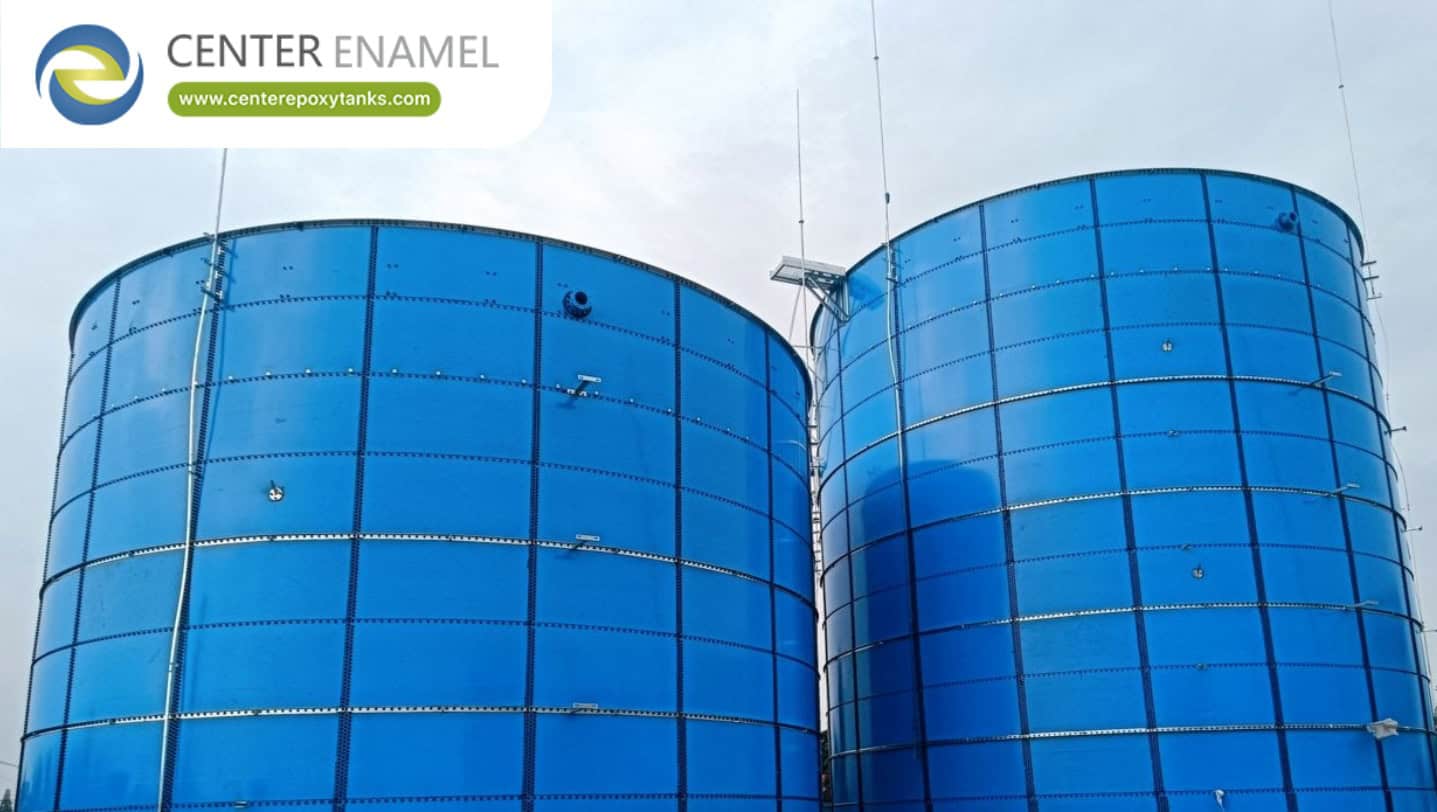
Epoxy Coated Tanks for Wastewater Storage: Engineering Specifications & Performance Advantages
Managing municipal sewage and industrial effluent requires storage infrastructure capable of resisting highly aggressive chemical environments. Wastewater is rarely just water; it is a complex slurry containing corrosive organic acids, volatile gases, grit, and shifting pH levels. Factory-coated epoxy bolted steel tanks provide a highly reliable, cost-effective containment solution. By combining the structural strength of carbon steel with the chemical inertness of advanced epoxy formulations, these tanks safeguard environmental assets and deliver exceptional operational longevity.
1. The Corrosive Reality of Wastewater Containment
Wastewater environments present unique degradation mechanisms that quickly compromise inferior containment materials. Selecting the right tank coating requires an understanding of these aggressive variables:
Hydrogen Sulfide (H2S) Biogenic Corrosion
In anaerobic wastewater zones, sulfate-reducing bacteria generate hydrogen sulfide gas. While H2S itself is corrosive to metals, the real danger occurs above the liquid level in the tank's vapor space. Here, moisture and sulfur-oxidizing bacteria convert the gas into sulfuric acid (H2SO4). This localized acidic environment aggressively attacks bare steel and eats away concrete structures via a process known as microbial-induced corrosion (MIC). Factory-applied epoxy coatings create an impermeable barrier that completely blocks acid penetration in this volatile headspace.
Variable pH and Chemical Volatility
Industrial effluents from chemical plants, food processing facilities, and textile mills can swing rapidly from highly acidic to heavily alkaline. Epoxy-coated steel plates are engineered to remain stable across a broad pH spectrum, preventing chemical stripping or softening of the lining.
Abrasive Suspended Solids
Wastewater frequently carries heavy grit, sand, and particulate matter, especially during initial intake and primary clarification phases. Continuous mixing and fluid movement cause these solids to scrape against the tank interior. The high physical hardness of cross-linked epoxy coatings prevents this mechanical scuffing from exposing raw steel.
2. Technical Quality Control and Manufacturing Specifications
The long-term performance of an epoxy-coated tank depends entirely on the quality of its factory application. Unlike field-painted alternatives, factory-applied coatings follow a strict, automated sequence to eliminate human error and environmental interference:
1. Automated Mechanical Blasting: Raw steel sheets are blast-cleaned to a near-white finish conforming to SSPC-SP10 / NACE No. 2 standards. This process removes all surface oxidation and mill scale, establishing a precise anchor profile (typically 50–75 microns) for optimal mechanical adhesion.
2. Precision Coating Application: High-solids liquid or fusion-bonded epoxy powder is applied in a climate-controlled cleanroom. This environmental isolation guarantees that fluctuating ambient humidity or airborne dust will not cause micro-voids or solvent entrapment in the curing film.
3. Thermal Cross-Linking: The coated plates pass through multi-zone curing ovens at elevated temperatures (typically 180°C to 220°C). This thermal energy triggers a complete chemical reaction, cross-linking the epoxy molecules into a dense, high-performance polymer matrix.
4. 100% Non-Destructive Testing (NDT): Every single panel undergoes a high-voltage discontinuity test (Holiday Testing) before packaging. Any micro-pinhole or thickness deviation is instantly flagged and corrected, ensuring that zero defects reach the installation site.
3. Performance Comparison: Wastewater Tank Options
When engineering a wastewater storage facility, asset managers typically evaluate three primary structural materials. The matrix below highlights why factory-coated epoxy tanks continue to gain market share:
Performance Metric | Factory-Coated Epoxy Bolted Tanks | Field-Welded Painted Tanks | Cast-in-Place Concrete Tanks |
Acid Resistance (H2SO4) | Excellent (Thermoset polymer barrier) | Variable (Prone to field-coating thinning) | Poor (Requires expensive secondary liners) |
Installation Timeline | Fast (Mechanical assembly with jacks) | Slow (Extensive field welding and curing) | Very Slow (Formwork, pouring, and 28-day cure) |
Risk of Leaking/Cracking | Extremely Low (Engineered EPDM gaskets) | Low (Dependent on field weld x-rays) | Moderate (Prone to structural settling cracks) |
Site Footprint Required | Minimal (Modular panels assembled on-site) | Large (Requires staging for heavy welding gear) | Large (Requires space for heavy concrete mixers) |
Lifecycle Capital Cost | Low (Minimal maintenance required) | High (Requires field blasting/repainting) | High ( liner maintenance and crack repair) |
4. Operational Advantages and System Integration
Beyond core material durability, epoxy bolted tanks offer significant operational benefits to wastewater system integrators:
● Hydraulic Smoothness: The smooth interior surface of cured epoxy features a low friction coefficient. This slick texture minimizes sludge accumulation and prevents biological slime from adhering tightly to the tank walls, making routine washdowns much faster.
● Modular Versatility: Wastewater treatment plants often expand to meet population growth or tightening regulatory standards. Bolted epoxy tanks can be disassembled, expanded by adding panel rings, or relocated entirely—a flexibility that concrete or welded infrastructure cannot match.
● Streamlined Accessory Mounting: Pre-engineered nozzles, overflow structures, mixers, and diffuser assemblies can be integrated directly into the factory drawings. The panels are punched and coated before assembly, ensuring that no raw steel edges are exposed during field installation.
Specifying factory-applied epoxy coated bolted steel tanks for wastewater storage introduces a highly durable asset to any treatment network. By neutralizing the threats of biogenic sulfuric acid, adapting to variable chemical inputs, and utilizing absolute factory quality controls, these containment systems deliver a reliable, low-maintenance solution for modern environmental engineering projects.


