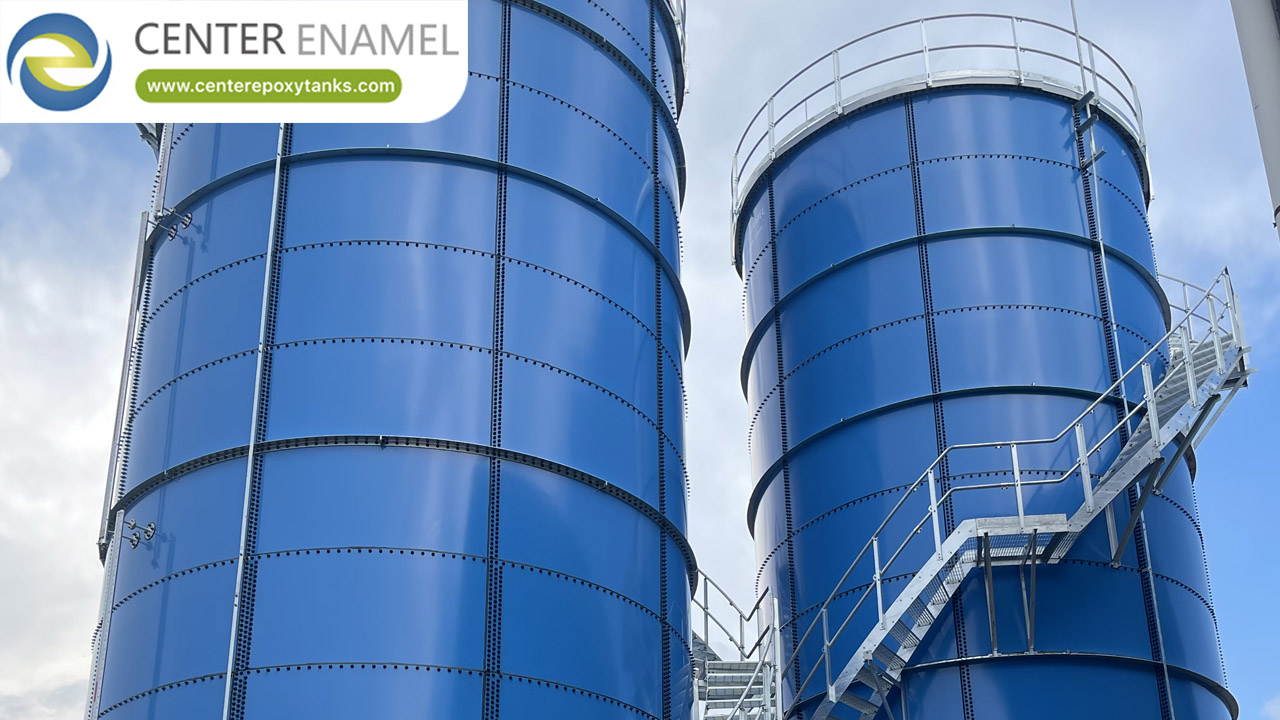
Epoxy Coated Tanks for Municipal Water Storage: Engineering Safety, Longevity, and Regulatory Compliance
Municipal water utilities face mounting pressure to upgrade aging infrastructure while meeting stringent public health and environmental mandates. Storing safe drinking water, emergency fire protection reserves, and municipal process water requires containment systems that guarantee absolute purity, structural resilience against seismic and wind loads, and multi-decade service life.
To satisfy these rigorous demands, modern municipal engineering has standardized on epoxy coated tanks for municipal water storage—specifically factory-coated bolted carbon steel structures engineered in strict compliance with American Water Works Association (AWWA D103) standards and health effects codes (NSF/ANSI/CAN 61).
Engineering Foundations and Advanced Coating Standards
The reliability of a municipal water storage tank relies on the precise synergy between high-tensile structural steel and advanced, health-certified polymer coatings:
AWWA D103 Structural Precision: Governing factory-coated bolted steel tanks, AWWA D103 ensures that every panel, sheet, and structural fastener is engineered to handle exact hydrostatic pressures, wind loads, and seismic forces. Unlike cast-in-place concrete, bolted modular construction allows for precise quality control and future capacity expansion.
Factory-Controlled Fusion-Bonded and High-Solids Epoxies: Unlike field-applied paints vulnerable to ambient weather and humidity, municipal-grade epoxy linings are applied in controlled factory environments. Steel plates undergo automated grit-blasting to achieve a clean anchor profile before high-build, low-VOC epoxy systems are electrostatically applied and thermally cured.
NSF/ANSI/CAN 61 and NSF 600 Compliance: Potable water tank linings must remain completely inert during continuous immersion against treated drinking water. Modern epoxy formulations comply with strict extractable solvent limits mandated by NSF 600, preventing the leaching of harmful volatile organic compounds (VOCs) or heavy metals into the municipal water supply.
Rigorous Quality Assurance (Holiday Testing): Every interior panel undergoes 100% high-voltage spark testing (holiday testing) per ASTM standards to detect and eliminate microscopic pinholes before the tank is shipped and erected.
Technical Performance Matrix: Municipal Water Storage Options
Technical Parameter | Factory Epoxy-Coated Bolted Steel Tanks | Traditional Welded Carbon Steel Tanks | Cast-in-Place Concrete Reservoirs |
Coating Application Control | Superior; factory-applied thermal curing ensures uniform thickness and zero weather interference | Variable; field-applied coatings depend heavily on contractor skill and ambient site humidity | Dependent on waterproof membranes or interior sealers applied post-pour |
Potable Water Compliance | Certified NSF/ANSI 61 / NSF 600 high-solids epoxy formulations meeting strict extractable limits | Requires meticulous field application of compliant interior epoxy lining systems | Requires specialized potable coatings prone to joint cracking over time |
Installation Velocity & Modularity | Rapid modular bolted assembly completed in weeks; easily expandable or relocatable | Slow field-erection requiring extensive welding, staging, and NDT testing | Slow civil construction requiring weeks of framing, pouring, and curing |
Lifecycle Maintenance Overhead | Low maintenance asset; long recoating intervals and modular component replacement | High ongoing maintenance cost due to periodic interior sandblasting and repainting | High if structural shifting causes micro-cracking and water seepage at joints |
Frequently Asked Questions (FAQ)
Q: Why choose epoxy coated bolted steel tanks for municipal drinking water storage?
A: They provide a cost-effective, rapidly installed, and highly durable alternative to concrete reservoirs. Factory-applied epoxy linings offer superior corrosion resistance, while bolted modular designs allow flexible sizing and municipal expansion.
Q: What is the significance of NSF/ANSI/CAN 61 and NSF 600 certifications for water storage epoxy?
A: NSF/ANSI/CAN 61 is the mandatory benchmark for materials in contact with drinking water. NSF 600 regulates allowable extractable solvent levels, ensuring that the cured epoxy lining does not leach contaminants, solvents, or taste-altering compounds into the municipal water supply.
Q: How long do epoxy coated municipal water tanks last before maintenance is required?
A: With proper installation, high-voltage holiday testing verification, and adherence to AWWA maintenance protocols, a high-performance municipal epoxy tank typically delivers a service life exceeding 30 years, with interior lining service intervals of 15 to 20 years.
Q: Can epoxy coated steel tanks also be used for municipal fire protection reserves?
A: Yes. In addition to potable drinking water, these certified tanks are widely utilized for dedicated municipal fire suppression storage in compliance with NFPA 22 standards.


