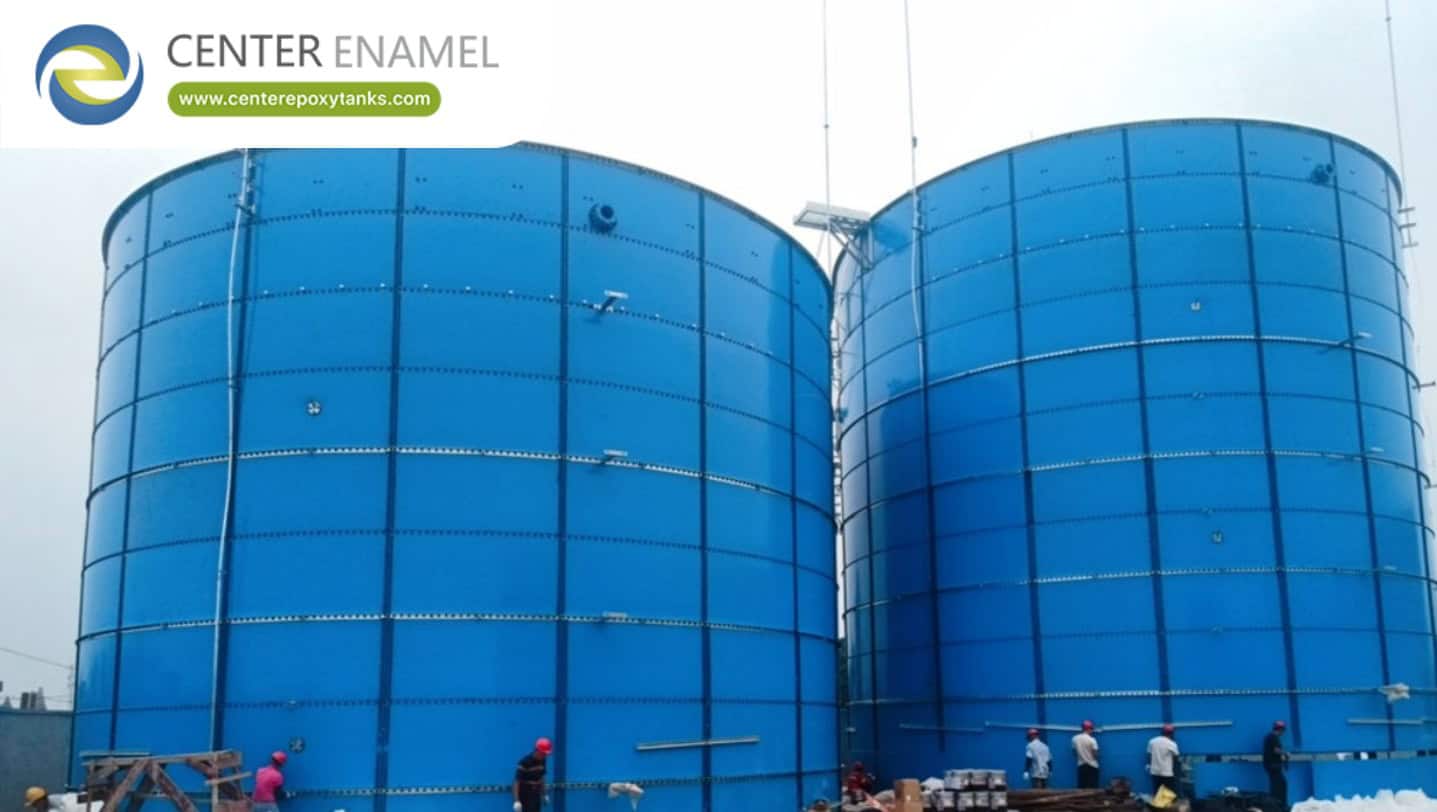
Epoxy Coated Tanks for Agricultural Waste: Engineering Guide
Managing agricultural waste—including livestock slurry, manure, and high-strength organic runoff—requires containment infrastructure that balances cost-efficiency with extreme chemical resilience. Epoxy-coated bolted steel tanks have become the industry standard for modern farms. By utilizing factory-applied Fusion Bonded Epoxy (FBE) technology, these tanks provide a chemically inert, corrosion-resistant barrier that protects against the aggressive, acidic nature of decomposing agricultural waste while offering the modularity needed for rapidly scaling farm operations.
1. The Engineering Challenge: Agricultural Waste
Agricultural waste is not merely water; it is a complex, often acidic, and biologically active liquid. The primary challenges in containment include:
● Corrosion: Manure and slurry often have varying pH levels that can rapidly oxidize unprotected carbon steel.
● Microbial Attack: Biological degradation within tanks can create volatile byproducts that degrade standard paints or concrete.
● Abrasion: Slurry often contains grit, sand, and organic solids that can wear down inferior interior coatings.
Epoxy-coated steel addresses these via dielectric insulation—a process where the thermoset polymer barrier completely isolates the steel substrate from the electrolytic environment of the waste, preventing the electrochemical reaction that leads to rust.
2. Why Epoxy Over Alternatives?
When compared to traditional concrete or field-welded options, factory-coated bolted epoxy tanks provide distinct operational advantages:
Engineering Metric | Epoxy Coated Steel | Concrete Tanks | Glass-Fused-to-Steel (GFS) |
Chemical Resistance | High (Customizable) | Low (Leaching risk) | Very High |
Installation Speed | Fast (Bolted panels) | Slow (Curing time) | Fast |
Mechanical Impact | Excellent | Moderate | Moderate (Brittle risk) |
Cost Efficiency | High | Variable | Moderate |
● Factory-Controlled Quality: Unlike field-applied coatings, epoxy panels are electrostatically coated and thermally cured in a controlled factory environment. This ensures 100% uniformity and eliminates the risk of "pinholes" or uneven coverage caused by weather or site conditions.
● Mechanical Flexibility: Epoxy coatings exhibit superior impact resistance and elasticity compared to glass coatings, making them ideal for sites where agitators or mixing equipment might occasionally contact the tank walls.
3. Standards & Durability: The AWWA D103 Benchmark
While originally developed for municipal water, the AWWA D103 standard is the gold-standard framework for the structural integrity of bolted agricultural tanks.
● Finite Element Analysis (FEA): Manufacturers utilize FEA to calculate the exact hydrostatic hoop tension acting on each horizontal shell ring.
● Panel Schedule: High-tensile carbon steel plates are utilized at the bottom rings (where pressure is greatest), while lighter panels are used at the top, optimizing both structural safety and material costs.
● Holiday Testing: Every panel undergoes high-voltage spark testing (holiday testing) at the factory to confirm the coating is free of microscopic defects before it ever reaches the farm.
4. Key Applications in Agriculture
● Slurry & Manure Storage: The impermeable epoxy barrier prevents soil contamination and ensures compliance with environmental regulations regarding nitrate and runoff management.
● Anaerobic Digesters: These tanks are designed to handle both the liquid waste and the aggressive gas headspace. Epoxy coatings withstand the thermal cycling and chemical exposure typical of biogas production.
● Liquid Fertilizer Storage: The inert nature of the epoxy ensures that the chemical composition of fertilizers remains stable and that the tank shell is not compromised by chemical acidity.
5. Frequently Asked Questions (FAQ)
Q: Can epoxy-coated tanks be expanded as my farm grows?
A: Yes. The modular, bolted panel design allows for disassembly and expansion. If your waste storage needs increase, additional panels can be added to the structure, or the tank can be relocated entirely—a significant advantage over fixed concrete pits.
Q: Is a special coating required for digesters?
A: Yes. Anaerobic digesters require specialized high-temperature epoxy formulations that can withstand the chemical stress of the gas phase at the top of the tank, where corrosion is often more aggressive than in the liquid phase.
Q: How long does an epoxy agricultural tank typically last?
A: With proper maintenance and the use of factory-applied high-performance epoxy, these tanks are engineered for a 30+ year service life in typical agricultural environments.
Are you currently designing a new manure management system or upgrading existing slurry containment, so we can suggest the specific coating specifications required for your site's pH levels and waste solids content?


