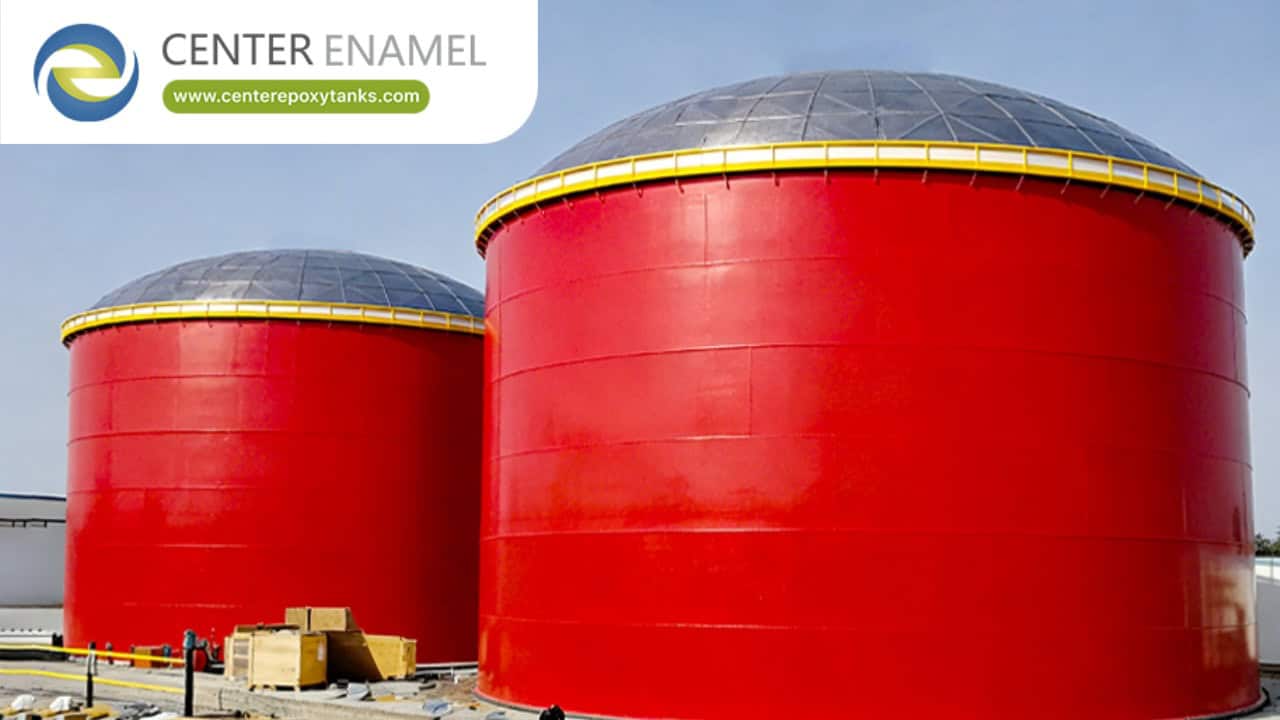
Epoxy Coated Tanks for Biofuel Storage
The global transition toward sustainable energy and net-zero carbon targets has driven unprecedented growth in the biofuel sector. Refineries, biorefineries, and fuel terminal operators handle large volumes of alternative fuels—including biodiesel (FAME), renewable diesel, sustainable aviation fuel (SAF), bioethanol, and various organic lipid feedstocks. However, these alternative fuels present unique chemical challenges. Unlike conventional fossil fuels, biofuels often contain active organic acids, residual moisture, and natural surfactants that accelerate internal corrosion, microbial growth, and tank wall degradation.
To prevent structural failure, product contamination, and environmental leaks, modern bioenergy facilities rely on specialized epoxy coated tanks for biofuel storage. Combining high-strength structural steel panels with advanced factory-applied Fusion-Bonded Epoxy (FBE) or high-performance epoxy novolac linings, these modular systems deliver elite chemical resistance and long-term asset reliability.
The Engineering Challenge of Biofuel and Feedstock Containment
Storing modern renewable fuels requires overcoming aggressive chemical and biological factors that standard fossil fuel tanks rarely encounter:
Organic Acid Attack: Lipids, animal fats, cooking oils, and vegetable oils used as biofuel feedstocks degrade over time into free fatty acids. These organic acids actively etch and pit unprotected carbon steel surfaces.
Water-Bottom Condensation: Like petroleum storage, biofuel tanks accumulate water bottoms from condensation and washing cycles. This aqueous layer breeds sulfate-reducing bacteria (SRB) and encourages localized microbial-induced corrosion (MIC).
Solvent and Temperature Stress: Bioethanol and specific high-temperature renewable fuel blends demand dense, highly cross-linked polymer linings that resist swelling, blistering, or solvent degradation.
Factory-controlled Fusion-Bonded Epoxy (FBE) and specialized epoxy novolac systems solve these issues by creating an impermeable, non-porous physical barrier that completely isolates the steel substrate from aggressive fuel components and water bottoms.
Technical Performance Matrix: Biofuel Storage Technologies
Technical Parameter | Fusion-Bonded Epoxy (FBE) Bolted Steel Tanks | Unlined Carbon Steel Tanks | Cast-in-Place Concrete Basins |
Organic Acid & Lipid Resistance | Superior; inert epoxy barrier prevents etching from fatty acids and vegetable oils | Low; highly vulnerable to pitting and wall thinning from organic acids | Moderate; susceptible to acid attack and surface dusting over time |
Installation Velocity & Equipment | Rapid modular assembly; erected in days or weeks using light bolting equipment | Slow; demands extensive plate rolling, field welding, and X-ray testing | Extremely slow; requires intensive civil formwork, rebar, and multi-week curing |
Modularity & Scalability | High; modular bolted panels allow seamless future capacity expansion | Rigid structure; impossible to modify or expand post-construction | Permanent structure; difficult to alter or repair once cracked |
Compliance & Standards | Engineered to AWWA D103, ISO 28765, and strict industrial coating specs | API 650 baseline construction codes | Local civil batch-pour and ACI structural guidelines |
Key Applications in Modern Biorefineries
1. Feedstock and Lipid Storage
Prior to processing, raw biological oils, animal tallows, and cooking greases must be stored safely. Epoxy-coated tanks provide the smooth, cleanable interior walls required to prevent sludge buildup and protect feedstocks from contamination.
2. Finished Biofuel and Blending Reservoirs
Storage vessels holding finished biodiesel or renewable diesel blends benefit from dense epoxy cross-linking, which prevents fuel discoloration, degradation, and tank wall scaling.
Frequently Asked Questions (FAQ)
Q: Why are epoxy coated tanks essential for biofuel storage?
A: Biofuels and organic feedstocks contain active organic acids, moisture, and impurities that rapidly corrode unlined carbon steel. Epoxy-coated tanks provide an inert, chemically resistant barrier that prevents corrosion, leakage, and fuel contamination.
Q: Can fusion-bonded epoxy tanks handle both biodiesel and bioethanol?
A: Yes. While standard FBE or epoxy novolac linings are engineered to handle biodiesel, animal fats, and vegetable oils, specific formulations or high-functionality epoxy novolacs are selected for bioethanol and high-temperature solvent exposure to ensure long-term stability.
Q: How long does an epoxy-coated bolted biofuel tank last?
A: When manufactured and maintained in accordance with international industrial standards (such as AWWA D103 and ISO 28765), high-quality epoxy-coated bolted steel tanks deliver a reliable operational lifespan exceeding 30 years.
Q: Can a biofuel plant expand its storage capacity later?
A: Yes. Because these tanks feature a modular bolted steel panel design, biorefineries can easily add additional steel rings or panels to increase storage volume as renewable fuel production scales up.


