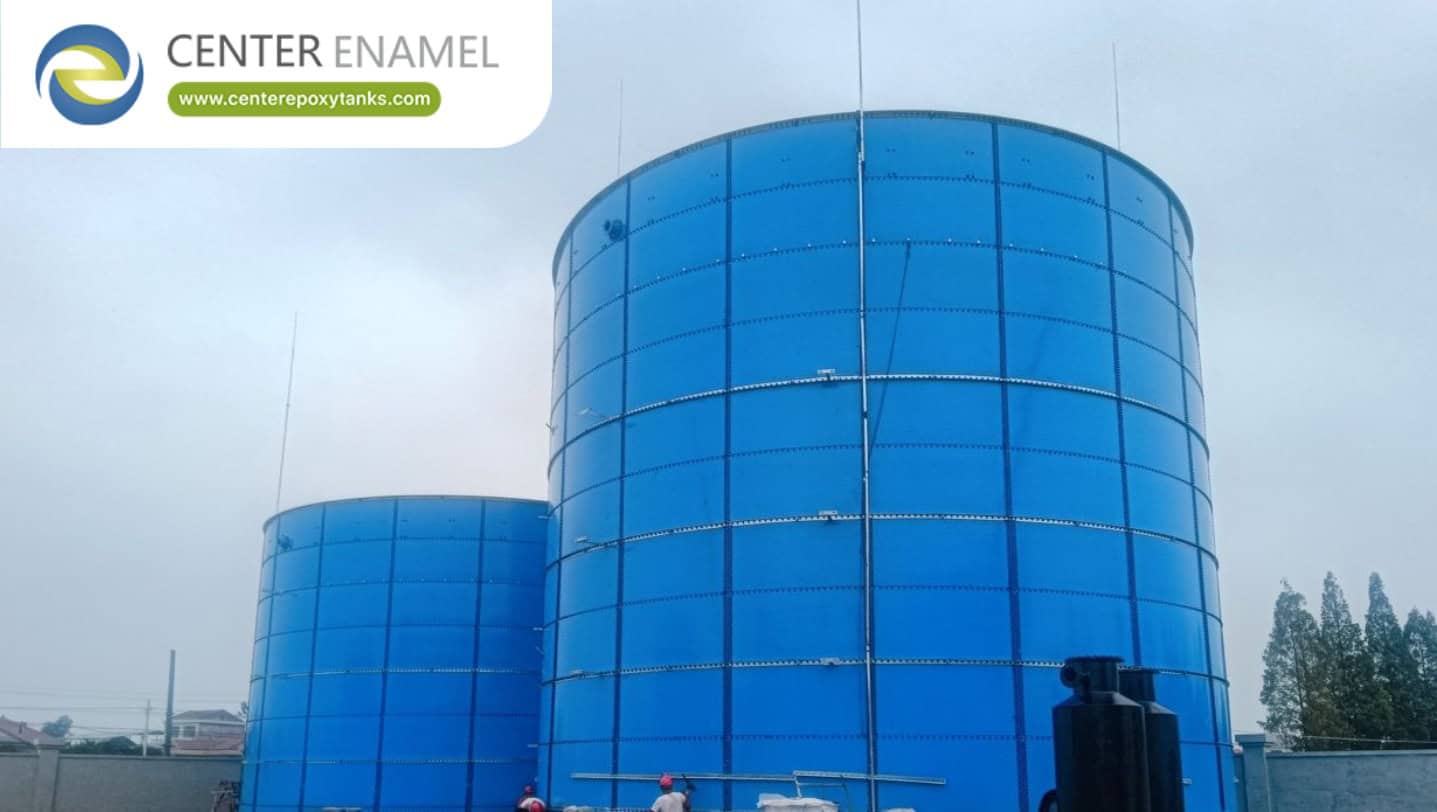
Epoxy Coated Tanks for Textile Wastewater Treatment: Engineering Guide
Textile wastewater management presents one of the most complex containment challenges in industrial engineering. Characterized by high variability in pH, intense colorants, high Total Dissolved Solids (TDS), and elevated process temperatures, textile effluent rapidly degrades traditional concrete or standard carbon steel infrastructure. Epoxy-coated bolted steel tanks offer a superior, cost-effective solution, providing a chemically inert, high-adhesion barrier designed to withstand the volatile chemistry of dyeing, scouring, and finishing cycles.
1. The Chemistry of Textile Wastewater: Why Standard Tanks Fail
Textile mills discharge complex liquid waste streams that fluctuate based on the fabric type (cotton, wool, or synthetic) and the stage of production. Standard containment systems often fail due to:
● Caustic/Acid Swings: Dyeing and mercerizing processes often involve rapid pH fluctuations (ranging from pH 2.0 to 12.0), which cause "chemical attack" on concrete and induce rapid oxidation in standard steel.
● High Thermal Load: Discharge from scouring units can reach temperatures exceeding $50^circtext{C}$, stressing protective liners and sealants.
● Dye & Chemical Aggression: Synthetic dyes and chemical auxiliaries are highly persistent and can cause permanent staining or degradation of inferior tank linings.
An epoxy-coated solution utilizes a molecularly bonded finish that acts as a physical barrier, preventing these aggressive agents from contacting the structural steel substrate.
2. Engineering & Coating Specifications
For textile applications, the coating is the critical performance variable. Procurement should prioritize Fusion Bonded Epoxy (FBE) or high-grade thermosetting epoxy resins applied in controlled, factory-canned environments.
Technical Performance Matrix
Feature | Engineering Requirement | Benefit |
pH Range | pH 3.0 – 12.0 | Resists caustic/acid cycling. |
Thermal Limit | Up to 60C (continuous) | Survives hot process water discharge. |
Coating Type | Fusion Bonded / Thermosetting | Provides zero-delamination molecular bond. |
Surface Finish | High-gloss / Non-porous | Prevents dye staining and microbial adhesion. |
Sealing System | EPDM / High-Density Elastomers | Chemically resistant against bleach/dyes. |
Structural Codes
All tanks must be designed in accordance with AWWA D103-09 (Standard for Bolted Carbon Steel Tanks) or equivalent international codes. The structural integrity of the steel shell should be calculated based on the specific gravity of the effluent, which can be higher than water due to dissolved solids:
3. Comparative Performance: Containment Solutions
When selecting infrastructure for a Treatment Plant (ETP/CETP), the choice of material dictates long-term O&M costs.
Containment Type | Corrosion Resistance | Installation Speed | Scalability | Maintenance |
Epoxy Coated Steel | High | Fast (Bolted) | Modular | Low |
Glass-Fused-to-Steel | Highest | Fast | Modular | Very Low |
Poured Concrete | Low (if unlined) | Very Slow | None | High (Cracks) |
Stainless Steel | Highest | Moderate | Limited | Low (Expensive) |
Note: Epoxy-coated tanks provide the optimal balance for mills requiring large-scale aeration basins or balancing tanks where budget optimization is as critical as chemical durability.
4. Procurement Vetting Matrix
To avoid sourcing failures in aggressive textile environments, utilize this quality control checklist during the vendor selection phase:
● Holiday Testing: Demand that 100% of the interior panel surface is subject to Holiday Detection (ASTM G62) at a minimum of 1100V to identify microscopic pores in the coating.
● Adhesion Testing: Ensure the manufacturer provides certification for cross-hatch adhesion tests (>4B classification).
● Bolt Protection: Ensure that all interior bolt heads are covered with specialized, chemically resistant plastic caps or coated with the same epoxy material to prevent localized corrosion at the seam.
● Traceability: Request Mill Test Reports (MTRs) for all steel plates to ensure compliance with structural standards.
Frequently Asked Questions (FAQ)
Q: Does textile dye stain the epoxy coating?
A: High-quality, non-porous FBE coatings are highly resistant to staining. Because the surface is "slick" and chemically inert, dye pigments do not bind to the tank walls, making the tank easy to clean during scheduled maintenance.
Q: Can these tanks handle the brine/salt in textile effluent?
A: Yes. Epoxy coatings are engineered to be impervious to high salinity, making them suitable for effluent streams containing heavy concentrations of sodium chloride or other salts used in dyeing processes.
Q: What is the expected service life?
A: With proper installation and adherence to pH/temperature limits, an epoxy-coated bolted tank can expect a service life of 20 to 30 years. Regular inspection of the sealing gaskets is the primary maintenance requirement.


