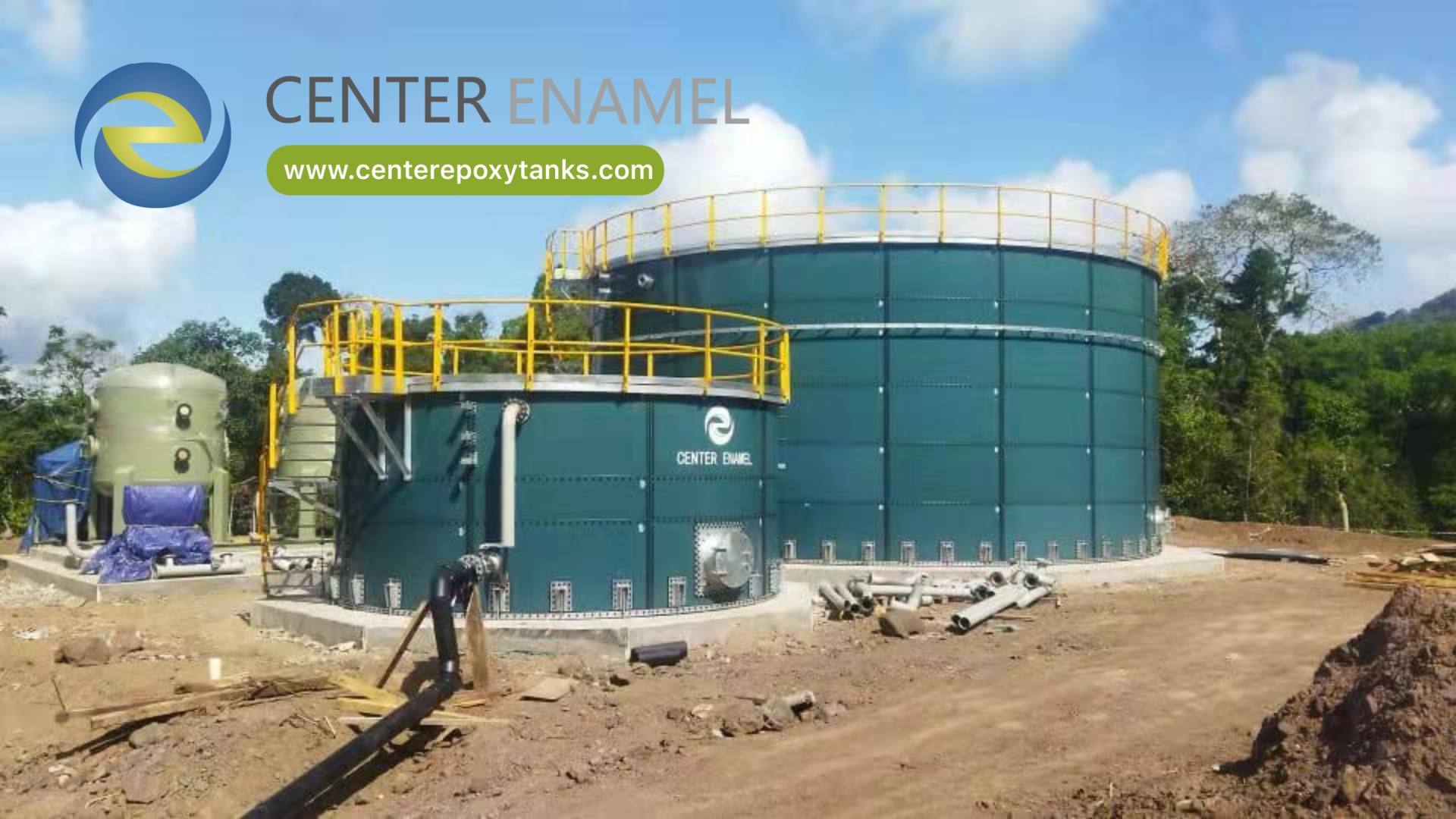
Epoxy Coated Steel Tanks for Pulp and Paper Mill Effluent: Engineering Guide
Pulp and paper mills produce some of the most complex wastewater streams in the industrial sector. Effluent often contains a volatile cocktail of dissolved wood fibers, lignin, bleaching agents, dyes, and varying pH levels that can rapidly degrade standard storage infrastructure. Center Enamel (Shijiazhuang Zhengzhong Technology Co., Ltd.) addresses this challenge with Fusion Bonded Epoxy (FBE) Coated Steel Tanks, designed to provide an inert, chemically resistant barrier that ensures the integrity of your treatment system, prevents leaks, and maximizes operational uptime.
1. The Challenge of Pulp & Paper Effluent
Pulp mill effluent is notoriously aggressive. Unlike standard municipal wastewater, it requires storage solutions that can withstand:
Chemical Attack: Exposure to hydrogen peroxide, chlorine dioxide, and various bleaching chemicals.
Corrosive Byproducts: The presence of sulfides and organic acids derived from wood digestion.
Temperature Variations: High-temperature discharge from process lines.
Solid Loading: Suspended pulp fibers that can settle and cause anaerobic decay if the tank surface is rough or porous.
2. Why FBE Coated Steel is the Industry Standard
Fusion Bonded Epoxy (FBE) is not just a coating; it is a thermal-fused engineering solution. By applying the epoxy powder to steel panels and curing them at temperatures exceeding 200°C, the coating becomes chemically bonded to the substrate.
Non-Porous Barrier: FBE creates a glass-like, non-porous surface that prevents fibers and chemicals from embedding into the tank wall. This significantly reduces the cleaning frequency required for the tank.
Superior Adhesion: With an adhesion strength of >20 MPa, FBE coatings resist the delamination issues common with inferior spray-on coatings.
Mechanical Integrity: The structural steel base provides the necessary strength for high-volume storage, while the FBE coating handles the chemical interface.
3. Technical Comparison: FBE vs. Traditional Infrastructure
For pulp and paper plant engineers, the choice of containment directly impacts long-term maintenance budgets.
Feature | Center Enamel FBE Bolted Tanks | Poured Concrete Tanks | Stainless Steel Tanks |
Chemical Resistance | High (Inert Polymer) | Low (Requires lining) | Excellent (High Cost) |
Fiber Adhesion | Low (Smooth surface) | High (Porous/Rough) | Low |
Construction Time | Weeks (Modular) | Months (Pouring/Curing) | Months (Welding) |
Lifecycle Cost | Low (Minimal maintenance) | High (Structural repairs) | High (Capital cost) |
Scalability | Yes (Modular expansion) | No | No |
4. Compliance and Safety
Center Enamel’s epoxy tanks are manufactured to meet stringent industrial standards, ensuring your wastewater facility adheres to environmental and safety regulations:
AWWA D103-09 & ISO 28765: Compliance with international standards for bolted steel liquid storage.
Holiday Testing: Every panel undergoes rigorous high-voltage holiday testing to ensure the FBE coating is entirely free of microscopic pinholes before installation.
Seismic Design: Engineered to withstand seismic activity, critical for large-scale effluent holding ponds and treatment tanks.
5. Frequently Asked Questions (FAQ)
Q: Can these tanks handle the varying pH levels of my effluent?
A: Yes. Center Enamel’s specialized epoxy formulations are designed to maintain integrity across a wide pH spectrum. We assess your specific effluent analysis to ensure the selected coating formulation meets your mill's operational chemistry.
Q: How does FBE coating perform in high-temperature wastewater?
A: FBE coatings are highly stable. While pulp and paper effluent can be hot, our thermally cured epoxy is engineered to withstand operating temperatures significantly higher than typical wastewater treatment requirements.
Q: Is installation disruptive to the paper mill’s daily operation?
A: The bolted, modular nature of our tanks allows for a "dry" construction process. There is no need for heavy onsite welding or concrete pouring, which keeps the construction footprint small and minimizes interference with your facility’s core production lines.
Engineering Your Wastewater Infrastructure
For pulp and paper facilities, wastewater management is a critical link in the production chain. Investing in FBE coated steel tanks provides the chemical durability and structural reliability necessary to keep your effluent treatment systems operating at peak efficiency.
Are you currently in the design phase for a wastewater plant expansion or looking to replace aging, high-maintenance storage assets at your mill?


