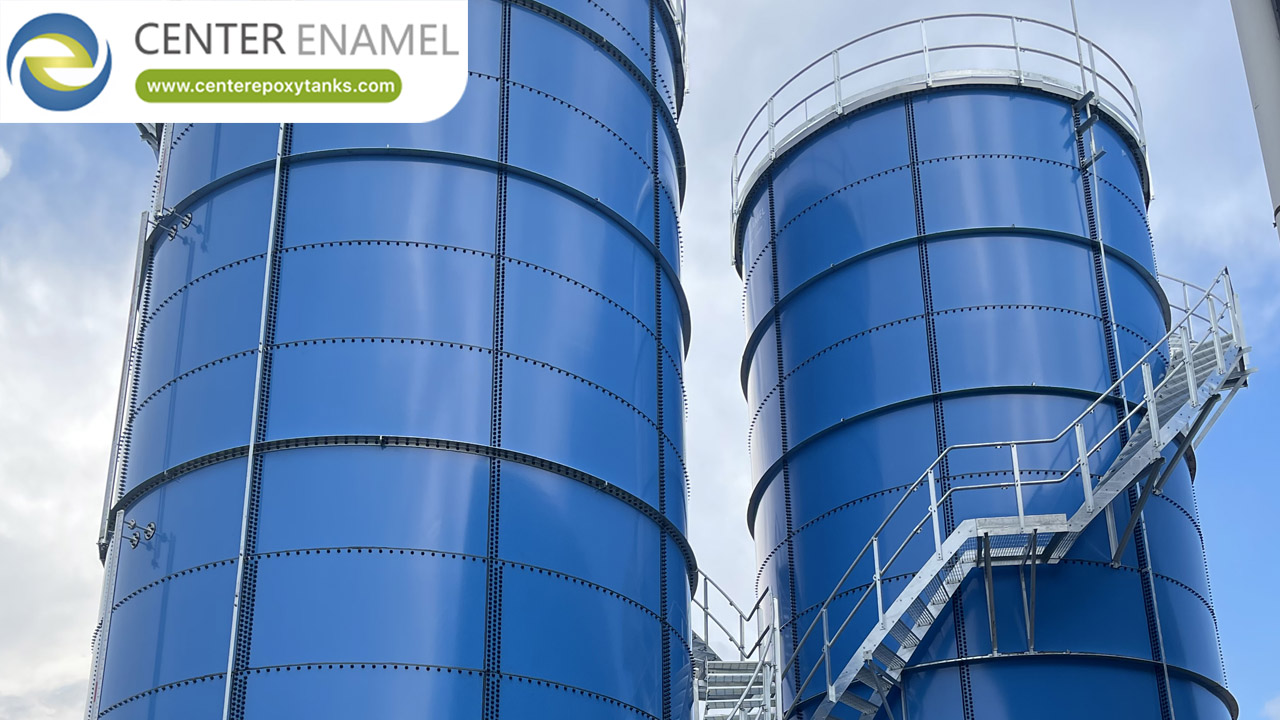
Epoxy Coated Steel Tanks for On-Site Assembly in Remote Locations: Engineering Mobility, Durability, and Rapid Deployment
Constructing heavy industrial infrastructure in remote, off-grid, or geographically isolated locations—such as high-altitude mining sites, rural water treatment plants, desert oilfields, or island communities—presents severe logistical challenges. Traditional storage solutions like poured-in-place concrete basins or field-welded steel tanks require massive shipments of raw aggregate, heavy construction machinery, specialized welding crews, and extended weather-dependent curing times. In remote environments, these hurdles often translate into exorbitant project costs and unacceptable delays.
An epoxy-coated steel tank designed for on-site modular assembly offers an ideal engineering solution. Comprising precision-manufactured steel panels finished with high-performance fusion-bonded epoxy (FBE), these modular systems combine the structural strength of heavy industrial steel with exceptional transport efficiency and rapid, weld-free field installation.
1. Logistical Optimization for Off-Grid Transportation
Transporting massive storage infrastructure to remote regions requires maximizing freight efficiency and minimizing cargo footprints:
Compact Flat-Pack Shipping: Bolted modular tank panels are engineered to stack efficiently into standard shipping containers or onto flatbed trucks. This drastically reduces transportation costs compared to hauling bulky, pre-fabricated cylindrical tanks that waste significant airspace.
Elimination of Heavy Crane Dependency: Because the panels are lightweight and handled modularly, they can be transported across rough terrain and rugged access roads where heavy-lift transport is impractical.
Modular Scalability: If project storage requirements increase over time, additional modular rings and panels can be easily shipped and integrated into the existing structure without requiring total tank replacement.
2. Advanced Fusion Bonded Epoxy (FBE) Protection
Remote locations demand infrastructure that operates maintenance-free for decades, as bringing specialized repair crews back to an isolated site is costly:
Factory-Controlled Quality: Unlike field-applied paints that are vulnerable to weather fluctuations, dust, and humidity during application, FBE coatings are electrostatically applied and thermally cured in an ISO-certified, climate-controlled factory.
100% Holiday Inspection: Every coated panel undergoes rigorous high-voltage spark testing ( 1100V) prior to dispatch, ensuring an absolute defect-free barrier against moisture, aggressive chemicals, and soil corrosion.
Superior UV and Weather Resistance: Exterior polymer layers are engineered to withstand extreme solar radiation, high winds, and severe temperature fluctuations found in desert, arctic, or tropical remote zones.
Data Table: Remote Tank Installation Comparison Matrix
Technical Parameter | Modular Bolted Epoxy Tank | Traditional Field-Welded Tank | Cast-in-Place Concrete Basin |
Transport Efficiency | High (Flat-packed into standard shipping containers) | Low (Bulky pre-formed plates or oversized rolls) | Very Low (Requires massive aggregate & cement transport) |
On-Site Construction Speed | Rapid (Assembled via mechanical bolting in days/weeks) | Slow (Requires weeks of field welding & NDT testing) | Extremely Slow (Requires formwork, pouring, & multi-week curing) |
Heavy Machinery Needed | Minimal (Standard tools & small jacks; no heavy cranes required) | Extensive (Heavy cranes, welding rigs, generators) | Heavy (Concrete trucks, pumps, excavators, cranes) |
Coating Quality Control | Factory-Controlled (Thermal fusion, 100% holiday tested) | Field-Applied (Subject to weather delays & human error) | Variable (Field-applied sealers prone to cracking) |
3. Ground-Level Safety and Rapid Erection Methodology
Erecting tanks in remote areas must prioritize worker safety and operational simplicity:
Ground-Level Ring Assembly: Installation crews assemble the top shell ring first at ground level using high-strength hardware and engineered sealing strips.
Hydraulic Jacking System: Using specialized mechanical or hydraulic jacks, the assembled shell course is elevated step-by-step to allow lower rings to be added at ground level. This completely eliminates dangerous elevated working conditions and reduces the need for large staging cranes.
Frequently Asked Questions (FAQ)
Q: Why are epoxy-coated bolted tanks ideal for remote locations?
A: They feature modular panels that pack efficiently into standard shipping containers, require no heavy welding equipment on-site, and can be rapidly assembled by local crews using basic tools and hydraulic jacks.
Q: How do factory-applied epoxy coatings withstand harsh remote environments?
A: Fusion-bonded epoxy coatings are thermally cured onto steel panels in a controlled factory setting, creating a tough, non-porous, corrosion-resistant barrier that resists UV radiation, extreme temperatures, and chemical degradation.
Q: What heavy equipment is required to install a modular epoxy tank on-site?
A: Unlike welded or concrete tanks that require heavy cranes and concrete mixers, modular bolted tanks typically only require standard hand tools, torque wrenches, and lightweight jacking systems for assembly.
Q: Can modular epoxy tanks be expanded if remote site water or chemical demands increase?
A: Yes. Because the tanks are constructed from standardized bolted panels, they can be easily disassembled, relocated, or expanded vertically by adding additional tiers of steel plates.


