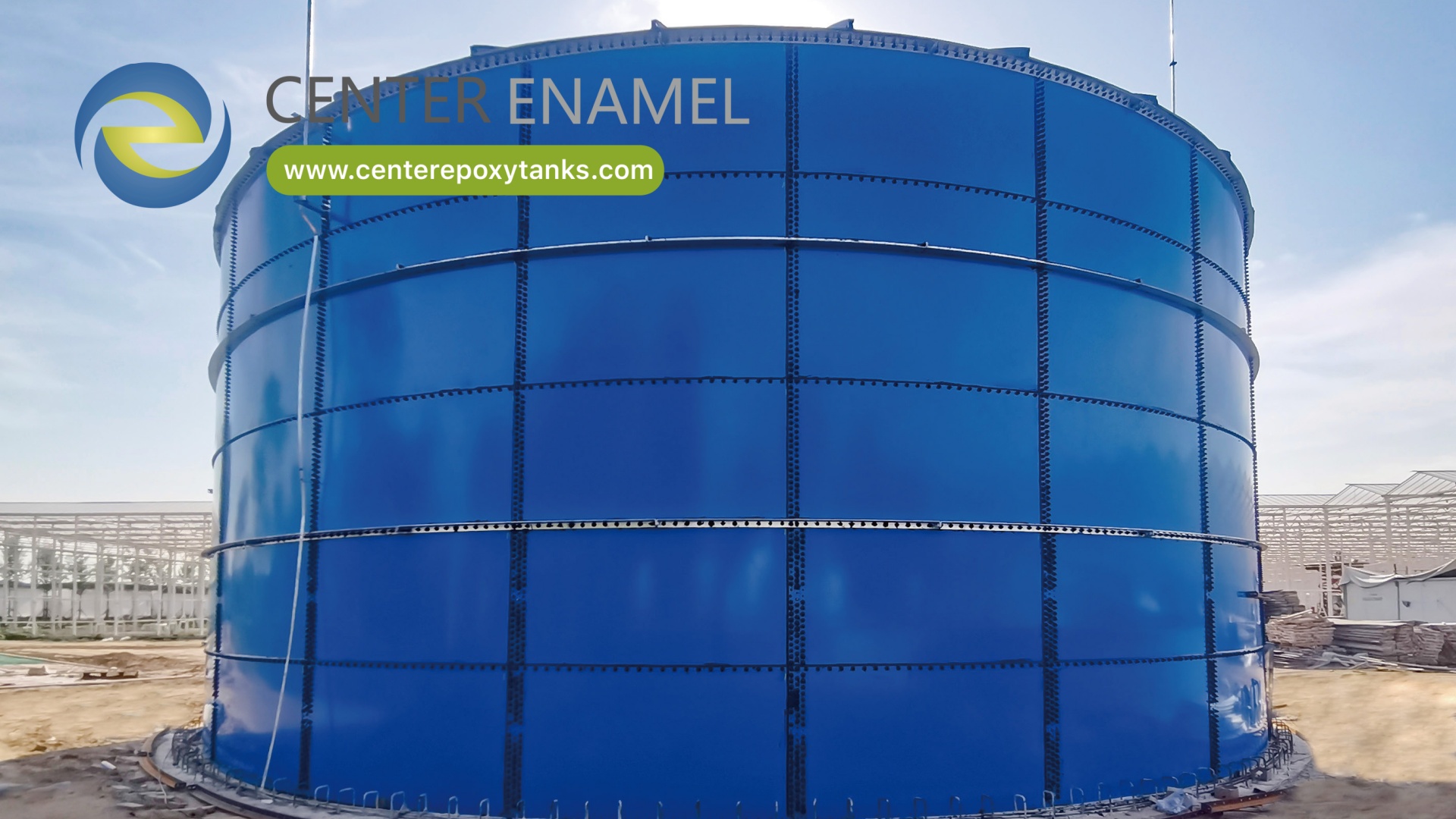
As the global energy landscape undergoes a profound transformation toward decarbonization, the production of biomethane has emerged as a cornerstone of the circular economy. Biomethane, a renewable substitute for natural gas, is derived from the upgrading of biogas produced during the anaerobic digestion of organic waste. However, the path from waste to energy is paved with significant technical challenges, particularly regarding the containment and processing of aggressive organic substrates and corrosive gases.
Shijiazhuang Zhengzhong Technology Co., Ltd (Center Enamel), a pioneering China Epoxy Coated Steel Tanks manufacturer, provides the high-performance infrastructure necessary to support the rigorous demands of modern biomethane projects. By leveraging advanced Fusion Bonded Epoxy (FBE) technology and modular engineering, Center Enamel delivers a storage solution that ensures operational longevity, gas-tight integrity, and superior resistance to the complex corrosive environments inherent in biogas production.
The Critical Role of Containment in Biomethane Projects
The production of biomethane involves several stages, each placing unique stresses on the storage and digestion vessels. From the initial collection of organic feedstock to the final storage of nutrient-rich digestate, the choice of tank material determines the success and safety of the entire facility.
1. Resistance to Organic Acids and Hydrolysis
During the initial stages of anaerobic digestion, organic matter undergoes hydrolysis and acidogenesis. This process produces volatile fatty acids that can be highly corrosive to traditional concrete or unprotected steel. Epoxy Coated Steel Tanks provide an inert barrier that remains unaffected by these acidic environments, ensuring that the structural integrity of the digester is never compromised.
2. Combating Biogenic Sulfuric Acid Corrosion
In the headspace of an anaerobic digester, hydrogen sulfide gas is a common byproduct. When this gas contacts moisture on the upper walls of the tank, it can be converted by specialized bacteria into sulfuric acid. This biogenic sulfuric acid is notoriously destructive, capable of eating through several inches of concrete in just a few years. Center Enamel's fusion-bonded coating is specifically engineered to resist this atmospheric attack, providing a permanent solution to one of the industry's most persistent problems.
3. Ensuring Gas-Tight Integrity
For a biomethane plant to be efficient and environmentally friendly, methane leakage must be prevented. The bolted modular design of our tanks, combined with high-performance sealants and precision-engineered joints, ensures a gas-tight environment. This is critical not only for maximizing the yield of methane for upgrading but also for preventing the release of potent greenhouse gases into the atmosphere.
Technical Excellence: The Fusion Bonded Epoxy Advantage
As a leading China Epoxy Coated Steel Tanks manufacturer, Center Enamel utilizes a sophisticated manufacturing process that sets our products apart from field-applied coatings and traditional containment methods.
The FBE Coating Process
The "Fusion Bonded" aspect of our tanks refers to a high-temperature factory process where epoxy resin powder is electrostatically applied to a grit-blasted steel substrate. When the steel is heated, the powder melts, flows, and molecularly bonds with the metal. This results in a dense, uniform, and incredibly hard finish.
Molecular Bonding: Unlike paint, which sits on the surface, the epoxy becomes part of the steel surface, preventing under-film corrosion.
Uniformity: Factory application ensures that there are no "thin spots" or holidays, which are common in hand-applied coatings.
Flexibility and Toughness: The coating is designed to handle the thermal expansion and contraction of the steel without cracking or losing adhesion.
Comparison with Concrete and Stainless Steel
While concrete is a traditional choice, its porosity makes it susceptible to chemical penetration and structural cracking. Stainless steel offers good resistance but at a significantly higher capital cost, especially for large-scale biomethane projects. Epoxy Coated Steel Tanks offer the "best of both worlds"—the strength and economy of carbon steel with the chemical resistance and hygiene of high-grade polymers.
Integration of Aluminum Dome Roofs for Enhanced Performance
In the design of modern biomethane projects, the roof system is just as critical as the tank walls. To provide a truly comprehensive solution, Center Enamel often integrates Aluminum Dome Roofs (铝穹顶盖) into our containment systems.
Advantages of Aluminum Dome Roofs
Aluminum Dome Roofs are self-supporting structures that offer unparalleled durability in corrosive environments. For biomethane applications, they provide several distinct benefits:
Superior Corrosion Resistance: Aluminum naturally forms a protective oxide layer, making it immune to the corrosive effects of hydrogen sulfide and water vapor found in biogas headspaces.
Clear-Span Design: These domes do not require internal support columns. This is a vital feature for anaerobic digesters, as it eliminates internal structures that could interfere with mixing or act as focal points for corrosion and sediment buildup.
Gas Containment: When integrated with specialized membrane systems or used as fixed covers, aluminum domes provide a secure, low-maintenance environment for gas collection.
Lightweight Efficiency: The low density of aluminum reduces the overall load on the tank walls, allowing for more cost-effective structural designs without sacrificing safety.
By combining an epoxy-coated shell with an aluminum dome, developers can create a maintenance-free asset with a design life exceeding thirty years.
Why Center Enamel is the Preferred China Epoxy Coated Steel Tanks Manufacturer
Choosing a partner for global biomethane projects requires a manufacturer that understands both the technical and logistical complexities of international construction.
Precision Engineering and Automation
At our manufacturing facility, we utilize automated production lines to ensure every panel is cut, punched, and coated to exact specifications. This precision ensures that when the components arrive at the project site—whether in Europe, Southeast Asia, or the Middle East—the assembly process is seamless and efficient.
Strict Quality Assurance
Center Enamel adheres to the most stringent international standards, including ISO and relevant industry certifications for liquid and gas storage. Every panel undergoes high-voltage spark testing to ensure that the epoxy barrier is 100% intact, providing our clients with a "zero-defect" guarantee.
Rapid Deployment and Logistics
One of the primary advantages of our bolted steel design is the ease of transport. The panels can be densely packed into standard containers, significantly reducing shipping costs. Once on-site, the tanks can be assembled using specialized jacking systems, eliminating the need for large cranes and reducing the overall construction footprint. This speed of deployment is a critical factor for developers looking to bring biomethane plants online as quickly as possible.
Project Cases: Demonstrating Versatility and Global Reach
The following cases highlight the diverse application of our epoxy resin tank technology. These real-world examples demonstrate how Shijiazhuang Zhengzhong Technology Co., Ltd supports essential infrastructure across multiple sectors, using the specific project list provided for our epoxy-coated solutions.
Hebei Agricultural Irrigation Water Project: In this essential domestic project, Center Enamel provided 2 units of tanks. This project highlights the suitability of epoxy coatings for maintaining water quality in large-scale agricultural distribution networks, ensuring that irrigation water remains free from contaminants and structural oxidation.
Thailand Drinking Water Project: Supporting the municipal needs of Southeast Asia, we delivered 1 unit of tank. This case proves the hygiene and safety of our epoxy resin technology, meeting strict standards for human consumption and providing a rapidly deployable solution for growing urban centers.
Saudi Firefighting Water Project: Operating in the extreme temperatures of the Middle East, we supplied 2 units of tanks. The resilience of the epoxy coating to thermal stress and its ability to provide maintenance-free storage for vital firefighting reserves make it the ideal choice for arid industrial zones.
Economic Sustainability and Total Cost of Ownership
For investors and operators of biomethane projects, the initial capital expenditure is only part of the equation. The Total Cost of Ownership (TCO) over the project's life is where the value of Center Enamel’s technology becomes most apparent.
1. Reduced Maintenance
Unlike concrete tanks, which may require periodic patching and re-lining, or welded tanks that need frequent repainting, our FBE tanks are virtually maintenance-free. The superior bond and hardness of the coating mean that the tank remains operational for decades without the need for structural intervention.
2. Operational Uptime
The durability of our tanks minimizes the risk of leaks or structural failures that could lead to unscheduled shutdowns. In the biomethane industry, where continuous production is key to profitability, the reliability of the containment system is a direct contributor to the bottom line.
3. Future-Proof Flexibility
The modular nature of bolted tanks allows for future expansion or even relocation. If a biomethane plant needs to increase its capacity, additional rings can often be added to the existing tanks, providing a level of flexibility that is impossible with concrete structures.
A Vision for a Sustainable Future
The transition to a renewable energy future requires infrastructure that is as sustainable as the energy it produces. Epoxy Coated Steel Tanks represent the ultimate synergy of strength, chemical resilience, and economic efficiency. By providing a containment solution that can withstand the most aggressive biological and chemical processes, Shijiazhuang Zhengzhong Technology Co., Ltd enables the global growth of biomethane projects.
As a premier China Epoxy Coated Steel Tanks manufacturer, we are committed to continuous innovation. By integrating advanced materials, modular engineering, and high-performance Aluminum Dome Roofs, we provide our partners with the tools they need to turn organic waste into a clean, reliable, and carbon-neutral energy source. With a proven track record in over ninety countries, Center Enamel is the foundation upon which the future of green gas is built.


