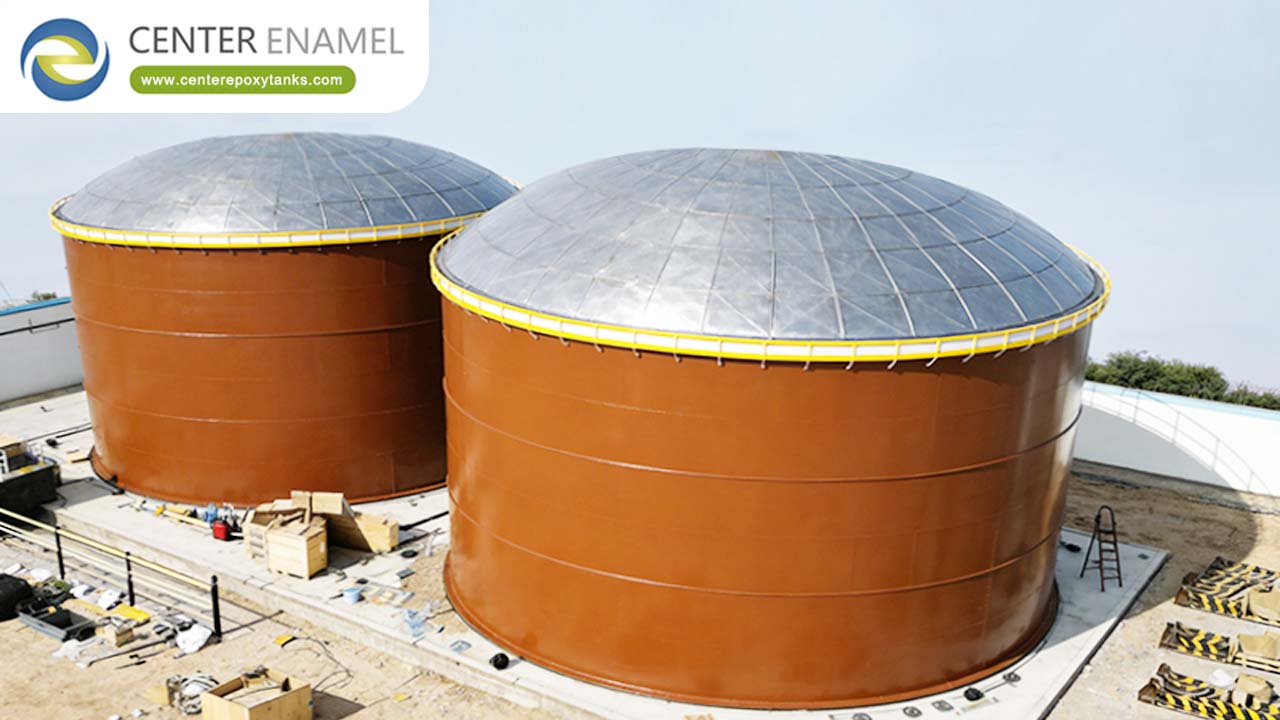
Epoxy-Coated Steel Tank Manufacturer: Your Reliable Partner for Wastewater Treatment
For epoxy coated steel tank manufacturer wastewater, the right tank is defined by the stored medium, the duty cycle, and any coating or approval rule — not a single headline number. A manufacturer that controls coating and bolted fabrication delivers consistent WW tanks. A epoxy-coated ww tank built with a verified coating system and correct sizing delivers a safe, low-maintenance installation.
Epoxy-coated WW tank In Wastewater
Wastewater duty is corrosive, variable, and often biological. For epoxy coated steel tank manufacturer wastewater, the tank must resist the liquor, sludge, and gases the process produces, not just hold volume.
A manufacturer that controls coating and bolted fabrication delivers consistent WW tanks.
Corrosion And Coating
For epoxy-coated ww tank, an epoxy or FBE lining is the primary defense against H2S, acids, and abrasive sludge. The bolted shell with a certified internal coating outperforms field-welded tanks on coating consistency and erection speed.
Above the liquid, the headspace can be as aggressive as the liquor because of trapped gas. Specify the coating for both the wetted and the vapor zone.
Process Fit
Match the tank to the process: equalization, anaerobic digestion, aeration, sludge holds, or clarifier balance. Volume follows retention time and peak flow, not a generic rule.
Plan for mixers, heating (where the process needs it), gas handling, and sludge removal. Confirm nozzle loads and access with the process designer.
Operation And Compliance
Keep the lining inspected, the level and mixing controlled, and the off-gas managed to permit. A documented coating spec and hydrostatic test support handover and audit.
How To Specify This Tank
1. Define the medium and duty: confirm the wastewater specifics — chemistry, temperature, solids, and any approval such as NSF-61 / WRAS for potable-adjacent duty.
2. Set the capacity from the real driver — demand, retention time, or the fire hydraulic calculation — rather than a generic rule of thumb.
3. Choose the shell and lining: a bolted, factory-coated steel tank with the lining matched to epoxy-coated ww tank duty and environment.
4. Agree ancillaries and standards with the engineer of record — nozzles, roof type, level and pressure control, bunding, and the applicable codes.
5. Verify at acceptance: coating certificate, lining inspection, and a hydrostatic or gas-tightness test before handover.
Common Pitfalls To Avoid
· Specifying a size before the medium and duty are known — the lining and volume must follow the process.
· Treating the roof, membrane, or cover as a late add-on — it must be matched to the shell at design time.
· Skipping the lining inspection and pressure or hydrostatic test, which is where most lifecycle problems begin.
· Assuming one coating fits every product — verify compatibility with the actual stored medium and temperature.
Procurement, Delivery, And Commissioning
For epoxy-coated ww tank in wastewater, procurement should lock the coating specification and the quality evidence — coating certificate, lining inspection, and test record — before shipment. Bolted panels arrive flat-packed; site erection is fast, and the tank can later be dismantled and re-erected if the duty or location changes.
During commissioning, confirm level and pressure instrumentation, verify the lining survived transport and erection, and document the as-built condition. A documented handover supports permitting, audit, and a sensible maintenance plan over the tank's service life.
Lifecycle, Maintenance, And Inspection
A epoxy-coated ww tank is a long-life asset when the lining and structure are specified and verified for the duty. For wastewater, plan routine checks of the lining, the roof or membrane, nozzles, and level or pressure instruments, and keep a record of the as-built coating and test evidence for audit and warranty purposes.
Bolted construction makes future expansion, relocation, or re-coating straightforward compared with a welded tank. Where the medium or regulation changes, the same shell can often be re-lined rather than replaced, which protects both budget and uptime over the service life.
Technical Specifications To Confirm
Parameter | What to specify |
Medium / product | Wastewater — confirm chemistry, temperature, solids |
Capacity | From demand, retention time, or hydraulic calc |
Coating / lining | Epoxy or FBE; NSF-61 / WRAS if potable-adjacent |
Shell | Bolted steel (GFS / epoxy / stainless per duty) |
Roof | Sealed, dome, floating, or double-membrane per application |
Standards | ISO 28765, AWWA D103, NFPA 22 / EN 12845 as applicable |
Ancillaries | Nozzles, mixers, level control, bunding, access |
Center Enamel Capability For Wastewater
Center Enamel supplies bolted steel tanks — including epoxy-coated, FBE, GFS, galvanized, and stainless builds — for wastewater and adjacent duties such as fire-protection water, drinking water, municipal and industrial wastewater, and biogas. Each tank is engineered to the medium, with a factory-controlled coating, documented material spec, and lining inspection at acceptance.
· Coating systems specified per medium, including NSF-61 / WRAS where potable-adjacent.
· Bolted panels for fast erection and easy relocation or expansion.
· Relevant references: ISO 28765, AWWA D103, NFPA 22 / EN 12845 as applicable.
No single published project case is cited here as the formal Project Case because the available verified record does not include a directly matching wastewater installation in the exact epoxy-coated ww tank configuration. The technical content above stands on its own and follows the same engineering discipline as the company's documented deliveries.
Frequently Asked Questions
Q: Why line a wastewater tank?
A: The liquor, sludge, and headspace gas are corrosive; the lining is the primary defense.
Q: Does the headspace matter?
A: Yes, trapped gas can be as aggressive as the liquid; coat the vapor zone too.
Q: How is volume set?
A: From retention time and peak flow for the specific process step.
Q: What process fits the tank?
A: Equalization, anaerobic digestion, aeration, sludge holds, or clarifier balance.
Q: What ancillaries are needed?
A: Mixers, heating, gas handling, and sludge removal nozzles per the process design.
Q: How is compliance shown?
A: Documented coating spec, lining inspection, and hydrostatic test support handover.
Epoxy-Coated Steel Tank Manufacturer: Your Reliable Partner for Wastewater Treatment comes down to matching the epoxy-coated ww tank to the medium, the duty, and the applicable standard. Specify the lining and sizing from the real operating condition, verify the coating and hydrostatic test at acceptance, and the installation will perform.
Request A Specification
Discuss your project with a Center Enamel engineer: share medium, capacity, site, and any approval requirement, and receive a tailored tank specification and quotation.


