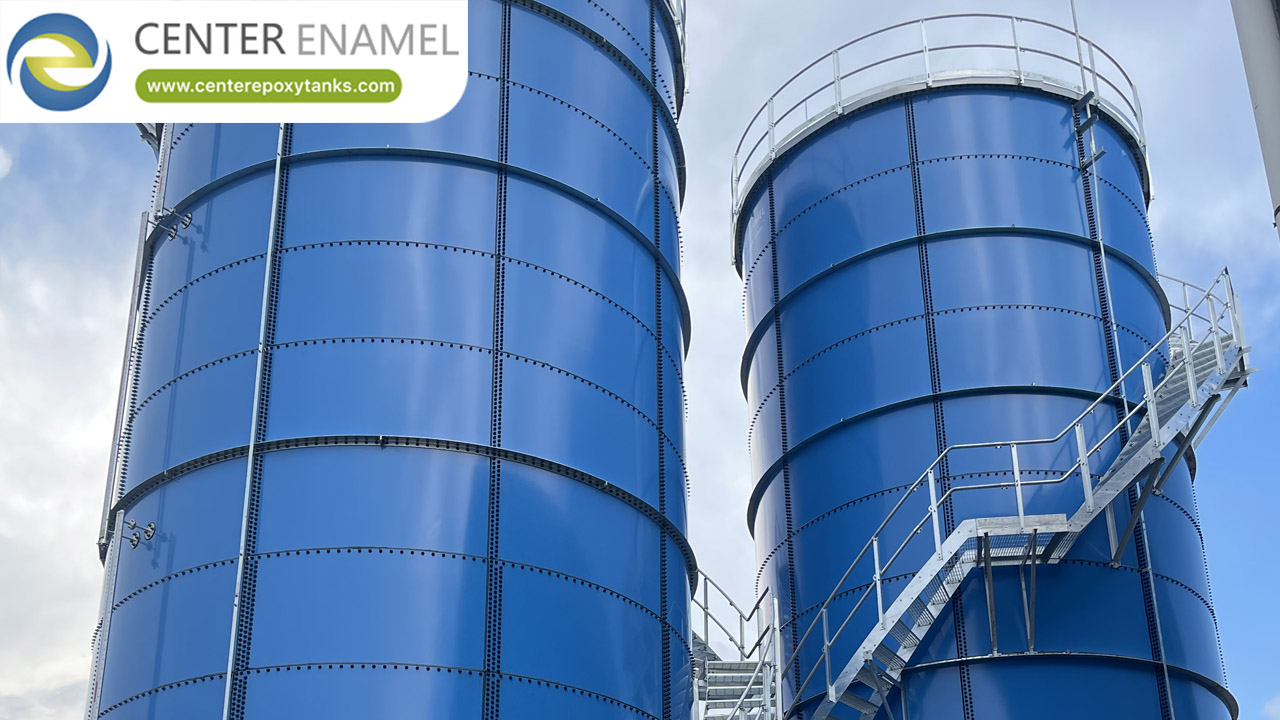
Epoxy Coated Steel Tanks for Pharmaceutical Wastewater Treatment: Engineering Chemical Resilience and Effluent Security
The pharmaceutical manufacturing sector produces some of the most complex, highly variable, and chemically aggressive industrial wastewater streams in the world. Encompassing residual active pharmaceutical ingredients (APIs), antibiotics, organic solvents, complex intermediates, and fluctuating chemical oxygen demand (COD) loads, pharmaceutical effluent requires robust, highly reliable containment infrastructure. Traditional concrete basins and unprotected metal tanks frequently suffer from structural degradation, chemical leaching, and catastrophic coating failure when exposed to these harsh conditions.
To ensure environmental compliance, prevent ground contamination, and maintain long-term asset integrity, modern industrial wastewater treatment facilities increasingly standardize on epoxy coated steel tanks—specifically those engineered with advanced Fusion Bonded Epoxy (FBE) over high-tensile bolted steel structures.
The Chemical and Operational Demands of Pharmaceutical Wastewater
Pharmaceutical effluent streams are rarely uniform. Production cycles shift frequently, introducing diverse challenges to equalization, neutralization, and biological or advanced oxidation treatment stages:
Aggressive Chemical and Solvent Exposure: Effluents often contain residual organic solvents (such as alcohols, acetone, and acetonitrile), acids, and caustic cleaning agents that rapidly strip standard industrial paints and erode unprotected concrete matrices.
Fluctuating pH and Biological Toxicity: Wastewater streams can swing dramatically between highly acidic and alkaline states during batch processing. Furthermore, antibacterial compounds in the effluent can disrupt biological treatment systems, necessitating resilient equalization and pre-treatment holding tanks.
Stringent Environmental Regulations: Zero-liquid discharge (ZLD) mandates and strict regulatory frameworks require containment vessels to offer absolute leak-proof reliability and resistance to permeation over a multi-decade operational lifespan.
Technical Superiority of Fusion Bonded Epoxy (FBE) Bolted Tanks
Epoxy-coated bolted steel tanks provide an advanced engineering solution by combining the structural strength of industrial steel with factory-controlled polymer science:
Factory-Controlled Thermal Curing: High-tensile steel plates undergo automated abrasive grit-blasting (meeting SSPC-SP 10 / Sa 2.5 standards) to create a precise anchor profile. High-performance epoxy resin powders are then electrostatically sprayed and thermally cured in high-temperature ovens (around 200°C), triggering a permanent thermoset cross-linking reaction.
100% Pinhole-Free High-Voltage Holiday Testing: Every coated panel undergoes rigorous electrical holiday testing (e.g., 1100V or 1500V standards) to detect and eliminate microscopic discontinuities before leaving the factory, ensuring complete isolation between the corrosive wastewater and the steel substrate.
Rapid Modular Bolted Installation: Prefabricated panel kits are shipped globally and assembled mechanically on-site using high-grade hardware and specialized chemical-resistant elastomeric seals, drastically reducing construction timelines compared to poured concrete.
Data Table: Comprehensive Comparison of Pharmaceutical Wastewater Containment Options
Technical Parameter | Bolted Fusion-Bonded Epoxy (FBE) Tanks | Cast-in-Place Concrete Basins | Uncoated Welded Carbon Steel Tanks |
Chemical & Solvent Resistance | Superior; inert thermoset FBE matrix resists broad pH swings, solvents, and salts | Moderate to poor; vulnerable to acid spalling, concrete carbonation, and chemical leaching | Poor; unprotected carbon steel corrodes and pits rapidly when exposed to aggressive industrial waste |
Coating Quality Assurance | Factory-controlled thermal curing and 100% high-voltage holiday testing | Dependent on field-applied sealers or membrane liners prone to cracking | Variable; field-applied paints degrade quickly under harsh chemical washdowns |
Installation Speed & Rigging | Rapid modular bolted assembly completed in weeks with minimal heavy machinery | Slow civil construction requiring weeks of framing, pouring, and 28-day curing | Slow field erection involving complex heavy welding and manual coatings |
Volumetric Scalability & Relocation | High; modular bolted design allows seamless capacity expansion or future relocation | Permanent monolithic structure; impossible to scale or relocate without total demolition | Rigid structure; expanding capacity requires complex field cutting and welding |
Frequently Asked Questions (FAQ)
Q: Why are epoxy coated steel tanks ideal for pharmaceutical wastewater treatment?
A: They combine the high structural strength of steel with a thermally fused, chemically inert epoxy barrier that resists aggressive pharmaceutical effluents, organic solvents, and wide pH fluctuations without degrading or leaking.
Q: How does the Fusion Bonded Epoxy (FBE) coating withstand organic solvents and acids?
A: The factory thermal-curing process creates a dense, cross-linked thermoset polymer matrix that completely seals the steel substrate away from aggressive chemical compounds, preventing oxidation, blistering, and structural wall thinning.
Q: Can bolted epoxy-coated tanks be expanded if a pharmaceutical plant increases its production capacity?
A: Yes. Because these tanks feature a modular bolted panel design, they can be easily unbolted and expanded by adding new ring panels to increase storage volume as facility wastewater output grows.
Q: What quality assurance standards govern the manufacture of pharmaceutical wastewater tanks?
A: Quality tanks are engineered in strict accordance with major international codes, including AWWA D103, ISO 28765, and rigorous quality assurance protocols such as high-voltage electrical holiday testing on every panel.


