Epoxy Coated Steel Tanks for Alcohol Wastewater Treatment: Engineering Chemical Resilience and Sustainable Effluent Management
In the beverage, biofuel, and industrial alcohol production sectors, manufacturing operations generate massive volumes of high-strength liquid waste. Commonly known as distillery wastewater or vinasse, alcohol effluent is characterized by an extremely high chemical oxygen demand (COD), high biological oxygen demand (BOD), elevated temperatures, and fluctuating acidic pH levels. Containing organic acids, suspended solids, and residual alcohol traces, untreated or poorly contained effluent can rapidly degrade conventional infrastructure.
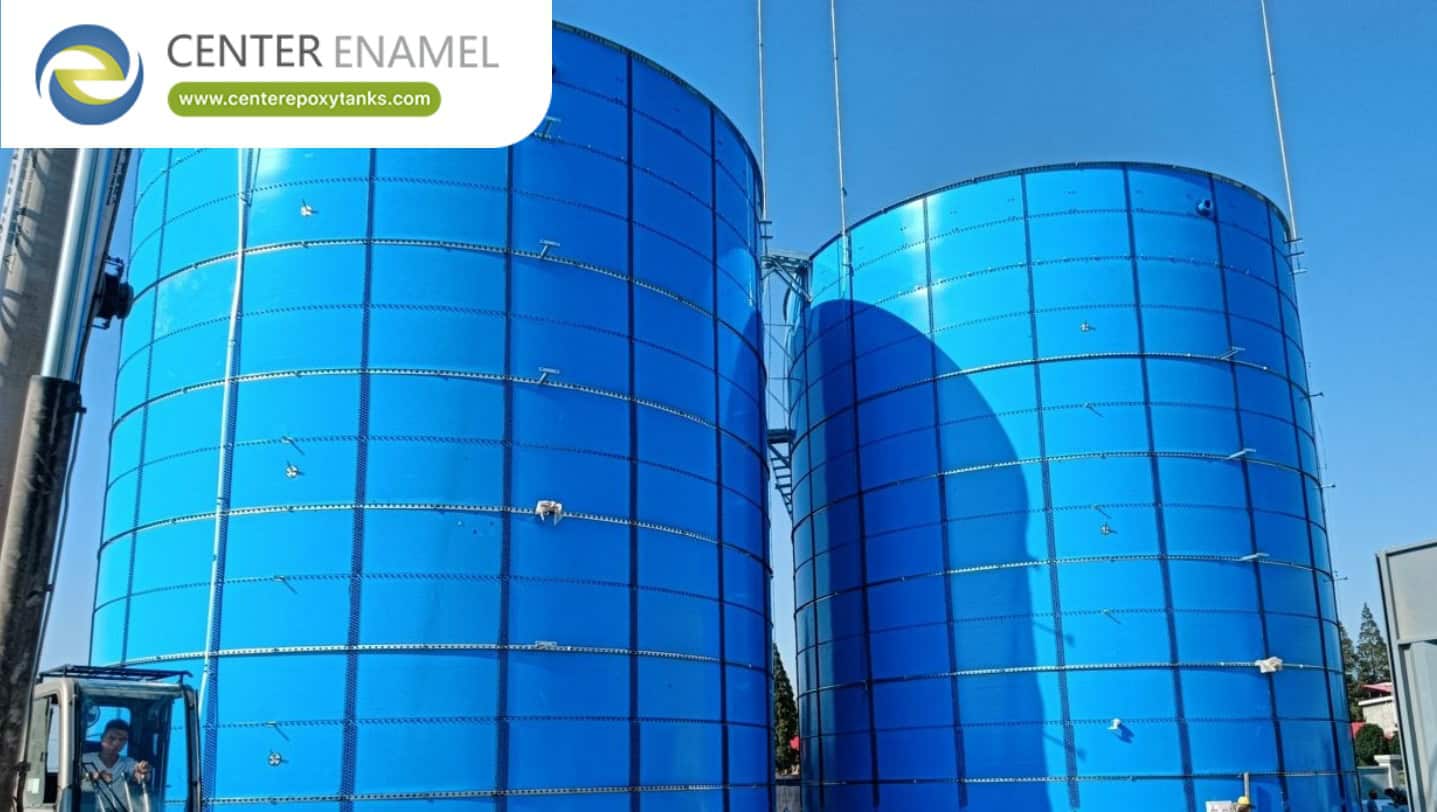
To manage these aggressive industrial effluents safely and efficiently, environmental engineers rely on epoxy coated steel tanks for alcohol wastewater treatment. Combining the high structural load capacity of modular bolted steel panels with advanced thermoset polymer protection, these tanks provide an economic, highly durable containment solution for equalization, anaerobic digestion, and biological processing.
The Chemical Challenges of Alcohol Wastewater Containment
Distillery and alcohol processing wastewater presents unique corrosion and structural challenges that standard municipal water tanks cannot handle:
High Acidity and Organic Acids: Fermentation byproducts create an acidic environment (often ranging from low pH to neutral during buffering), which rapidly pits unprotected carbon steel and deteriorates standard concrete structures through calcium leaching.
High Thermal and Biological Activity: Effluent entering equalization basins or anaerobic digesters often carries elevated temperatures and high microbial loads, accelerating chemical reactions and biological-induced corrosion.
Variable Volumetric Loads: Wastewater treatment plants require continuous expansion capabilities and reliable structural integrity to handle shifting hydraulic retention times (HRT) and gas pressure if integrated with biogas recovery systems.
Technical Superiority of Fusion Bonded Epoxy (FBE) Steel Tanks
To withstand the aggressive chemistry of alcohol wastewater, modern tanks utilize advanced Fusion Bonded Epoxy (FBE) technology rather than basic liquid-applied paints:
Rigorous Surface Preparation: Steel panels are grit-blasted to a near-white metal standard (SSPC-SP 10) to create a precise micro-anchor profile that ensures permanent mechanical and chemical bonding.
Electrostatic Powder Application: High-performance epoxy resin powders are electrically charged and uniformly sprayed onto the steel panels, ensuring complete edge and corner coverage.
Thermoset Thermal Curing: Panels are cured in automated ovens at high temperatures (around 200 degrees Celsius), triggering a cross-linking reaction that forms a hard, chemically inert, and flexible polymer shield.
Holiday Spark Testing: Every interior panel undergoes rigorous high-voltage testing (such as FBE-1500V specifications for aggressive wastewater environments) to guarantee zero pinholes or microscopic voids before assembly.
Data Table: Comprehensive Comparison of Wastewater Tank Technologies
Technical Parameter | Fusion Bonded Epoxy (FBE) Steel Tanks | Cast-in-Place Concrete Basins | Solid Stainless Steel Tanks (304/316) |
Chemical Resistance to Acids | Excellent; inert cross-linked polymer resists organic acids and mild solvents | Poor to Moderate; highly vulnerable to acid attack and microbial concrete degradation | Superior; excellent intrinsic resistance to chemical corrosion |
Installation Speed & Labor | Rapid modular bolted assembly completed in days to weeks | Extremely slow civil pouring, forming, and curing (months) | Complex field welding, pickling, and passivation required |
Capital & Lifecycle Cost | Highly competitive initial cost with a 25 to 30+ year lifespan | High long-term maintenance overhead due to crack remediation and lining repair | Prohibitive initial capital investment for large-scale volumes |
Modularity & Expansion | High; bolted panels allow easy capacity expansion or relocation | Permanent fixed structure; impossible to modify once cured | Rigid welded structure; difficult to alter on-site |
Frequently Asked Questions (FAQ)
Q: Why are standard concrete or painted steel tanks unsuitable for alcohol wastewater?
A: Alcohol wastewater contains organic acids and fermentation byproducts that lower pH and corrode unlined concrete or standard paint coatings, leading to structural degradation, leaks, and environmental contamination.
Q: What is the difference between standard paint and Fusion Bonded Epoxy (FBE)?
A: Unlike air-dried liquid paints that cure via solvent evaporation, FBE is a thermoset polymer powder heat-cured onto grit-blasted steel at high temperatures, creating a dense, cross-linked chemical barrier with superior adhesion and impact resistance.
Q: Can epoxy coated steel tanks be used in anaerobic digestion systems for alcohol wastewater?
| A: Yes. High-grade epoxy-coated bolted tanks are widely utilized for anaerobic digestion and equalization basins in industrial wastewater treatment, provided the operating temperature and chemical concentrations align with the specific epoxy formulation ratings.
Q: How do you verify the integrity of an epoxy coating before putting the tank into service?
A: Manufacturers perform rigorous high-voltage "holiday" spark testing (such as 1500V tests for aggressive wastewater service) across all interior surfaces to detect and eliminate any microscopic pinholes prior to field installation.


