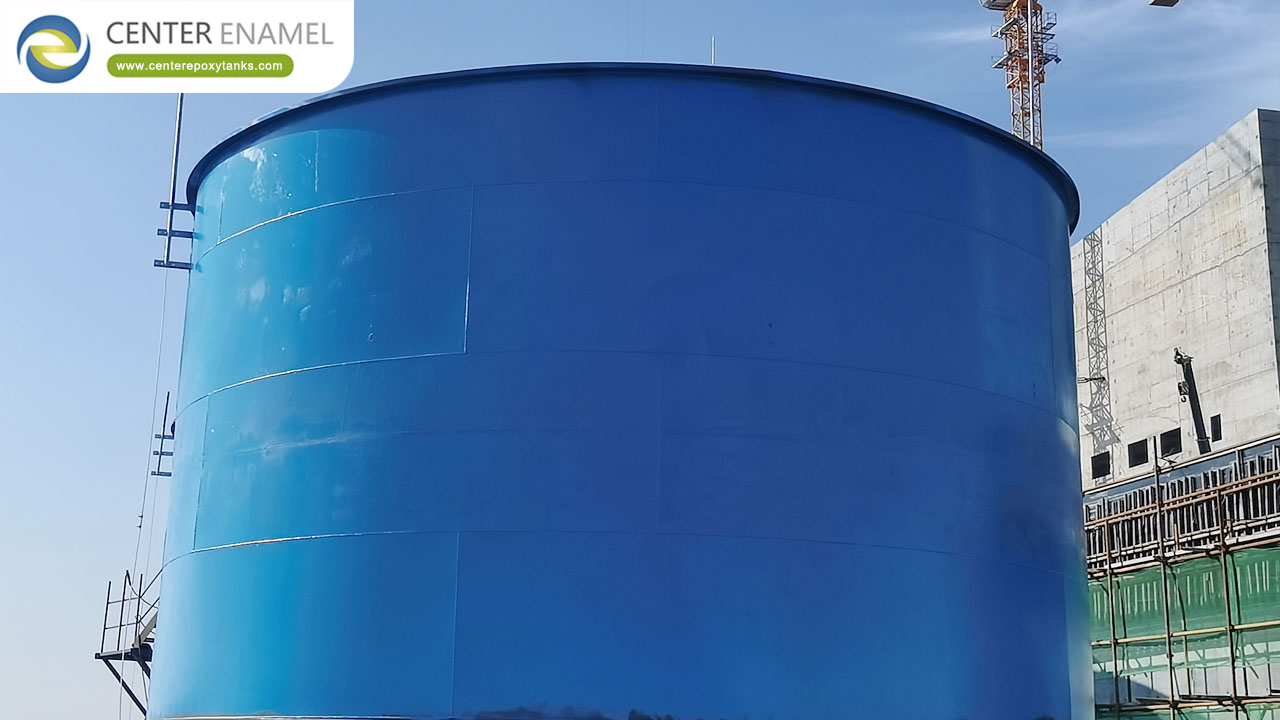
Durable Welded Carbon Steel Tanks for Reliable Heavy Fuel Oil (HFO) Storage Across Industries
In the global industrial sector, the storage of Heavy Fuel Oil (HFO) presents unique engineering challenges, including high viscosity management, thermal stability, and strict leak prevention. Welded Carbon Steel Tanks remain the industry standard for HFO containment, offering the structural rigidity and thermal conduction properties required for high-volume energy reserves.
Shijiazhuang Zhengzhong Technology Co., Ltd (Center Enamel), a premier global provider of industrial storage solutions, engineers welded carbon steel tanks that comply with international safety codes, ensuring reliable performance in power generation, marine bunkering, and petrochemical processing.
1. Technical Engineering: The HFO Containment Framework
Heavy Fuel Oil requires a storage environment that can handle high temperatures and aggressive chemical compositions. Unlike light fuels, HFO must often be heated to remain pumpable, placing thermal stress on the tank structure.
Core Performance Matrix
Technical Parameter | Standard Reference | Engineering Metric |
Design Standard | API 650 / GB 50341 | Atmospheric storage of petroleum |
Material Grade | Q235B / Q355B / ASTM A36 | High-tensile carbon steel |
Welding Protocol | AWS D1.1 / ASME IX | X-ray & Ultrasonic verified seams |
Corrosion Protection | ISO 12944 | Multi-layer C5-level epoxy coating |
Thermal Insulation | Mineral Wool / Polyurethane | Maintains 50°C–80°C operating temp |
Design Life | Maintenance Dependent | 30 – 50 Years |
2. Strategic Advantages for Heavy Industry
● Structural Integrity for High-Density Liquids: HFO has a high specific gravity. Welded carbon steel provides the necessary hoop strength and bottom-plate thickness to support large-scale vertical storage without the risk of deformation.
● Thermal Conductivity & Heating Integration: Carbon steel efficiently conducts heat, making it the ideal substrate for internal heating coils (steam or electric). This ensures the HFO maintains optimal viscosity for transfer to boilers or engines.
● Seismic and Wind Resilience: Engineered to ASCE 7-22 and API 650 seismic protocols, these tanks are designed to maintain containment during natural disasters, a critical requirement for power plant fuel security.
● Zero-Leakage Assurance: Unlike bolted systems, fully welded seams provide a seamless internal surface, eliminating potential leak points at joints and making the tank ideal for hazardous hydrocarbon storage.
3. Key Features for Reliable HFO Management
1. High-Performance Internal Coatings: To prevent biogenic corrosion and sludge buildup, internal surfaces are treated with chemical-resistant epoxies tested against high-sulfur fuel environments.
2. Advanced Thermal Insulation Systems: For facilities in colder climates or those requiring precise temperature control, tanks are equipped with high-density rock wool insulation and aluminum cladding to minimize energy loss.
3. Comprehensive Safety Instrumentation: Center Enamel tanks integrate with modern PLC systems, including Radar Level Transmitters, high-low temperature alarms, and fire-suppression foam chambers.
4. Industrial Applications
● Power Generation: Bulk fuel storage for thermal power plants and backup generators.
● Marine & Bunkering: Shore-based HFO reservoirs for vessel refueling in international ports.
● Manufacturing & Mining: Large-scale energy reserves for smelting, cement production, and heavy machinery operations.
5. Why Choose Center Enamel for HFO Storage?
● Global Project Authority: With over 30 years of experience and projects in 100+ countries, we understand the regulatory and environmental requirements of global energy infrastructure.
● Integrated Storage Portfolio: Beyond welded steel, we offer a comprehensive range of solutions including Epoxy Coated Tanks, Glass-Fused-to-Steel tanks, and Aluminum Dome Roofs for secondary protection.
● Quality Verification: Every welded tank undergoes rigorous non-destructive testing (NDT), including vacuum box testing for floor seams and hydrostatic testing for shell integrity.
6. Frequently Asked Questions (FAQ)
Q: Does Center Enamel provide site-welding services?
A: Yes. We offer end-to-end support, including prefabricated plate delivery and expert on-site welding and inspection to ensure compliance with API 650 standards.
Q: How do you prevent internal corrosion from high-sulfur fuel?
A: We utilize heavy-duty, high-build epoxy liners (C5-M or C5-I rated) that create a permanent barrier against sulfuric acid and microbial growth common in HFO sludge.
Q: Can these tanks handle extreme wind loads?
A: Absolutely. Our tanks are engineered to withstand site-specific environmental loads, including wind speeds up to 250 km/h and seismic Category D or E zones.


