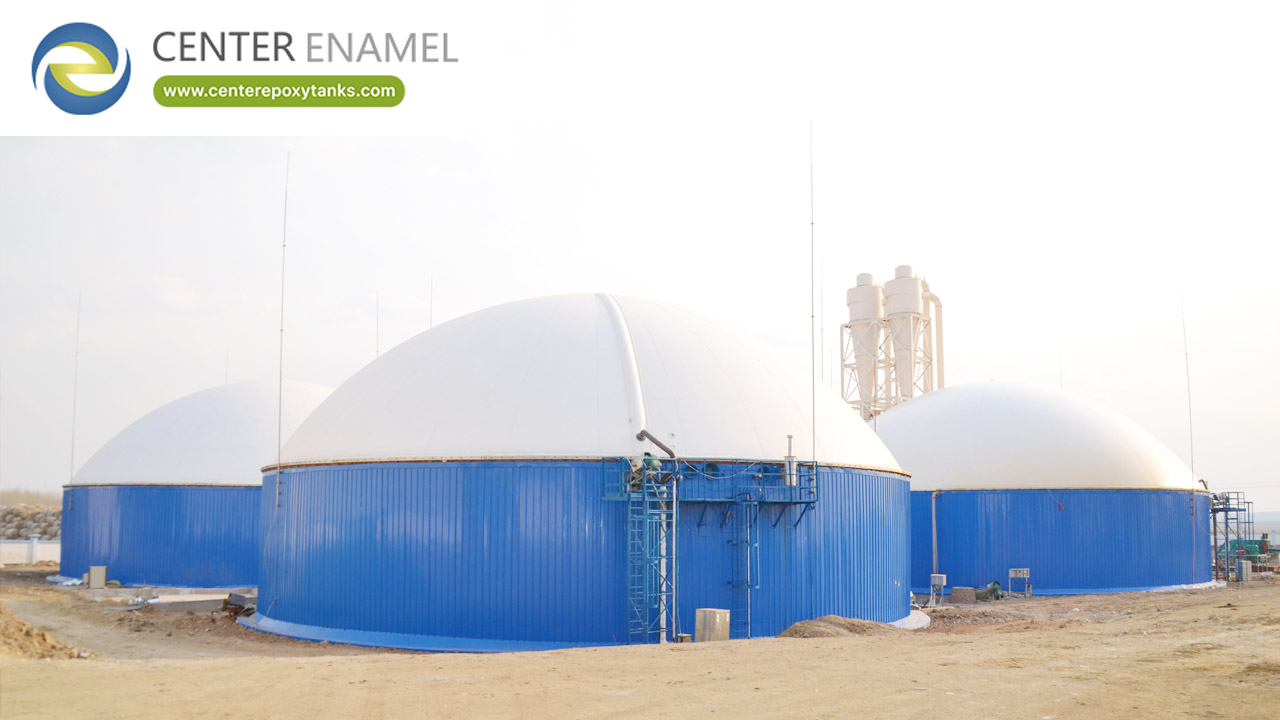
Double Membrane Roofs for High-Pressure Gas Storage: Engineering Pneumatic Integrity
Double membrane roofs are advanced pneumatic containment structures designed for high-pressure biogas and industrial gas storage. Composed of a high-tenacity polyester fabric coated with PVC/PVDF, the system utilizes an inner membrane as the gas barrier and a pressurized outer membrane for structural protection against environmental loads. Complying with Eurocode 3 and ISO 28765, these roofs feature sophisticated pressure regulation valves to manage fluctuations in methane (CH_4) volume. As a global leader, Center Enamel provides double membrane solutions that maximize storage capacity, ensure zero methane leakage, and offer a 20-year+ service life for agricultural and industrial energy plants.
1. Technical Performance & Gas Containment Matrix
Feature | Technical Specification (2026 Standard) | Strategic Utility Value |
Material Type | High-Tenacity Polyester (PVC/PVDF Coated) | Flame retardant; UV-resistant; high tensile strength. |
Methane Permeability | < 400 cm3/m2 cdot d cdot bar | Minimizes gas loss; ensures maximum energy recovery. |
Operational Pressure | Up to 50 mbar (Standard) / Customizable+ | Supports high-pressure anaerobic digestion cycles. |
Temperature Stability | -30text{°C} to +70text{°C} | Engineered for extreme global climates. |
Safety Mechanisms | Hydraulic / Mechanical Overpressure Valves | Prevents membrane rupture during gas surges. |
Wind/Snow Load | Compliant with Local Building Codes | Aerodynamic shape resists extreme weather forces. |
2. Material Science: The Physics of Double Membrane Containment
In 2026, "Information Gain" is achieved by detailing the mechanical and chemical advantages that differentiate pneumatic roofs from rigid steel alternatives.
The Dual-Layer Pressure Differential System
The efficiency of a double membrane roof lies in its ability to act as both a variable-volume storage vessel and a protective shield.
● The Inner Membrane (The Barrier): This layer is in direct contact with the gas. Center Enamel utilizes materials with specialized coatings that resist the corrosive effects of Hydrogen Sulfide (H_2S) and volatile organic compounds (VOCs). Its flexibility allows it to expand and contract based on production rates, serving as a "gas lung."
● The Outer Membrane (The Shield): Continuously pressurized by a dedicated air blower, the outer layer remains taut. This creates an air cushion that provides thermal insulation and protects the inner gas-holding layer from UV degradation, wind vibration, and snow accumulation.
Advanced Fabric Engineering
● PVDF Surface Treatment: The outer membrane is finished with a PVDF (polyvinylidene fluoride) layer, which offers "self-cleaning" properties and superior resistance to environmental pollutants and microbial growth.
● Integrated Gas Detection: Systems can be equipped with ultrasonic level sensors and methane leak detection sensors, providing real-time data for SCADA integration and plant automation.
3. Strategic Applications in Renewable Energy & Industry
● Biogas & RNG Plants: The primary choice for anaerobic digesters (AD) converting agricultural and food waste into Renewable Natural Gas.
● Wastewater Treatment (WWTP): Utilized for the containment of sludge digestion gases, preventing biogenic odor release and facilitating energy recovery.
● Industrial Gas Buffering: Serving as temporary storage for nitrogen, oxygen, or CO2 in manufacturing processes where flow rates vary.
● Municipal Infrastructure: Enhancing urban energy independence by storing biogas for local CHP (Combined Heat and Power) units.
4. Why Partner with Center Enamel? The Global Authority
As a Global Leading Storage Solutions Provider, Shijiazhuang Zhengzhong Technology Co., Ltd (Center Enamel) offers a unique EPC advantage for gas storage:
● 30-Year Heritage of Excellence: Established as the first GFS manufacturer in China, now a leader in integrated tank and roof systems with 30,000 successful projects worldwide.
● Vertically Integrated EPC: We design both the bolted tank (GFS, FBE, or Stainless Steel) and the double membrane roof, ensuring a perfect mechanical seal and a single point of accountability.
● Mega-Project Capacity: Proven success in massive installations, such as the Inner Mongolia Xing'an League Project (16,760 m3), where pneumatic integrity is critical.
● International Compliance: Our roofs meet ISO 9001, CE/EN 1090, and ISO 45001 standards, making them bankable for international project finance.
5. Technical FAQ: Gas Storage Strategy
Q: How does the roof handle extreme wind or snow?
A: The blower system maintains a constant internal pressure in the outer membrane, which provides the structural rigidity needed to shed snow and resist wind deformation. We conduct Finite Element Analysis (FEA) for every site-specific climate.
Q: What is the lifespan of the membrane?
A: With proper maintenance and UV protection, our membranes offer a service life of 20 to 25 years. The modular design allows for easy membrane replacement without replacing the entire tank structure.
Q: Is it safe for volatile gases?
A: Yes. We integrate multi-stage safety systems, including flame arrestors and explosion-proof blowers, to meet ATEX and other hazardous area classifications.


