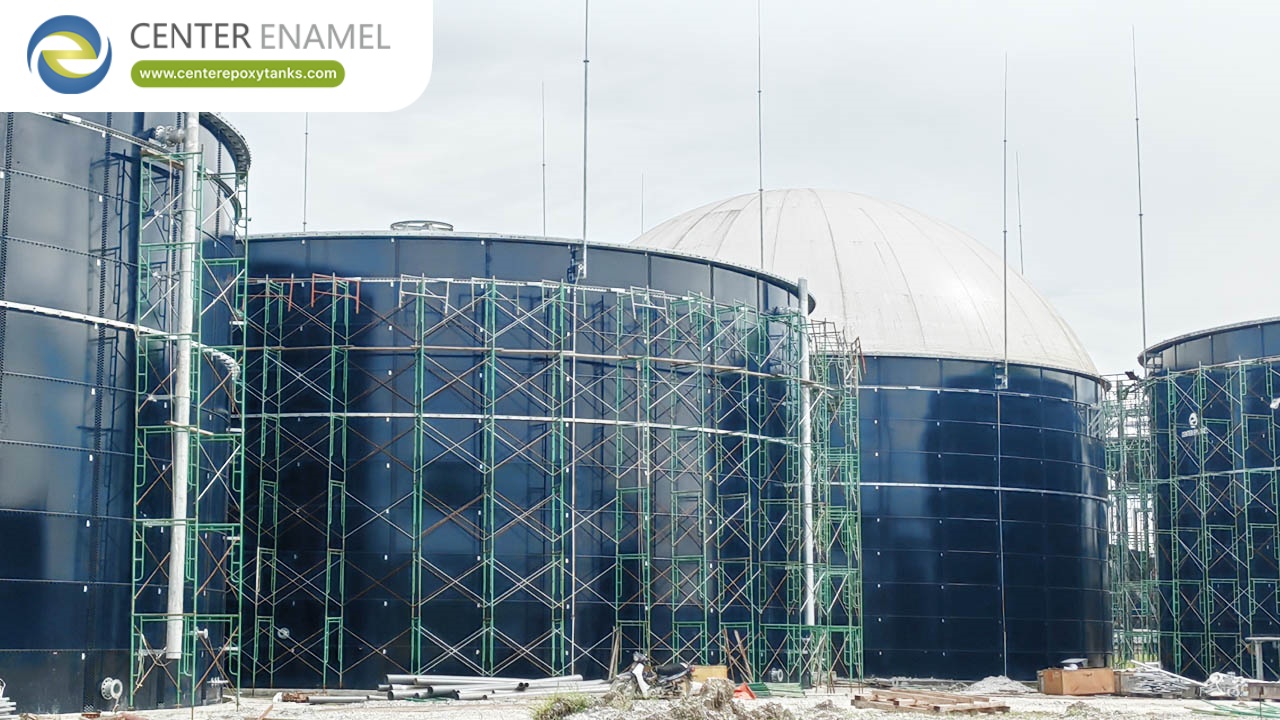
Double Membrane Roofs for Epoxy Coated Steel Anaerobic Digestion Tanks
In the modern landscape of renewable energy generation, municipal wastewater treatment, and organic waste valorization, anaerobic digestion (AD) serves as a primary technology for converting complex organic biomass into clean, renewable biogas. Designing a high-performance anaerobic digestion facility requires pairing a robust, chemically inert vertical containment tank with a reliable, flexible gas storage system.
Among all structural configurations, combining epoxy-coated steel anaerobic digestion tanks with double membrane roofs represents the pinnacle of modern bioenergy engineering. This synergistic pairing delivers exceptional structural durability, rapid modular deployment, and integrated variable-volume gas containment.
The Synergy of Epoxy-Coated Steel Tanks and Double-Membrane Roofs
Epoxy-coated steel tanks (constructed from high-strength bolted steel plates treated with specialized thermal-cured or liquid epoxy coatings) provide a superior alternative to traditional concrete or welded steel structures. When crowned with a custom-engineered double-membrane roof, the entire system functions as an integrated, dual-purpose containment asset:
Vertical Wall Durability: The epoxy-coated steel shell provides elite resistance to abrasion, moisture, and aggressive wastewater chemistry, ensuring a multi-decade structural lifespan without the need for recurring interior repainting.
Top-Mounted Gasholder Integration: The double-membrane roof mounts securely directly onto the perimeter of the epoxy-coated tank rim. It acts simultaneously as the weather-tight protective cover for the digestion process and an active, pressurized variable-volume gasholder.
Pressure Stabilization: An automated low-pressure blower system maintains constant air pressure in the outer membrane, exerting steady downward force on the inner gas containment bladder to ensure a uniform, reliable delivery pressure to downstream combined heat and power (CHP) engines or upgrading units.
Technical Performance Matrix: Digestion Tank & Roof Technologies
Technical Parameter | Epoxy-Coated Steel Tanks with Double-Membrane Roofs | Cast-in-Place Concrete Digesters | Field-Welded Carbon Steel Tanks & Fixed Roofs | Bolted Stainless Steel Tanks |
Installation Velocity & Equipment | Rapid modular bolting on-site; completed in days with minimal heavy crane fleets | Extremely slow; requires intensive civil formwork, rebar tying, and multi-week curing | Slow; requires extensive field plate rolling, welding, and X-ray testing | Rapid bolted assembly, but higher material cost |
Chemical & Corrosion Resistance | Superior; thermally cured epoxy resists organic acids and wastewater chemistry | Moderate; vulnerable to concrete carbonation and acid gas attack over time | Low; highly vulnerable to internal vapor-space pitting and wall thinning | Exceptional chemical resistance, but at a significantly higher capital cost |
Biogas Storage Flexibility | Integrated dual-purpose structure; acts as both tank roof and active variable-volume gasholder | Requires a separate, costly external gasholder tank or fixed headspace | Requires external gas storage or lacks gas collection entirely | Requires external gasholder connection |
Global Standards Compliance | Manufactured strictly to AWWA D103, ISO 28765, ATEX, and ISO 9001 | Dependent on local civil engineering batch pours and site curing inspections | ASME pressure vessel or localized structural steel codes | AWWA D103 bolted tank guidelines |
Key Advantages for Bioenergy Plant Operators
1. Accelerated Project Commissioning
Because epoxy-coated steel tank panels are precision-manufactured off-site under strict quality control and bolted together rapidly in the field, construction timelines are reduced by up to 50% compared to concrete builds. This allows renewable energy facilities to begin operations and generate revenue much faster.
2. Tailored Resistance to Aggressive Biogas Atmospheres
Anaerobic digestion headspaces accumulate corrosive gases such as hydrogen sulfide ($H_2S$) and water vapor. The inner membrane of the double-membrane roof is fabricated from high-tenacity polyester fabrics coated with specialized PVC/PVDF layers that are chemically inert, preventing degradation and ensuring absolute gas-tight integrity.
Frequently Asked Questions (FAQ)
Q: Why pair a double-membrane roof with an epoxy-coated steel anaerobic digestion tank?
A: Epoxy-coated steel tanks provide rapid, modular installation and superior corrosion resistance for the liquid digestate zone, while the double-membrane roof caps the system with an integrated, variable-volume gasholder that eliminates the need for separate external gas storage vessels.
Q: How do double-membrane roofs mount onto bolted epoxy-coated steel tanks?
A: The double-membrane roof is secured directly to the top perimeter angle flange of the epoxy-coated steel tank using specialized clamping profiles, continuous sealing gaskets, and stainless steel hardware to ensure a 100% gas-tight and weather-tight seal.
Q: Are epoxy-coated steel AD tanks resistant to hydrogen sulfide ($H_2S$) and organic acids?
A: Yes. The specialized epoxy coatings applied to the steel plates are chemically formulated to withstand aggressive wastewater environments, fluctuating pH levels, and corrosive bio-gases, preventing internal wall pitting and structural thinning.
Q: What safety systems are included with double-membrane gasholder roofs?
A: Standard systems include automated dual-air blower controls, inner-membrane overpressure protection, mechanical or liquid safety relief valves, continuous gas leak detection sensors, and lightning protection grounding to ensure safe operation.


