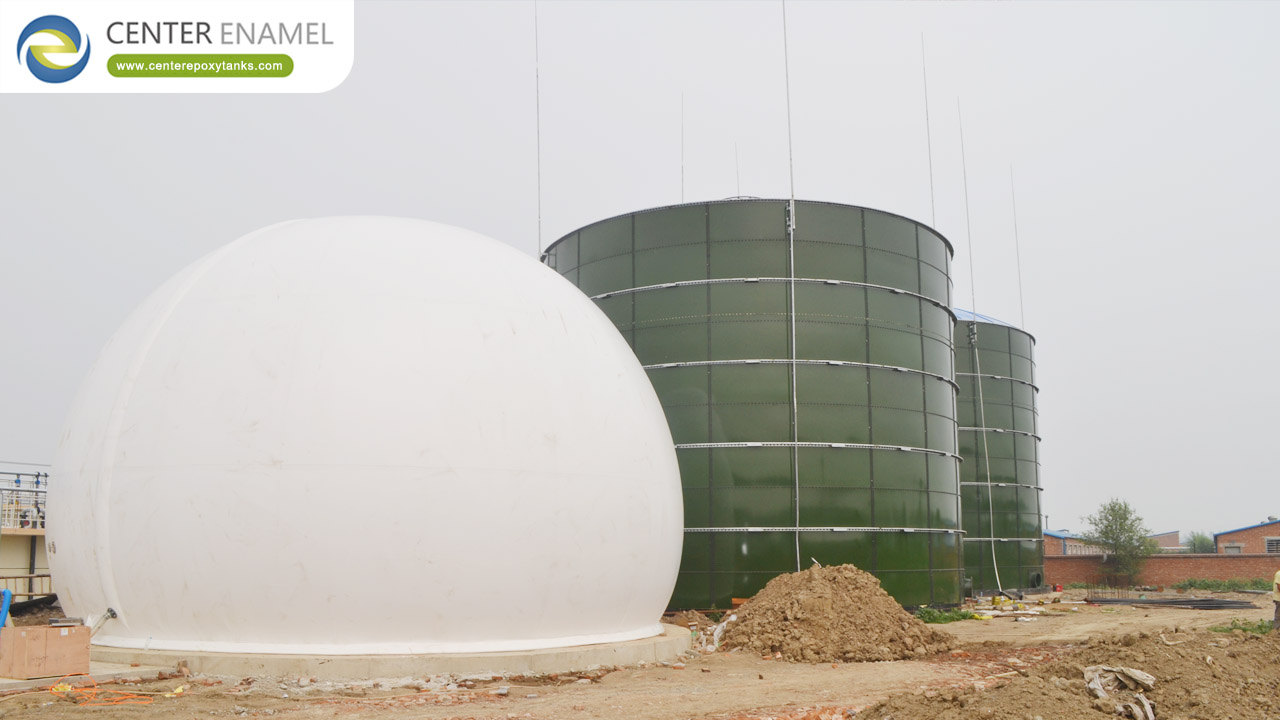
Double Membrane Biogas Storage Balloons: Engineering & Procurement Guide
In modern anaerobic digestion (AD) plants and wastewater treatment facilities, managing gas production fluctuations is vital for operational stability. Because microbes produce biogas (CH4 and CO2) continuously, but combined heat and power (CHP) units or upgrading systems consume gas based on fluctuating demand profiles, high-efficiency storage is required.
Double membrane biogas storage balloons (also known as gasholders) have become the global standard for low-pressure gas containment. Operating as either standalone, ground-mounted spheres or as integrated tank roofs, these structures leverage automated pressure systems to deliver continuous, safe, and cost-effective gas regulation. This guide reviews the mechanical design, material composition, safety features, and procurement criteria for double membrane biogas systems.
1. Thermodynamic and Structural Principles
A double membrane gasholder is a variable-volume, constant-pressure system consisting of two distinct flexible polymer membranes anchored tightly to a concrete base or a storage tank rim.
The Dual-Membrane Layout
● The Outer Membrane: Functions as the external structural exoskeleton. It is permanently inflated with ambient air by an automated, low-kilowatt centrifugal blower. This constant inflation creates a rigid, spherical, or spherical-dome profile that protects the system from outdoor weathering, high wind shears, and regional snow loads.
● The Inner Membrane: The active containment barrier for the biogas. This membrane expands and contracts independently within the protected headspace of the outer membrane as biogas moves into or out of the system.
● The Interstitial Air Space: The pressurized zone between the two membranes. An automated air regulation valve monitors this cavity, constantly modulating air pressure to match the volumetric movement of the inner gas bag. This maintains a steady backpressure on the downstream gas utilization equipment.
Pressure Regulation Math
To ensure stable gas delivery to a CHP engine without causing pressure spikes, the air pressure within the interstitial cavity must balance the internal pressure of the biogas along with the tension and self-weight forces exerted by the structural fabric:
Standard operating pressures typically range between 10 mbar and 50 mbar (1,000 -5,000 { Pa}), providing a highly reliable, low-pressure delivery line that eliminates the need for expensive, energy-intensive high-pressure gas compressors.
2. Advanced Material Science: Cross-Linked Polymers
Biogas is a highly corrosive, humid, and combustible mixture. It contains high concentrations of methane (CH4), carbon dioxide (CO2), and trace levels of aggressive hydrogen sulfide (H2S). Consequently, standard PVC fabrics will quickly embrittle and fail.
Premium manufacturers fabricate these balloons using heavy-duty, high-tenacity polyester base fabrics (PES) multi-coated with advanced polyvinyl chloride (PVC) layers and specialized surface finishes:
● Methane Permeation Barrier: The inner membrane features an ultra-dense polymer matrix with a very low methane permeability rating according to DIN 53380) to prevent hazardous gas loss and minimize micro-leakage.
● H2S & Chemical Resistance: The gas-facing side is finished with a chemical-grade polyurethane (PU) or fluoropolymer (PVDF) protective layer to prevent structural weakening from acidic H2S condensates.
● UV & Atmospheric Protection: The outer membrane includes an integrated PVDF lacquer coating. This coating reflects solar radiation, resists UV degradation, prevents environmental dirt accumulation, and carries a strict flame-retardant classification (such as DIN 4102 B1 or EN 13501-1).
3. Integral Safety Systems & Monitoring Components
Because biogas is flammable and forms explosive mixtures when combined with oxygen, double membrane balloons incorporate strict, multi-layered safety mechanisms:
● Hydrostatic or Mechanical Pressure Relief Valves: Protects the system from catastrophic over-pressure or under-pressure events. If a blower fails or gas production spikes unexpectedly, the safety valve automatically vents excess gas or admits air to prevent structural tearing or liner collapse.
● Ultrasonic Level Sensors: Suspended from the apex of the outer membrane, an ultrasonic transmitter constantly measures the physical distance to the top of the inner gas membrane. This delivers continuous, real-world volumetric capacity data (0% to 100%) to the main plant PLC to control gas flared systems or CHP feed rates.
● Gas Leakage Detection System: Air sensors monitor the air chamber between the inner and outer membranes. If methane is detected within the interstitial space, it indicates a micro-tear in the inner gas membrane, triggering an immediate alarm long before gas can escape into the open atmosphere.
4. Architectural Deployments: Standalone vs. Tank-Mounted
Project engineers can specify double membrane systems in two primary configurations:
Design Format | Structural Setup | Best Use Case | Capital Cost Index |
Tank-Mounted Roof | Installed directly on top of a concrete or bolted steel anaerobic digester tank; replaces a traditional solid roof. | Standard agricultural and municipal AD plants; maximizes space by combining digestion and storage. | Highly Economical (Saves material cost by serving as both tank cover and gasholder). |
Standalone Ground-Mounted | Anchored via a heavy steel retaining ring directly to a flat concrete slab at ground level. | Industrial chemical parks, centralized wastewater hubs, or plants with massive gas storage needs. | Moderate to High (Requires dedicated site footprint and independent concrete foundation). |
5. Procurement Vetting Checklist
When issuing a technical Request for Proposal (RFP) for a biogas storage balloon asset, ensure your procurement criteria include these essential baselines:
1. Wind and Snow Load Validation: Demand a localized structural engineering calculation verifying the outer membrane inflation pressure can withstand regional wind speeds (e.g., up to 150 km/h) and localized snow accumulation metrics without distorting.
2. Ex Compliance Certification: All electronic components situated within or near the gas zone—including ultrasonic level meters, gas sensors, and pressure switches—must carry valid ATEX Zone 1 or Zone 0 explosion-proof certifications.
3. Blower Redundancy Configuration: For critical gas infrastructure, require a dual-blower setup featuring an automated duty-standby switchover. If the primary inflation fan drops pressure, the backup blower engages instantly to maintain the outer membrane's structural shape.
Double membrane biogas storage balloons provide an exceptionally reliable, flexible, and economically optimized solution for low-pressure gas management. By separating environmental protection (outer membrane) from gas containment (inner membrane) and governing the system via automated air-pressure loops, operators ensure their bioenergy facilities run safely, efficiently, and with minimal operational downtime.


