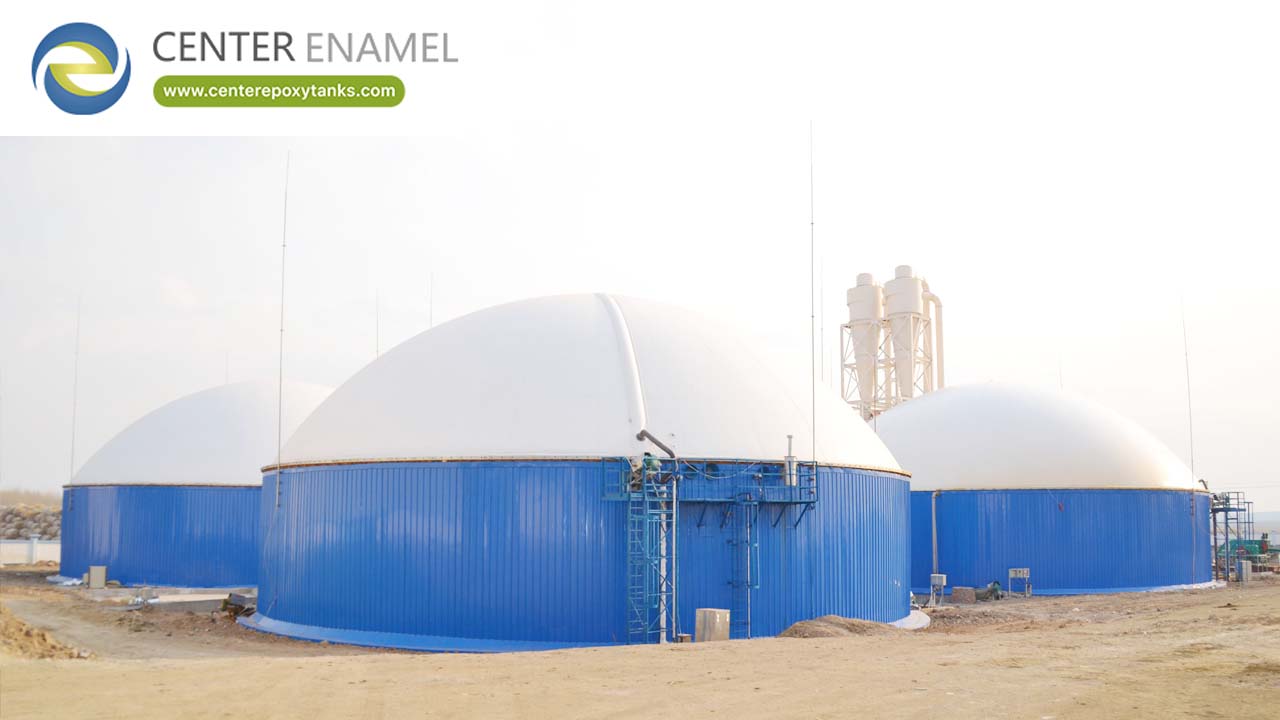
Double Membrane Biogas Holder: Engineering & Design Guide
In the transition to sustainable energy, the Double Membrane Biogas Holder has emerged as the definitive storage solution for anaerobic digestion (AD) plants. These systems function as "dynamic lungs" for biogas, providing a flexible, volumetric storage capacity that balances intermittent gas production with energy consumption demands. By utilizing advanced polymers and pressurized air control, they offer a scalable, corrosion-resistant, and cost-effective alternative to rigid, fixed-roof steel or concrete tanks.
1. Structural Architecture & Mechanics
The double membrane system operates on a differential pressure principle. It typically consists of three distinct layers of high-strength, flexible textile:
1. Inner Membrane: Acts as the primary gas barrier, containing the biogas.
2. Outer Membrane: Functions as the structural and weather shield, protecting the system from environmental loads (wind, snow, rain).
3. Bottom Membrane: Acts as the floor in freestanding installations (integrated digesters use the tank top as the base).
The system is maintained by a specialized air blower that keeps the interstitial space (the gap between the inner and outer membranes) pressurized. This pressure is the mechanism that keeps the outer dome rigid and applies the necessary "squeeze" on the inner gas membrane to deliver the biogas at a constant, controlled pressure to downstream equipment like engines or flares.
The Physics of Membrane Tension
To ensure structural stability under variable gas volumes, the membrane material must be engineered to withstand specific tensile stresses. The mechanical stress on the dome surface is defined by the thin-wall pressure vessel approximation:
2. Advanced Material Science
Biogas is a challenging medium. It is often saturated with moisture and contains hydrogen sulfide ($H_2S$), which creates a corrosive environment that would degrade standard metals and plastics.
● Textile Core: Typically constructed from high-tenacity polyester fabric, chosen for its high tensile strength and elasticity.
● Coatings: The fabric is coated with specialized PVC (Polyvinyl Chloride) or PVDF (Polyvinylidene Fluoride) formulations. These are treated with:
○ Anti-Microbial/Anti-Fungal agents: To prevent degradation from biological contaminants.
○ UV Inhibitors: To protect the outer membrane from solar radiation.
○ Gas Impermeability additives: Specifically for the inner membrane to prevent methane seepage.
3. Comparative Analysis: Storage Technologies
For renewable energy project developers, selecting the storage method is a balance between CAPEX and long-term durability.
Storage Feature | Double Membrane Holder | Fixed Steel Roof | Concrete Dome |
Volumetric Flexibility | High (Expands/Contracts) | None (Fixed volume) | None |
Corrosion Resistance | Excellent (Inert polymer) | Low (Requires lining) | Moderate (Needs coating) |
Installation Time | Rapid (Days) | Slow (Weeks) | Very Slow (Months) |
Gas Pressure Control | Automatic/Constant | Manual/External | Difficult |
Maintenance | Low (Minimal moving parts) | High (Painting/Coating) | High (Crack repair) |
4. Integration with Anaerobic Digesters
The double membrane holder is most effectively deployed as a "rooftop" unit mounted directly onto Glass-Fused-to-Steel (GFS) anaerobic digesters.
Key Integration Advantage: By mounting the biogas holder directly on top of the GFS digester, the plant footprint is minimized, and the cost of piping and separate gas-holder foundations is eliminated.
Safety & Automation Systems
Modern biogas holders are integrated into the plant's SCADA system for automated control:
● Ultrasonic Level Sensors: Continuously track the dome's height to calculate real-time gas volume.
● Pressure Relief Valves: Hydraulic safety valves are mandatory to prevent over-pressurization during system surges.
● Explosion-Proof Blowers: Air supply systems are designed with ATEX-certified components to ensure safety in hazardous zones.
Frequently Asked Questions (FAQ)
Q: How does the system handle high wind or snow loads?
A: The air blower system is equipped with pressure-sensing controls. If external wind pressure increases, the blower automatically increases the air pressure within the outer membrane, stiffening the dome to resist deformation and shedding snow efficiently.
Q: What is the typical operational lifespan?
A: With proper maintenance and UV protection, double membrane holders are designed for a 15 to 20-year service life. The inner membrane, which is protected from the elements, often outlasts the outer membrane.
Q: Is it possible to retrofit a double membrane dome onto an existing concrete tank?
A: Yes. This is a common upgrade for legacy biogas plants. The top of the concrete tank is fitted with a specialized steel clamping ring (the "tension ring"), which serves as the mounting base for the membrane holder.
Q: Do these systems require frequent cleaning?
A: Most outer membranes utilize a self-cleaning finish (often PVDF or a high-gloss lacquer) that creates a "lotus effect," allowing rain to wash away dust and debris. Manual cleaning is typically required only in extremely dusty or arid environments.


