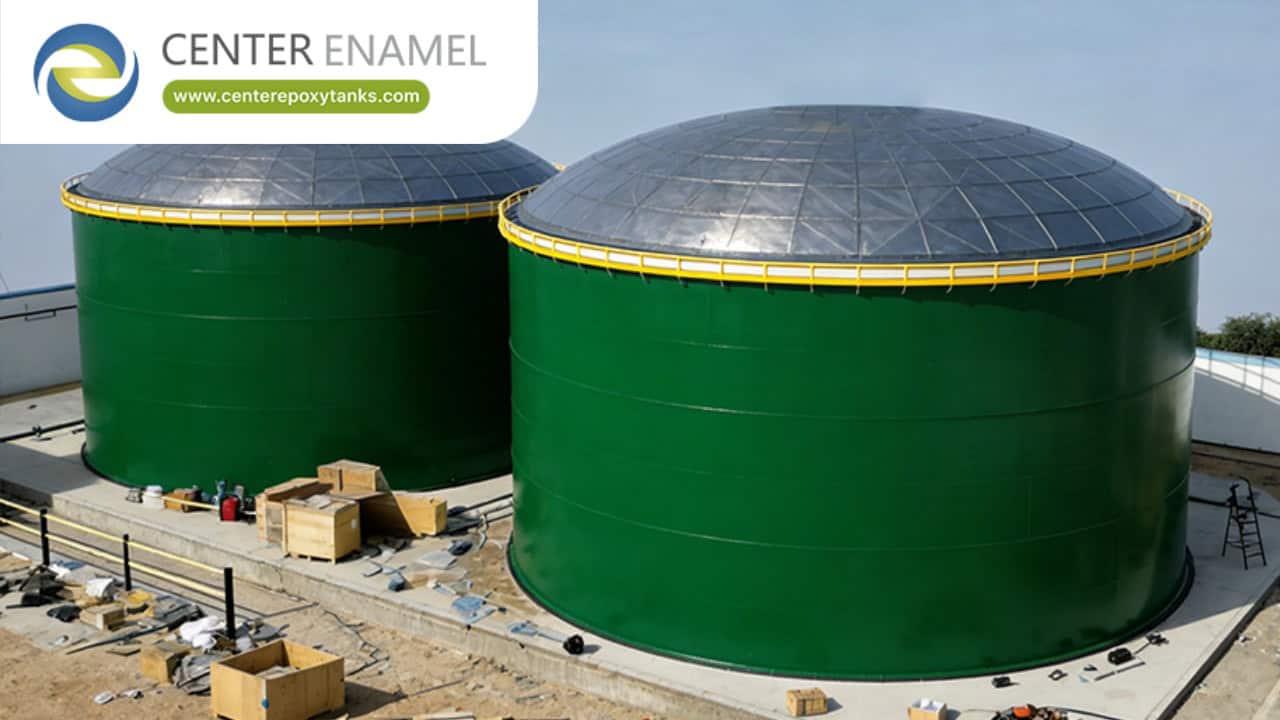
Custom-Built Welded Steel Storage Tanks for Stormwater and Rainwater Harvesting
As urban development expands and climate variability increases extreme weather events, sustainable water management has transitioned from a localized municipal concern into a critical global priority. Effective stormwater attenuation and industrial rainwater harvesting are essential for preventing urban flooding, reducing strain on municipal sewer grids, and conserving freshwater resources.
Achieving these objectives at scale requires robust, high-capacity, and dependable containment infrastructure. Among all available options, custom-built welded steel storage tanks stand out as the engineering gold standard, offering unmatched structural integrity, custom geometrical flexibility, and decades of reliable service life.
The Engineering Superiority of Welded Steel Storage Tanks
Unlike standard modular containers or precast concrete vaults, custom-built welded steel tanks are fabricated to exact project specifications using high-grade structural steel. This offers several distinct mechanical advantages:
Monolithic Structural Integrity: Fabricated via advanced plate rolling and fusion welding (utilizing Submerged Arc Welding and Gas Metal Arc Welding), welded steel tanks achieve complete joint continuity. This monolithic construction eliminates the gaskets and mechanical fasteners prone to degradation in bolted designs.
Unrivaled Ductility and Seismic Resilience: Structural steel possesses high tensile strength (typically starting at 55,000 pounds per square inch) combined with exceptional ductility. This allows welded tanks to absorb abnormal dynamic shocks, including seismic ground acceleration, high wind loads, and intense thermal fluctuations without structural cracking.
Unlimited Geometric Customization: Whether a project requires low-profile ground reservoirs, tall standpipes, or custom footprint dimensions to fit restricted industrial site boundaries, welded steel fabrication allows engineers to design exact volumetric capacities ranging from tens of thousands to several million gallons.
Technical Performance Matrix: Water Storage Technologies
Performance Parameter | Custom-Built Welded Steel Tanks | Modular Bolted Steel Tanks | Precast Concrete Basins | Polyethylene / FRP Cisterns |
Structural Integrity & Joint Efficiency | Superior; monolithic fusion welding provides 100% joint efficiency | Moderate; relies on thousands of mechanical bolts, gaskets, and sealants | High initial mass, but prone to micro-cracking and joint seepage over decades | Monolithic plastic, but restricted by lower mechanical impact and thermal limits |
Capacity Scalability & Footprint Customization | Infinite scalability; custom-engineered to any height, diameter, or shape | Configurable from standard panel modules, but bounded by modular increments | Heavy transport limits; restricted to precast transportable dimensions | Limited maximum volume (typically under 30,000 gallons per unit) |
Seismic & Extreme Weather Resistance | Exceptional; engineered via Finite Element Analysis (FEA) to exceed local wind/seismic codes | Moderate; joint stress concentration can occur under heavy seismic shifting | High structural weight, but vulnerable to differential foundation settling | Low resistance to heavy external ground shifts or extreme wind uplift when empty |
Global Standards Compliance | Manufactured strictly to AWWA D100, ASTM, and NSF/ANSI 61 | AWWA D103 or localized industrial standards | Local civil engineering batch pours and site curing inspections | Industry-specific composite fabrication guidelines |
Dual-Purpose Integration: Stormwater Detention Meets Rainwater Harvesting
Modern civil engineering increasingly leverages dual-purpose stormwater systems—infrastructure that simultaneously provides flood control (detention) and water conservation (harvesting):
Controlled Stormwater Attenuation: By incorporating managed orifice plates or timed outflow control valves at the base of a welded steel tank, excess stormwater from heavy precipitation is safely detained and metered out into municipal storm sewers at allowable discharge rates, preventing downstream flooding.
High-Volume Rainwater Recovery: Concurrently, the upper or dedicated storage volume of the reservoir retains clean rooftop runoff. This harvested water is filtered and redirected for non-potable uses such as landscape irrigation, cooling tower makeup, industrial washing, and fire suppression.
Quality Control, Coatings, and NDT Verification
To ensure a multi-decade service life, custom-built welded steel tanks undergo rigorous quality control protocols during both shop prefabrication and field erection:
Non-Destructive Testing (NDT): All critical shell and floor weld seams are inspected using Radiographic Testing (RT), Ultrasonic Testing (UT), or vacuum box testing to verify zero porosity or structural discontinuities.
Certified Protective Coatings: Internal surfaces are treated with advanced, high-performance epoxy or polyurethane lining systems certified under NSF/ANSI 61 for potable compliance or specialized corrosion resistance, ensuring no chemical leaching occurs. External surfaces receive multi-layer weather-resistant coatings protected against solar ultraviolet degradation.
Frequently Asked Questions (FAQ)
Q: Why choose a custom-built welded steel tank over modular bolted tanks for stormwater management?
A: Welded steel tanks provide a seamless, monolithic structure with zero risk of gasket degradation or bolt-hole leakage. They offer superior structural longevity, higher seismic resilience, and can be fully customized to unique site footprints and capacities exceeding millions of gallons.
Q: How do welded steel tanks comply with industry standards?
A: High-quality welded steel water storage tanks are designed, fabricated, and tested in strict accordance with AWWA D100 (Standard for Welded Carbon Steel Tanks for Water Storage), ensuring public safety, structural reliability, and compliance with local municipal codes.
Q: Can a single steel tank be used for both stormwater detention and rainwater harvesting?
A: Yes. Civil engineers frequently design dual-compartment or managed-outlet welded steel tanks that hold back a designated volume of stormwater for controlled release while retaining clean water reserves for irrigation or industrial reuse.
Q: What is the expected service life of a properly maintained welded steel water tank?
A: When constructed according to AWWA standards and subjected to routine periodic inspections and exterior/interior coating maintenance, a welded steel storage tank can easily deliver a service life exceeding 50 years.


