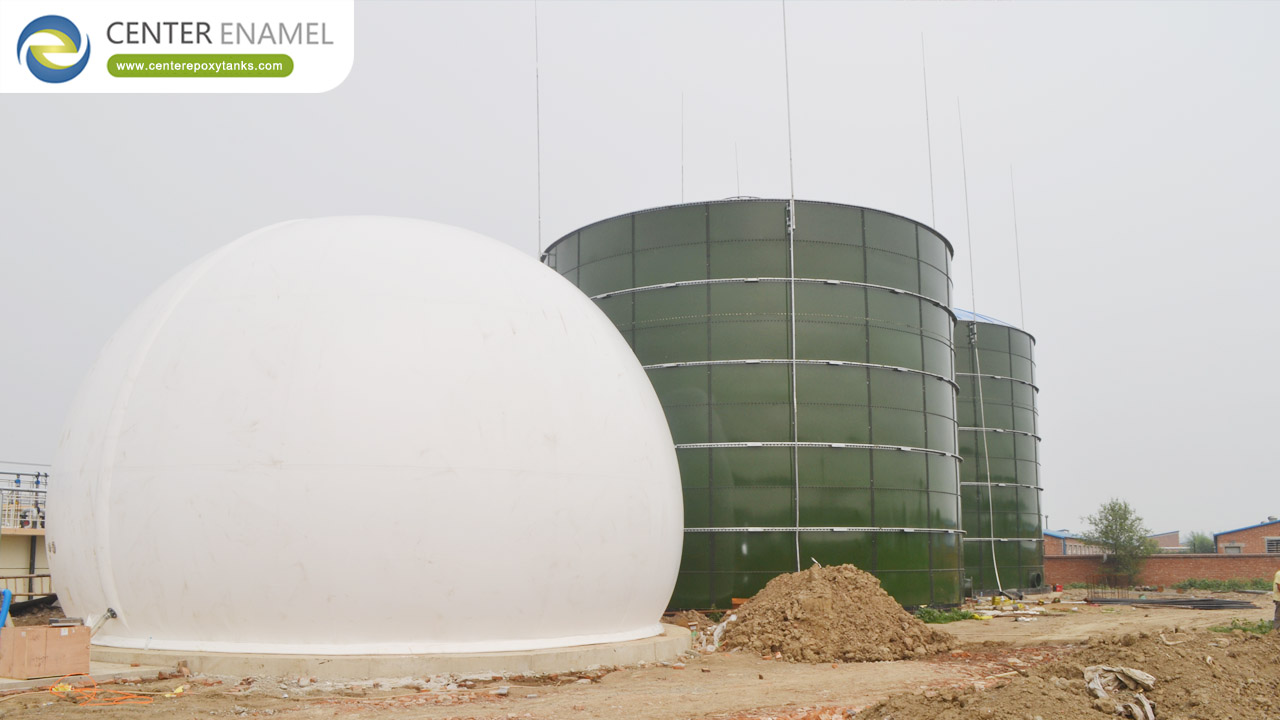
Cost-Effective Biogas Holders for Sustainable Biogas Project Development
Cost-effective biogas holders maximize a project's Return on Investment (ROI) by optimizing the balance between capital expenditure (CAPEX) and operational reliability. Modern sustainable projects achieve this by moving away from rigid, low-efficiency storage toward modular, variable-volume double membrane gas holders. These systems are cost-effective because they provide integrated gas containment, eliminate the need for expensive high-pressure compression infrastructure, and facilitate rapid, bolt-together installation that minimizes on-site civil works. Long-term cost-effectiveness is further secured by selecting high-tenacity, chemically resistant membrane materials (such as PVDF-coated fabrics) that reduce maintenance costs and extend the operational lifespan of the gas storage asset.
Redefining "Cost-Effectiveness" in Biogas Projects
In the biogas industry, "cost-effective" is often misinterpreted as "the cheapest option." However, for sustainable energy projects, a cheap tank that fails in three years is a liability, not an asset. True cost-effectiveness is defined by Total Cost of Ownership (TCO), which includes:
Installation Speed: Every day the plant is not running is a day of lost revenue. Modular systems reduce on-site labor and downtime.
Operational Efficiency: Systems that provide steady gas pressure reduce the wear and tear on downstream machinery (CHP engines/boilers).
Maintenance Cycles: Reducing the frequency of repairs, cleaning, and painting significantly lowers the annual operating budget.
Key Strategies for Sustainable Cost Management
1. Prioritize Modular Design
Traditional storage (concrete/welded steel) requires heavy equipment, site-poured foundations, and lengthy curing times. Modular biogas holders—specifically those designed for "top-down" installation—use prefabricated panels or tensioned membranes. This significantly reduces civil engineering costs and allows for easier future expansion if the farm or facility needs to increase capacity.
2. Optimize for Gas Utilization (Variable Volume)
Fixed-roof systems force facilities to use gas exactly when it is produced, or flare the excess. Variable-volume holders allow you to "store" the gas produced during low-demand hours for use during peak energy demand. This simple capacity management turns gas storage from a "cost" into a "revenue generation" tool.
3. Material Durability as a Cost-Saver
Selecting materials based on the specific chemical atmosphere of your biogas is the #1 way to avoid premature replacement.
The Error: Buying a standard PVC membrane for a high-sulfur ($H_2S$) environment.
The Solution: Investing in PVDF-coated, high-tenacity polyester. While the upfront material cost is 15-20% higher, the lifespan is often 200% longer, effectively halving your amortized annual cost.
Comparative Value Matrix
Metric | Basic Storage (PVC/Standard) | Optimized Storage (PVDF/Reinforced) |
Initial CAPEX | Low | Moderate |
Maintenance | High (Repair/Replacement) | Very Low |
Lifespan | 5–8 Years | 15–20+ Years |
Chemical Resistance | Moderate | Superior |
Overall ROI | Poor (High long-term cost) | Excellent (Long-term value) |
Planning for Sustainable Development
To maintain project feasibility, investors should integrate these three steps into their development phase:
Site-Specific Engineering: Do not "over-engineer" based on generic guidelines. Use local wind load and snow load data to size the structure perfectly. Excess steel or heavy-duty components that aren't necessary for your climate are simply wasted capital.
Preventative Monitoring: Implement basic pressure and level monitoring sensors. Catching a small leak in a membrane or a blower malfunction early costs hundreds; ignoring it until the system fails costs thousands in gas loss and repair.
Standardized Procurement: Work with manufacturers who use standardized, tested components. Bespoke, one-off engineering is expensive to fix if something breaks. Standardized, mass-produced parts (valves, blower mounts, sensor ports) are easier and cheaper to replace.
Frequently Asked Questions (FAQ)
Q: Is it always cheaper to retrofit an existing tank?
A: Generally, yes. If you already have a stable tank structure (concrete or steel), adding a double membrane roof is the most cost-effective way to add biogas storage. You utilize the existing footprint and wall structure, paying only for the "lid" and the gas handling equipment.
Q: How do I calculate the ROI of a biogas holder?
A: Calculate the value of the gas stored minus the cost of compression/flaring. By capturing gas that would otherwise be flared, you increase the plant's energy output. For most commercial projects, the storage system pays for itself within 3–5 years through increased energy capture and reduced energy purchase costs.
Q: What is the most common hidden cost in biogas storage?
A: Corrosion. If the biogas is not "scrubbed" (sulfur removed) before it enters the holder, the internal metallic components and the fabric itself will degrade rapidly. Investing in a gas scrubbing system is an investment in the longevity of your storage.
Q: Does "cost-effective" mean lower quality?
A: Absolutely not. In engineering, "cost-effective" refers to the optimization of resources. It means buying the right tool for the job—not the most expensive "Ferrari" of tanks, but the "Workhorse" that is purpose-built for your specific site conditions.
Are you currently in the feasibility study phase for a new biogas project, or are you looking to optimize the gas storage capacity of an existing facility?


