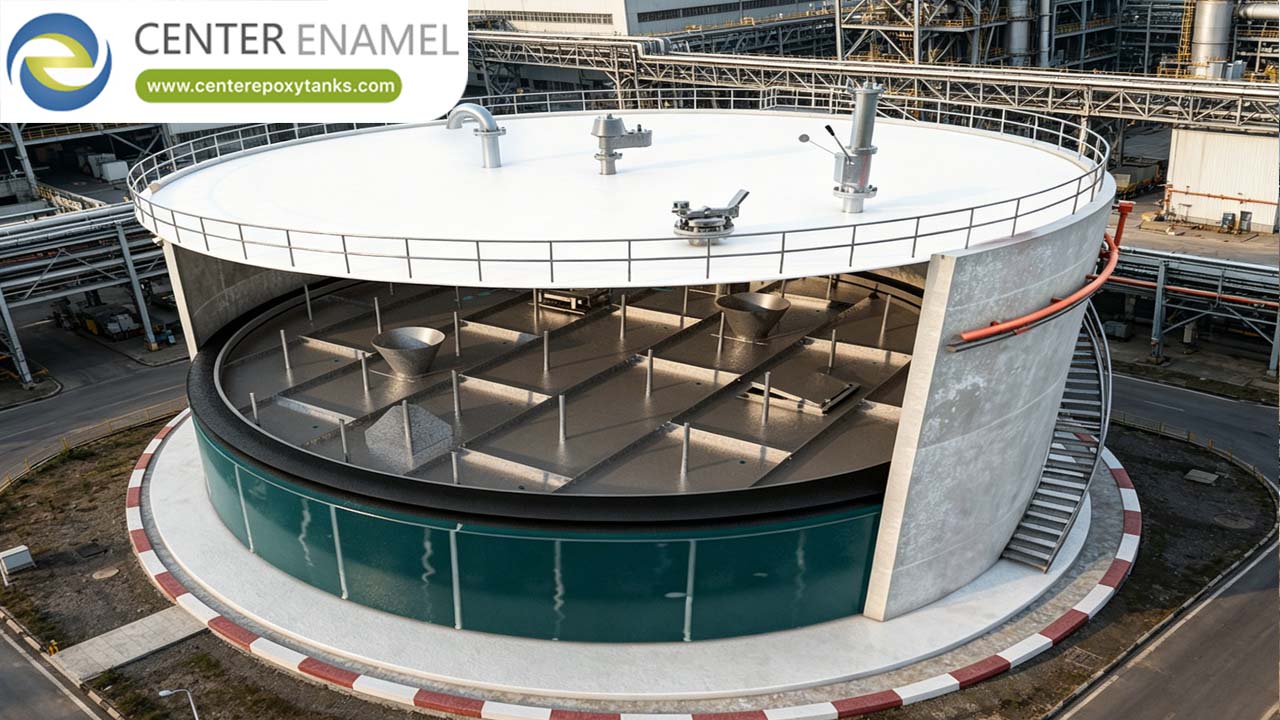
Floating Roofs for Oil & Gas Storage: Chinese Manufacturing & Procurement Guide
For global energy and chemical terminals, the floating roof is the frontline defense against evaporative product loss and VOC (Volatile Organic Compound) emissions. As China has become a global hub for high-capacity petrochemical infrastructure, its manufacturers have evolved to deliver world-class, API 650-compliant floating roof systems that balance structural integrity, operational longevity, and regulatory compliance.
This guide outlines the critical engineering standards and manufacturing benchmarks necessary for sourcing industrial-grade internal and external floating roofs from China.
1. Engineering Standards: The API 650 Benchmark
Any manufacturer operating at the top tier of the Chinese market must demonstrate strict adherence to international standards. The American Petroleum Institute (API) codes are the baseline for all global petrochemical infrastructure.
● API 650 Appendix H/C: Specifically covers the design, fabrication, and installation of Internal Floating Roofs (IFR) and External Floating Roofs (EFR).
● ASME Compliance: Manufacturers with international project portfolios often hold ASME welding certifications, ensuring that structural joints, pontoon seals, and support legs meet the high-pressure and load-bearing requirements of large-scale terminals.
● Material Integrity: Leading Chinese suppliers utilize high-grade aluminum alloys, stainless steel (304L/316L), or composite materials, depending on the chemical aggressiveness of the stored medium.
2. Choosing Between IFR and EFR Configurations
The choice between an Internal Floating Roof (IFR) and an External Floating Roof (EFR) depends on the terminal's environmental exposure and product volatility.
Internal Floating Roofs (IFR)
IFRs are installed within a fixed-roof tank, creating a dual-layer system. The internal roof eliminates the vapor space, while the external fixed roof provides primary protection from rain, wind, and debris.
● Best For: High-purity chemicals, aviation fuel, and volatile light hydrocarbons.
● Manufacturing Focus: Look for modular, bolt-together designs (Hexagonal or Pontoon-type) that allow for easy installation through standard tank manways, eliminating the need for extensive onsite hot-work (welding).
External Floating Roofs (EFR)
EFRs are exposed to the elements and feature single or double-deck welded steel construction.
● Best For: Large-diameter crude oil storage tanks and high-throughput terminals.
● Manufacturing Focus: Precision drainage system integration. A top-tier manufacturer must demonstrate expertise in flexible-joint roof drains that prevent water pooling—a critical factor for structural safety.
3. High-Performance Sealing Systems
The floating roof is only as efficient as its seal. The seal-to-shell interface is the primary path for fugitive emissions. Top Chinese manufacturers provide advanced, multi-stage sealing configurations:
● Primary Seals: Mechanical shoe seals or liquid-mounted rim seals providing constant wall contact.
● Secondary Seals: Wiper seals (often EPDM, PTFE, or Nitrile rubber) that capture any vapors bypassed by the primary seal, ensuring compliance with strict environmental VOC limits.
● Material Testing: Ensure your supplier provides certifications for seal material compatibility with your specific product (e.g., aromatics vs. paraffinic fuels) to prevent seal swelling or rapid degradation.
4. Procurement Vetting Matrix
To identify a qualified Chinese manufacturer, evaluate them against these four technical pillars:
Evaluation Criterion | Industrial-Grade Manufacturer | Standard Commodity Supplier |
Design Standards | Explicit API 650/ASME compliance | General ISO 9001 only |
Installation Method | Bolt-together, no-weld (retrofitting focus) | Heavy welding required |
Material Quality | Certified Aluminum/Stainless/Composite | Standard carbon steel only |
Documentation | Full material traceability & mill certs | Basic sales invoices |
5. Frequently Asked Questions (FAQ)
Q: Why are modular (bolt-together) IFRs preferred for retrofitting older tanks?
A: Modular designs allow the entire roof system to be broken down into small, lightweight components. These can be carried through standard 24-inch manways, significantly reducing the downtime of the tank and eliminating the high safety risks and costs associated with gas-freeing and welding inside an existing fuel tank.
Q: How does a Chinese manufacturer guarantee performance for highly corrosive chemicals?
A: Manufacturers specializing in high-end solutions utilize full-composite or stainless-steel floating roofs. These materials are inherently resistant to acid or sulfur-rich environments that would destroy aluminum or standard steel decks within a few years.
China’s leading floating roof manufacturers have transitioned from basic fabrication to high-end, precision-engineered solutions compliant with API 650 and other global petrochemical standards. By focusing your procurement criteria on modular, no-weld installation systems, verified material traceability, and advanced dual-seal technology, you can secure infrastructure that maximizes storage capacity while ensuring environmental and regulatory compliance.
Would you like to evaluate specific structural load calculations for a large-diameter tank project, or do you need help comparing the chemical compatibility of specific seal materials (e.g., PTFE vs. Viton) for your terminal's product profile?


