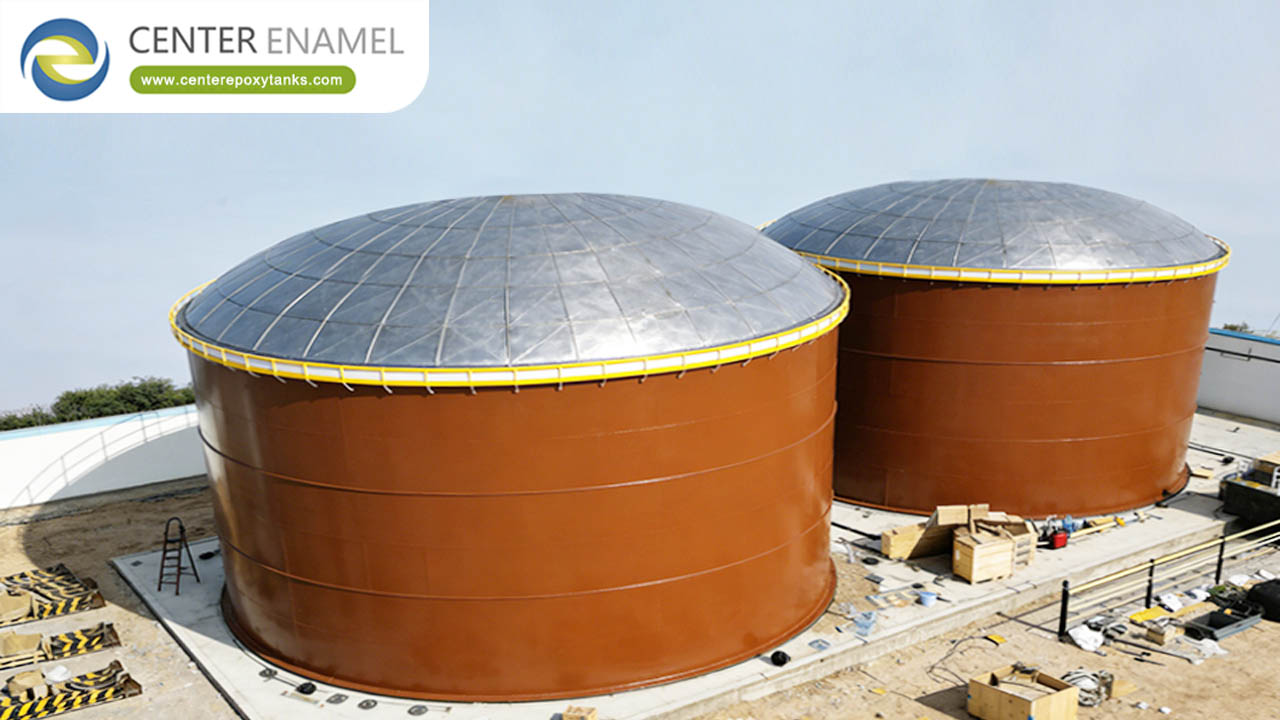
JET A1 fuel is the standardized kerosene-type fuel that powers the vast majority of modern turbine-engine aircraft, from commercial passenger jets to military transports. Its consistent availability and uncompromised quality are non-negotiable for global aviation. The storage of JET A1 fuel presents extremely stringent requirements that go beyond typical petroleum product containment: preventing any form of contamination (particulate, water, microbial), maintaining chemical stability, ensuring robust fire protection, and absolutely guarding against leaks that could severely impact sensitive airport environments and critical ecosystems. A failure in JET A1 fuel storage, even minor, can have catastrophic consequences, jeopardizing flight safety, leading to operational disruptions, and incurring immense financial and environmental liabilities. At the very core of safe, efficient, and reliable JET A1 fuel supply are purpose-built storage vessels. Among the most trusted, durable, and expertly engineered are Welded Steel JET A1 Fuel Storage Tanks. Shijiazhuang Zhengzhong Technology Co., Ltd, known globally as Center Enamel, has established itself as a leading China Welded Steel JET A1 Fuel Storage Tank Manufacturer. With a distinguished legacy spanning many years, Center Enamel combines unparalleled engineering precision, advanced manufacturing capabilities, and an unwavering commitment to the highest international quality, safety, and environmental standards, delivering indispensable JET A1 fuel storage solutions that form the bedrock of global air operations.
Welded Steel JET A1 Fuel Storage Tanks are far more than mere containers; they are sophisticated, meticulously designed systems that are foundational to the operational continuity and safety of airports, airbases, and extensive fuel distribution networks worldwide. Their role is multifaceted and critically important:
Guaranteeing Unblemished Fuel Purity and Quality: JET A1 fuel is exceptionally sensitive to contamination. These tanks are specifically designed to provide a sealed, pristine environment, diligently protecting the fuel from water ingress, particulate matter, microbial growth, and chemical degradation. To achieve this, all internal surfaces, including the underside of the roof, are typically coated with specialized light-colored epoxy linings. This light color aids in visual inspection for cleanliness and the detection of any foreign matter. Crucially, tank bottoms are engineered with a specific slope and equipped with dedicated water draw-off lines to facilitate the efficient collection and removal of any accumulated water, which, being denser than JET A1, can cause severe operational issues if allowed into aircraft fuel systems.
Providing Unwavering Secure and Safe Containment: Given the highly flammable nature of JET A1 fuel, absolute secure containment is paramount. Welded Steel JET A1 Fuel Storage Tanks are engineered with the highest degree of structural integrity to prevent leaks, withstand significant internal pressures, and resist external impacts. Comprehensive safety features are meticulously integrated, including:
Proper venting with coarse meshes to prevent foreign body ingress.
Pressure vacuum relief valves for mounded or partially buried tanks to manage vapor pressure.
Sophisticated overfill protection systems.
High-level alarms to alert operators before overfilling.
Emergency venting capabilities to safely release excessive internal pressure during fire events.
Floating suction units, designed to draw fuel from the very top layers, avoiding any potential water accumulation at the bottom and sediment, thus ensuring only the purest fuel enters the distribution system.
Facilitating Seamless Fuel Logistics and Rapid Refueling: These tanks are pivotal in providing the extensive buffer capacities essential for continuous airport operations. They ensure that aircraft can be refueled swiftly and efficiently, thereby minimizing critical turnaround times. Optimized inlets, outlets, and specialized high-flow pumping systems facilitate rapid and controlled fuel transfer, streamlining logistics and supporting the demanding, time-sensitive schedules of modern global aviation.
Minimizing Environmental Footprint: The aviation industry operates under exceptionally strict environmental regulations. Secure Welded Steel JET A1 Fuel Storage Tanks are explicitly designed to prevent soil and water contamination from fuel leaks or spills. This often includes implementing integral secondary containment (e.g., robust double-walled construction) or carefully designed external bunded areas to provide robust protection for sensitive ecosystems surrounding airports. Advanced leak detection systems, such as a grid of fuel leak detection cables installed between the concrete foundation and the tank bottom, are also vital components for early warning and prevention.
Rigorous Compliance with International Standards and Regulations: The storage of JET A1 fuel is governed by some of the most exacting national and international regulations and industry best practices worldwide. These include, but are not limited to, standards such as API 650 (for vertical, cylindrical, aboveground welded tanks), NFPA 30 (Flammable and Combustible Liquids Code), NFPA 407 (Aircraft Fuel Servicing), OSHA requirements, JIG (Joint Inspection Group) standards, and specific local and international aviation authorities' guidelines. Tanks must meet uncompromising standards for materials selection, design specifications, fabrication precision, erection procedures, and comprehensive inspection and testing for strength, leakage, and buoyancy, ensuring global interoperability and safety.
Long-Term Durability in Extreme Environments: Aviation fuel storage facilities are often exposed to a wide range of harsh environmental conditions, from extreme temperatures to corrosive coastal atmospheres. Welded Steel JET A1 Fuel Storage Tanks are built to withstand these challenges over many decades of continuous service. External painting systems, specialized coatings, and cathodic protection systems (such as impressed current type cathodic protection) are frequently employed to robustly protect the tank's exterior against corrosion, ensuring its longevity and significantly reducing long-term maintenance requirements.
The selection of Welded Steel JET A1 Fuel Storage Tanks is fundamentally driven by the material's inherent strength, the fabrication method's unparalleled integrity, and its proven adaptability to meet the aviation industry's uniquely stringent requirements for JET A1 fuel. The superior performance characteristics of welded steel are absolutely paramount in this critical application:
Unrivaled Structural Strength and Extreme Durability: Steel, particularly high-grade carbon steel, boasts exceptional tensile strength, rigidity, and ductility. These properties are absolutely critical for containing vast volumes of highly dense JET A1 fuel and for withstanding significant internal hydrostatic loads, internal pressures, and dynamic forces associated with filling, emptying, and temperature fluctuations. Through meticulous, full-penetration welding techniques, individual steel plates are permanently fused into a monolithic, continuous structure. This inherently strong, stable, and seamless vessel is specifically engineered to resist formidable external environmental forces such as hurricane-force winds, severe seismic activity, and potential accidental impacts, ensuring an exceptionally long operational lifespan and guaranteeing reliable, uninterrupted service in the most critical aviation infrastructure applications.
Absolute Leak-Proof Integrity for High-Value, Sensitive Contents: A defining and non-negotiable advantage of expertly welded tanks is their absolute leak-proof nature. Unlike tanks that rely on mechanical joints, gaskets, or bolted connections, which inherently introduce multiple potential leak paths that can degrade or fail over time, welding creates a permanent, homogenous, and impermeable fusion between steel components. This effectively eliminates all avenues for JET A1 fuel escape, which is profoundly critical given the extremely high value, high flammability, and acute environmental sensitivity of this specialized fuel. Preventing even minute leaks is paramount for safeguarding against product loss, severe environmental contamination (especially in sensitive airport ecosystems), and catastrophic safety hazards.
High Degree of Design Customization and Scalability: Welded steel offers unparalleled versatility in tank design and fabrication, allowing for precise engineering to meet highly specific airport layouts, land availability, and exact fuel volume requirements. Tanks can be custom-engineered to virtually any required size, shape (typically vertical cylindrical), and capacity, ranging from smaller operational tanks to massive field-erected reservoirs capable of holding millions of gallons. This adaptability extends to incorporating and seamlessly integrating essential internal and external features, such as sophisticated internal floating roofs, precisely engineered sloped bottoms, and complex internal piping required for maintaining fuel quality.
Optimal Compatibility with Specialized Internal Linings and Coatings: While carbon steel provides the robust structural foundation, its surface is universally paired with highly specialized internal linings for JET A1 fuel. Carbon steel serves as an excellent substrate for the precise application of high-performance, chemical-resistant epoxy coatings. These specific coatings are often light-colored to facilitate easier visual inspection of cleanliness and the detection of any particulate matter or water. These meticulously applied and highly durable internal barriers are crucial for preventing internal corrosion, inhibiting microbial growth within the fuel, maintaining absolute fuel purity, and ensuring that no particulate contamination originates from the tank walls. This vital combination significantly extends the tank's operational lifespan and rigorously safeguards the sensitive physical and chemical properties of JET A1 fuel.
Superior Long-Term Cost-Effectiveness (Lifecycle Value): While the initial capital investment for a high-quality Welded Steel JET A1 Fuel Storage Tank (which includes its specialized lining, advanced safety features, and often integrated cathodic protection) is substantial, its long-term economic benefits are profound. Their extended operational lifespan, inherently low maintenance requirements due to their seamless, robust structure, and comprehensive corrosion and contamination protection through the specialized lining system result in a significantly lower total cost of ownership compared to alternative materials or less robust construction methods over the tank's entire service life.
Robustness Against External Threats: The inherent strength and monolithic nature of welded steel tanks make them exceptionally resistant to external physical damage from accidental impacts (e.g., from ground support equipment in a busy airport environment) or severe environmental events (e.g., high winds, seismic activity). This superior robustness is a critical safety factor, further enhancing the overall safety profile of the aviation fuel storage facility.
Shijiazhuang Zhengzhong Technology Co., Ltd (Center Enamel) has dedicated many years to perfecting the art and science of tank fabrication, earning its status as a premier China Welded Steel JET A1 Fuel Storage Tank Manufacturer. Our profound engineering capabilities, state-of-the-art fabrication facilities, and unyielding commitment to quality ensure we deliver meticulously designed, exceptionally robust, and reliably performing tanks that are integral to secure JET A1 fuel management globally.
The precision-engineered Welded Steel JET A1 Fuel Storage Tanks manufactured by Center Enamel are vital for operations where fuel purity and safety standards are of the highest priority. These solutions are widely applied across:
Commercial International Airports: Providing large-scale fuel farm infrastructure to support continuous passenger and cargo flight operations.
Military Aviation Bases: Delivering secure and robust containment for strategic fuel reserves and high-tempo military flight logistics.
Regional and Private Airfields: Offering customized storage capacities for local aviation services and private jet refueling centers.
Refinery and Pipeline Terminals: Serving as intermediate storage points in the aviation fuel supply chain before distribution to airport facilities.
As a leading China Welded Steel JET A1 Fuel Storage Tank Manufacturer, Center Enamel addresses global client needs through advanced production and specialized logistics:
Precision Engineering and ISO Standards: Our facility utilizes automated welding systems and precision steel processing to ensure every component meets international aviation standards. Our ISO-certified quality management ensures full traceability and adherence to rigorous fabrication codes.
Exhaustive Quality Assurance: Every tank undergoes a multi-stage inspection process, including 100% Non-Destructive Testing (NDT) of critical welds and holiday detection for internal linings. This guarantees a zero-defect product capable of maintaining fuel purity for decades.
Optimized Logistical Support: We manage the complex logistics of exporting large-scale steel components. By precision-engineering plates for dense packing in standard containers, we reduce shipping costs and ensure all materials arrive at the project site ready for immediate field erection under our professional technical supervision.
Regarding specialized aviation fuel storage infrastructure, Shijiazhuang Zhengzhong Technology Co., Ltd focuses on delivering bespoke engineering designs and precision manufacturing to meet the unique structural and purity demands of the global aviation sector. While we possess an extensive global track record in Epoxy Coated Tanks for water and industrial sectors—including successful projects in Thailand, Saudi Arabia, and various domestic irrigation networks—our aviation fuel solutions are currently provided as specialized engineering services tailored to the specific regulatory requirements of international airport authorities and fuel suppliers.


