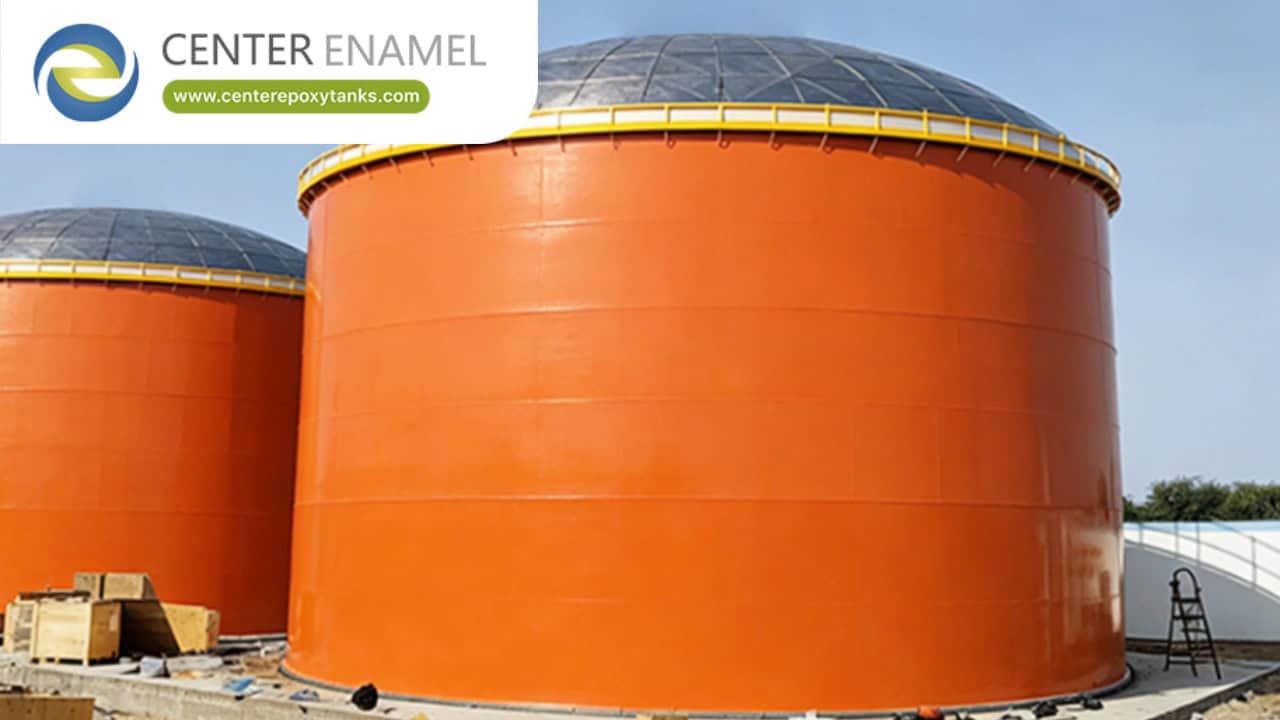
China Welded Carbon Steel Cement Silos Manufacturer - Center Enamel
In modern civil engineering, concrete batching plants, precast manufacturing facilities, and large-scale infrastructure projects, reliable and high-capacity bulk powder storage is essential. Cement, fly ash, slag, and mineral powders require completely dry, structurally robust, and leak-proof containment environments. Moisture ingress or structural failure can cause severe material caking, operational downtime, and financial loss. While bolted modular silos serve certain logistical niches, welded carbon steel cement silos represent the definitive industrial standard for high-capacity, monolithic, and airtight bulk storage.
As a globally recognized industry pioneer with over three decades of engineering excellence, Shijiazhuang Zhengzhong Technology Co., Ltd. (Center Enamel) stands as a premier China welded carbon steel cement silos manufacturer. Supplying heavy-duty, high-performance powder storage systems to construction and industrial projects across more than 100 countries, Center Enamel combines automated fabrication precision with strict compliance with international structural standards.
The Engineering Superiority of Welded Carbon Steel Cement Silos
Storing fine powders like cement requires mitigating immense hoop stresses, abrasive internal wear, and hygroscopic moisture sensitivity. Center Enamel’s welded carbon steel silos are engineered to conquer these challenges through advanced structural execution:
Monolithic Structural Integrity via Submerged Arc Welding (SAW): Unlike bolted structures that rely on thousands of mechanical fasteners and gaskets, Center Enamel’s welded silos feature a continuous, monolithic shell. Utilizing automated Submerged Arc Welding, steel cylinders achieve complete penetration with zero porosity, eliminating leak paths where moisture can enter and spoil stored cement.
High-Grade Carbon Steel and Advanced Protective Coatings: Fabricated using premium structural carbon steel plates treated with high-performance factory-applied coatings or Fusion Bonded Epoxy (FBE). This provides exceptional resistance to internal abrasion from sliding cement particles and defense against external atmospheric corrosion.
Optimized Mass Flow and Pneumatic Integration: Designed with precise hopper cone angles (typically 45 or 60 degrees) and equipped with integrated fluidizing pads, dust collection filters, and pressure-relief valves to ensure smooth, continuous, and dust-free discharge into batching mixers.
Technical Performance Matrix: Bulk Cement Storage Technologies
Technical Parameter | Center Enamel Welded Carbon Steel Silos | Traditional Bolted Modular Silos | Cast-in-Place Concrete Silos | Corrugated Steel Grain Bins |
Structural Leak Prevention | Superior monolithic welded shell; zero joints or gaskets to degrade or allow moisture ingress | Moderate; relies on hundreds of bolts, sealants, and rubber gaskets prone to aging and weeping | High structural integrity, but vulnerable to micro-cracking and moisture migration through porous concrete | Low; high risk of dust leakage and moisture seepage around structural wall joints |
Erection Velocity & Site Complexity | Factory-welded sections erected rapidly on-site; high dimensional tolerance and strict quality control | High on-site labor requirement; assembly involves extensive manual bolting and gasket placement | Extremely slow; demands heavy civil formwork, steel rebar tying, and multi-week curing cycles | Fast, but structurally unsuited for heavy industrial cement loads and fine powder storage |
Abrasion & Structural Resilience | High; heavy-duty carbon steel withstands severe sliding abrasion from dense mineral powders | Moderate; thinner panel walls can experience localized stress concentration at bolt holes | High deadweight, but susceptible to chemical carbonation and sulfuric degradation | Low; inadequate structural rigidity for dense cement loads and high seismic pressures |
Global Standards Compliance | Engineered to strict international standards including Eurocode 3, API 620, ASCE 7, and ISO 9001 | Variable depending on field assembly precision and local contractor execution | Dependent on local civil batch pours and site curing inspections | Designed primarily for agricultural grain storage rather than industrial powder applications |
Key Advantages of Center Enamel Welded Cement Silo Solutions
1. Strict Compliance with International Engineering Codes
Center Enamel manufactures its industrial bulk storage silos in strict accordance with premier global structural codes, including Eurocode 3, API 620, ASCE 7, and ISO 9001 quality management systems. This ensures that concrete batching plant operators, EPC contractors, and civil engineers receive fully certified, audit-ready infrastructure.
2. Comprehensive Safety and Environmental Controls
To maintain safe operating conditions and comply with strict environmental regulations, Center Enamel integrates advanced safety accessories into every silo system. These include high-efficiency top-mounted dust collectors to prevent particulate emissions, pressure-relief valves for over-pressure protection, and reliable bin level indicators for automated inventory management.
Frequently Asked Questions (FAQ)
Q: What makes Center Enamel a trusted China welded carbon steel cement silos manufacturer?
A: Center Enamel brings over 30 years of industrial manufacturing experience, state-of-the-art automated welding facilities, strict compliance with global engineering codes like Eurocode 3 and API 620, and a proven export track record across more than 100 countries.
Q: Why choose a welded carbon steel cement silo over a bolted alternative?
A: Welded silos offer a monolithic, seamless structure produced via automated Submerged Arc Welding. This eliminates mechanical joints and gaskets, providing superior protection against moisture ingress, which prevents cement caking and material spoilage.
Q: How does Center Enamel prevent cement bridging and ensure smooth discharge?
A: Center Enamel engineers its silos using advanced flow analysis to determine optimal hopper angles, complemented by integrated fluidizing pads, aeration systems, and mechanical vibrators that promote consistent, uninterrupted powder discharge.
Q: What international standards do Center Enamel welded silos comply with?
A: Center Enamel’s welded silos are engineered and fabricated in strict compliance with major international standards, including Eurocode 3, API 620, ASCE 7, and ISO 9001 quality frameworks.


