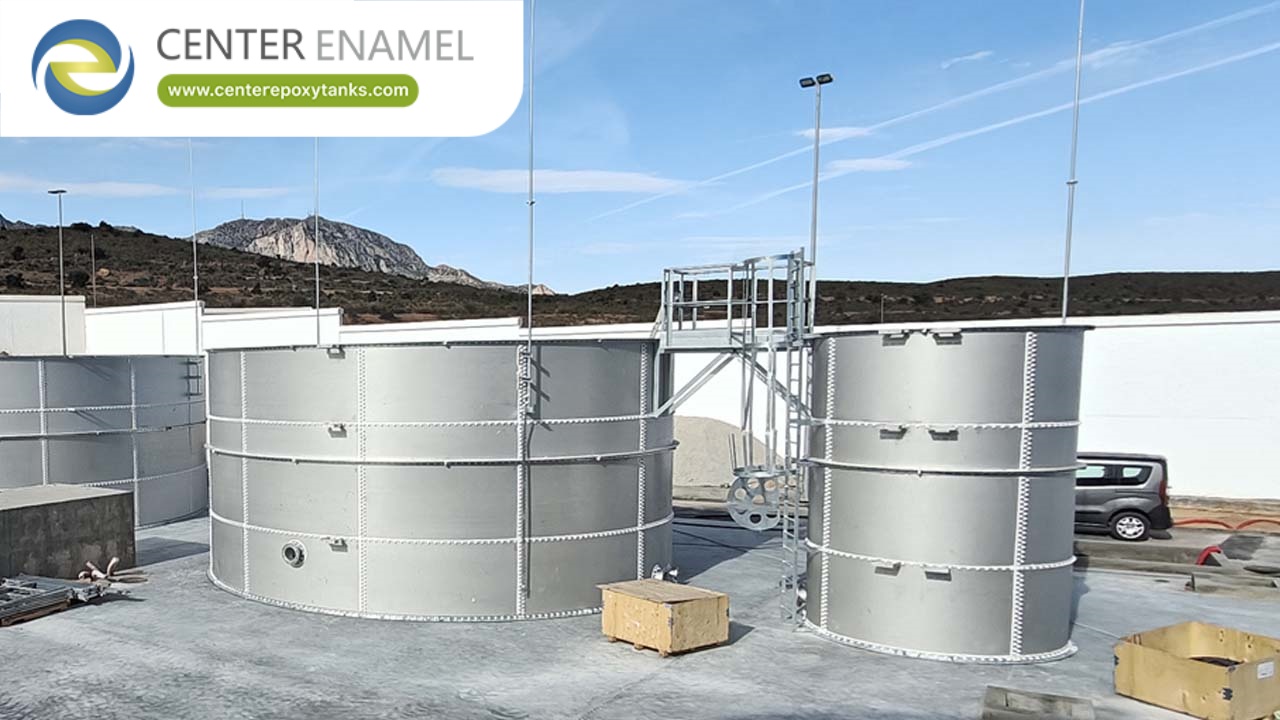
China Stainless Steel Desalination Tank Manufacturer - Center Enamel
In an era defined by severe global water scarcity, coastal and island communities increasingly rely on seawater desalination to secure dependable drinking water and industrial process supplies. However, handling high-salinity water, concentrated brine, and chemically treated permeate introduces severe engineering challenges. Traditional carbon steel and conventional concrete structures suffer from rapid chloride-induced corrosion, rebar oxidation, and structural failure when exposed to aggressive marine environments. Consequently, modern desalination facilities require advanced, highly durable, and chemically inert storage infrastructure. Among all containment options, stainless steel and high-performance corrosion-resistant bolted tanks represent the ultimate standard for reliability.
As a globally recognized industry pioneer with over three decades of manufacturing and engineering expertise, Shijiazhuang Zhengzhong Technology Co., Ltd. (Center Enamel) stands as a premier China stainless steel desalination tank manufacturer. Delivering cutting-edge modular containment solutions to municipal, industrial, and seawater desalination projects across more than 100 countries, Center Enamel combines automated manufacturing precision with strict compliance with international standards.
The Engineering Superiority of Desalination Storage Systems
Desalination plants handle water across various stages—ranging from raw intake seawater and pre-treatment media to high-purity permeate and concentrated brine. Center Enamel’s containment systems are engineered to conquer these demanding conditions through advanced material science:
Exceptional Chloride and Chemical Defense: Seawater and desalination chemicals (such as coagulants, antiscalants, and disinfection chlorine) rapidly attack standard metals. Center Enamel utilizes premium stainless steel grades and specialized fusion-bonded coatings that create an impermeable barrier against chloride ion penetration and pitting corrosion.
Uncompromised Potable Water Safety: Stored permeate must meet strict drinking water safety requirements. Non-reactive interior surfaces prevent the leaching of heavy metals or toxic compounds into treated water, while inhibiting bacterial and algal growth.
Robust Structural Integrity under Hydrostatic Load: Engineered with precision bolted panel configurations, these tanks withstand immense internal hydrostatic pressure, seismic activity, and harsh coastal wind loads in compliance with international design codes.
Technical Performance Matrix: Desalination Storage Technologies
Technical Parameter | Center Enamel Desalination Storage Tanks | Traditional Field-Welded Carbon Steel Tanks | Cast-in-Place Concrete Basins | Fiberglass-Resistant (FRP) Tanks |
Chloride & Seawater Corrosion Defense | Superior; inert metallic or fused-barrier construction withstands heavy salt spray and brine | Moderate; relies entirely on paint or epoxy layers that degrade rapidly in marine atmospheres | Low to Moderate; salt ions penetrate porous concrete, causing rebar oxidation ("concrete cancer") | Moderate; vulnerable to resin blistering, matrix softening, and UV degradation over time |
Installation Velocity | Rapid modular bolted assembly; erected quickly on-site without complex heavy welding | Slow; requires intensive plate rolling, extensive field welding, and complex NDT testing | Extremely slow; demands heavy civil formwork, steel rebar tying, and multi-week curing cycles | Moderate delivery, but severely limited by maximum structural capacity constraints |
Purity & Hygiene Maintenance | Superior; smooth, non-porous interior surfaces prevent biofilm growth and sediment buildup | Moderate; prone to interior rust nodules and flaking if protective coatings fail | Low to Moderate; prone to scaling, mineral leaching, and difficult interior cleaning | Mold-dependent; variable structural consistency and potential chemical residue risks |
Standards Compliance | Designed to strict global standards including AWWA D103-09, ISO 28765, and NSF/ANSI 61 | Variable depending on local contractor execution and unpredictable field-welding quality | Dependent on local civil engineering batch pours and strict moisture curing inspection | Mold-dependent; variable structural consistency based on resin-to-fiber ratios |
Key Advantages of Center Enamel Desalination Solutions
1. Strict Compliance with Global Engineering Benchmarks
Center Enamel manufactures its storage vessels in strict compliance with globally recognized benchmarks, including AWWA D103-09 (Standard for Bolted Steel Water Storage Tanks), ISO 28765, and NSF/ANSI 61 for drinking water safety. This ensures that municipal planners, water authorities, and plant EPC contractors receive fully certified, audit-ready infrastructure.
2. Modular Engineering for Rapid Global Deployment
Desalination projects are frequently located in remote coastal regions, arid islands, or constrained plant sites. Center Enamel’s modular bolted panel design allows tanks to be packed compactly into standard containers, drastically reducing international freight expenses and enabling rapid on-site erection by local installation teams without heavy crane fleets.
Frequently Asked Questions (FAQ)
Q: What makes Center Enamel a trusted China stainless steel desalination tank manufacturer?
A: Center Enamel brings over 30 years of specialized containment manufacturing experience, state-of-the-art automated production lines, strict compliance with international standards like AWWA D103-09 and NSF/ANSI 61, and a proven export track record across more than 100 countries.
Q: Why are specialized corrosion-resistant tanks required for seawater desalination?
A: Seawater and concentrated brine contain high concentrations of chloride ions that cause rapid pitting and stress corrosion cracking in standard carbon steel and degrade traditional concrete through rebar expansion. Specialized stainless steel and coated bolted tanks provide long-term structural immunity in these harsh environments.
Q: Do Center Enamel desalination tanks comply with international drinking water certifications?
A: Yes. All potable water and desalination storage tanks are engineered in strict compliance with international health and safety frameworks, including NSF/ANSI 61 standards, ensuring safe storage for treated drinking water.
Q: How does modular bolted construction benefit desalination plant construction schedules?
A: Modular bolted construction eliminates lengthy concrete curing delays and complex field-welding requirements, allowing panels to be bolted together quickly on-site to accelerate project delivery and reduce overall labor costs.


