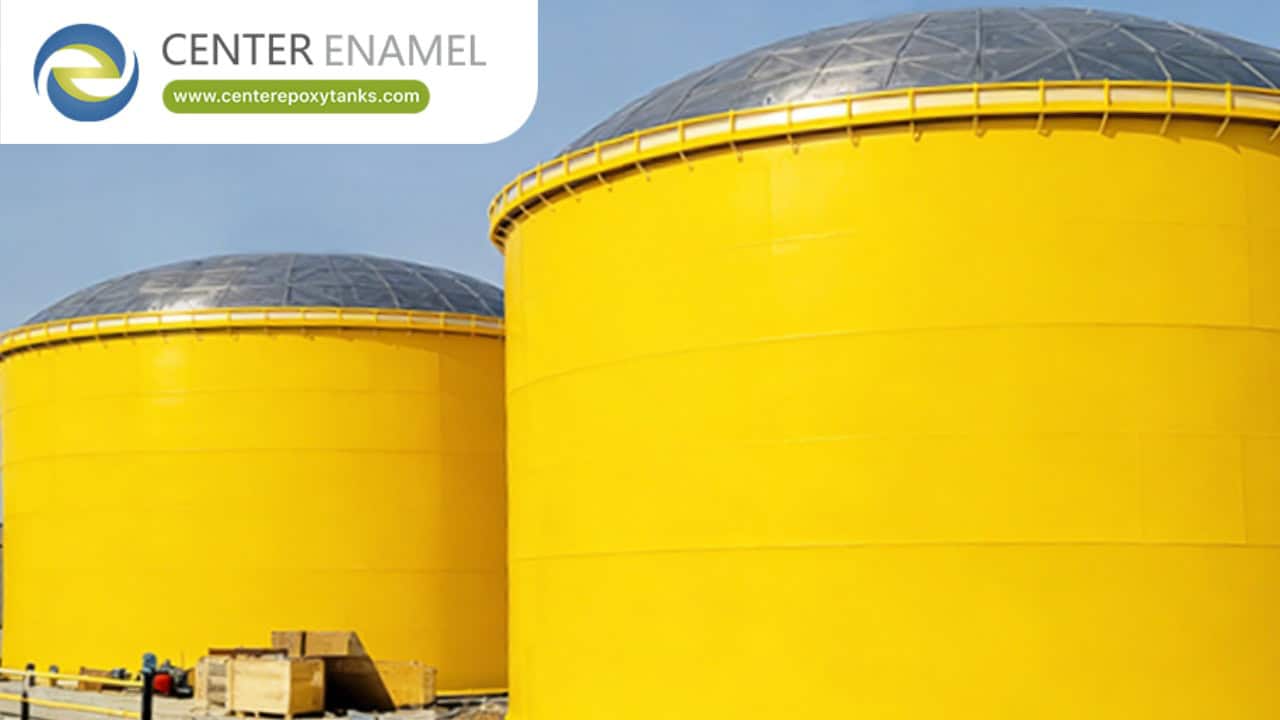
China Aviation Gasoline (Avgas) Storage Tank Manufacturer: Engineering & Procurement Guide
Aviation Gasoline (Avgas), specifically the widely used 100LL grade, requires storage environments that maintain absolute fuel purity and safety. Unlike standard automotive gasoline or diesel, Avgas is highly susceptible to lead sedimentation, anti-knock additive degradation, and water-induced phase separation.
Sourcing storage tanks from a China aviation gasoline storage tank manufacturer demands a rigorous adherence to international safety standards. Buyers must prioritize partners who demonstrate strict compliance with API 650 (for bulk storage) or UL 142 (for shop-fabricated tanks), coupled with specialized internal coating protocols that prevent metallic contamination.
1. Engineering Standards & Structural Mechanics
Aviation fuel tanks must manage high static loads while maintaining a strictly controlled internal environment. When calculating the shell thickness of large-capacity vertical tanks, manufacturers use the One-Foot Method (per API 650) to determine the design thickness (td) for each shell ring:
Filtration & Water Control
In aviation fuel infrastructure, the tank is only part of the system. Procurement must specify the inclusion of internal water-block filters and coalescer-separators integrated into the tank piping manifold. These systems remove the free water and particulate matter that standard fuel tanks would otherwise tolerate.
2. Metallurgy & Internal Lining Protocols
Carbon steel (typically Q345R or ASTM A36) provides the structural backbone, but the internal surface is the primary line of defense against fuel degradation.
The Criticality of Internal Linings
Standard carbon steel will rust if exposed to the humid, cyclical conditions inside a fuel tank. Rust flakes are "no-go" contaminants for aircraft engines.
● Surface Preparation: Chinese manufacturers must perform Sa 2.5 grade abrasive blast cleaning to ensure the steel substrate is "near-white" before coating.
● Lining Selection: Use high-build, solvent-free epoxy or novolac epoxy linings specifically certified for aviation fuel compatibility (often tested against ASTM D5487). These linings prevent the fuel from contacting the steel, eliminating the risk of internal corrosion or biological contamination.
3. Welding & Non-Destructive Testing (NDT)
The integrity of the weld seam is the single greatest variable in tank quality. Aviation gasoline storage demands 100% leak-proof continuity.
● Automated SAW (Submerged Arc Welding): Tier-1 Chinese manufacturers utilize automated SAW machines for longitudinal and circumferential seams. This process offers superior penetration and heat control compared to manual stick (SMAW) or flux-cored (FCAW) welding.
● NDT Verification: A professional manufacturer will provide a full NDT log for every tank, including:
○ Radiographic Testing (RT): X-ray inspection of all vertical "T-joint" intersections.
○ Ultrasonic Testing (UT): Thickness measurement of the plate stock post-fabrication.
○ Vacuum Box Testing: A localized vacuum test to ensure zero porosity in floor-lap welds.
4. Procurement Vetting Matrix
When vetting a Chinese manufacturer, use this checklist to differentiate between general-purpose industrial fabricators and aviation-grade specialists:
Audit Parameter | Tier-1 Aviation Specialist | Commodity Steel Workshop |
API Code Compliance | Full API 650/ASME IX certification | "Built to standard" without certification |
Welding Procedures | Certified WPS/PQR for all seams | Unverified manual welding |
Coating Application | Climate-controlled indoor spray booth | Open-air spray painting (dust contamination) |
Traceability | MTRs (Mill Test Reports) for all plates | No material origin tracking |
Filtration Integration | Pre-integrated coalescer manifolds | Standard piping only |
5. Safety & Static Dissipation
Aviation gasoline is volatile. The tanks must be engineered to prevent static electricity accumulation, which can cause ignition during filling.
● Grounding: Tanks must be equipped with specialized stainless steel grounding shunts at the tank shell and piping interfaces to ensure continuous electrical bonding to the earth grid.
● Ventilation: NFPA 407 requires specialized pressure-vacuum (PV) vents that allow for rapid thermal breathing while preventing the ingress of dust or humidity that could contaminate the fuel.
Frequently Asked Questions (FAQ)
Q: Can a standard diesel tank be retrofitted for Aviation Gasoline?
A: Generally, no. While the shell steel might be the same, the internal lining, filtration, and water-handling systems required for Avgas are vastly different. Diesel tanks are not designed to the filtration cleanliness levels required for aviation. It is safer to procure a dedicated tank.
Q: Why does aviation fuel require an internal floating roof (IFR)?
A: Avgas is highly volatile. An IFR is often installed in larger bulk tanks to eliminate the vapor space above the liquid. This suppresses evaporation losses and significantly reduces the chance of moisture condensation, which is the primary driver of rust in aviation storage.
Q: How do I ensure the Chinese manufacturer follows international standards?
A: Always request an "Inspection & Test Plan" (ITP) before signing the contract. Require the presence of a third-party inspection agency (e.g., SGS, Bureau Veritas) to witness the hydrostatic testing and X-ray verification of welds before the tanks are released for shipping.


