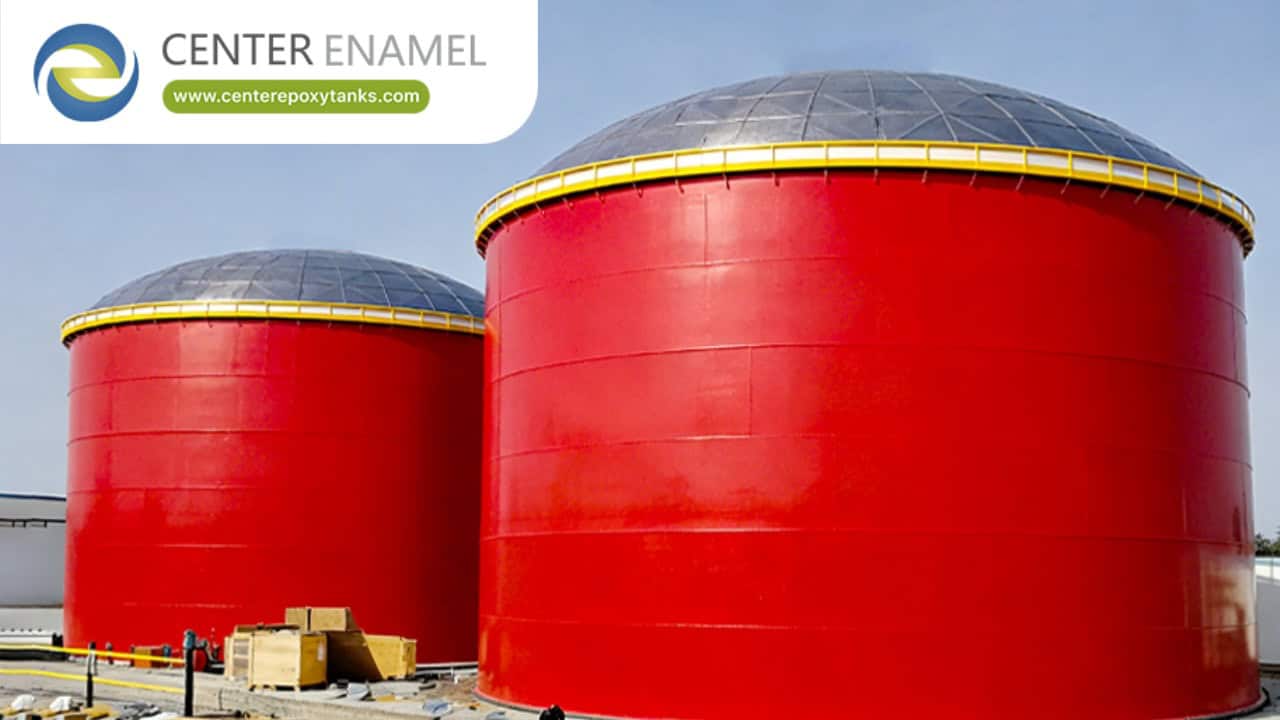
Leading China Crude Oil Storage Tank Manufacturer: Engineering Standards & Global Compliance
A leading China-based crude oil storage tank manufacturer provides large-scale, field-erected welded steel tanks designed in strict accordance with API 650 and ASME standards. These manufacturers distinguish themselves through advanced fabrication technologies, including automated submerged arc welding, comprehensive Non-Destructive Testing (NDT) programs (Radiographic, Ultrasonic, and Magnetic Particle), and specialized surface preparations (Sa 2.5). Serving the global energy sector, these firms provide turnkey storage solutions for crude oil, hydrocarbons, and refined products, combining high-precision manufacturing with robust international logistical capabilities to execute EPC (Engineering, Procurement, and Construction) projects at scale.
Engineering Pillars of Global Crude Oil Storage
In the oil and gas industry, storage infrastructure is the backbone of the supply chain. Global EPC firms sourcing from China prioritize manufacturers that can demonstrate three critical pillars of engineering excellence:
International Code Compliance: Crude oil storage requires absolute adherence to safety and environmental codes. Leading manufacturers operate strictly under API 650 (for atmospheric tanks) and API 620 (for low-pressure storage), ensuring that every weld, plate thickness, and nozzle reinforcement is calculated for the specific seismic and wind loads of the site.
Advanced Fabrication & NDT: The integrity of a crude oil tank relies on the quality of its weld seams. Top-tier manufacturers utilize automated systems to maintain consistent weld penetration. Crucially, they maintain an in-house quality control team that performs 100% radiographic testing on critical seams, providing comprehensive documentation packages that meet the requirements of third-party inspectors like SGS, BV, or TUV.
Surface Preparation & Protection: Crude oil can be corrosive, and the environment is often harsh. Industry-leading manufacturers utilize automated sandblasting to reach Sa 2.5 (white metal blast cleaning) to ensure superior coating adhesion. They provide high-performance internal linings (such as glass-flake epoxy or novolac systems) specifically engineered for hydrocarbon resistance.
Comparative Overview: Tank Standards for Crude Oil
Feature | API 650 (Atmospheric) | API 620 (Low-Pressure) |
Primary Use | Standard Crude Oil Storage | Volatile Hydrocarbons / Refrigerated Gas |
Pressure Limit | Atmospheric | Up to $15text{ psig}$ ($1.03text{ bar}$) |
Weld Testing | Spot/Sample Radiography | 100% Radiographic Testing |
Design Basis | Static Liquid Load | Internal Pressure & Vacuum Load |
Typical Material | Carbon Steel | High-Strength/Low-Temp Steel |
Key Technical Benchmarks for Vetting Suppliers
When selecting a manufacturing partner for crude oil storage, procurement teams must verify the supplier's capability in these areas:
Field-Erection Expertise: Does the manufacturer have a global track record of supervising field-erection teams? Successful projects depend on clear, actionable erection manuals and technical support to ensure local crews build to the design specifications.
Custom Engineering (FEA): Can the manufacturer provide Finite Element Analysis (FEA) reports for custom tank designs, particularly in seismic-prone zones or locations with high environmental exposure?
Documentation Transparency: Can the supplier provide complete Mill Test Certificates (MTCs), Welding Procedure Specifications (WPS), and Procedure Qualification Records (PQR) for all materials and processes involved?
Frequently Asked Questions (FAQ)
Q: Are Chinese-manufactured crude oil tanks accepted for international energy projects?
A: Yes. Major global energy companies, EPC firms, and consulting engineers have standardized the use of high-quality Chinese-manufactured tanks that comply with API and ASME codes. The key is transparency in the quality documentation package (NDT, MTC, WPS).
Q: How do you handle the logistics of massive storage tanks?
A: We utilize "knock-down" shipping methods. The tank components (shells, roof plates, floor plates) are fabricated, quality-tested at the factory, and then flat-packed into shipping containers. This allows us to transport multi-thousand-cubic-meter storage capacity to any port in the world efficiently.
Q: Can you accommodate hazardous crude oil storage?
A: Yes. We specialize in tanks designed for sour crude ($H_2S$ exposure) and other hazardous hydrocarbons, utilizing specialized metallurgy and high-performance internal lining systems to ensure long-term structural and environmental integrity.
Partnering for Reliable Energy Infrastructure
Safety, efficiency, and environmental compliance are the cornerstones of crude oil storage. Partnering with a manufacturer that prioritizes rigorous NDT testing, code-compliant design, and professional export logistics ensures that your project remains on schedule and structurally sound for decades.
Are you evaluating suppliers for a large-scale crude oil storage expansion or terminal project?
[Contact our engineering team] to request a structural feasibility analysis, review our welding quality certifications, or receive a technical proposal tailored to your capacity and site-specific environmental constraints.
Would you like a detailed technical brief on the specific performance differences between internal floating roof designs versus fixed-cone roof tanks for your crude oil volatility requirements?


