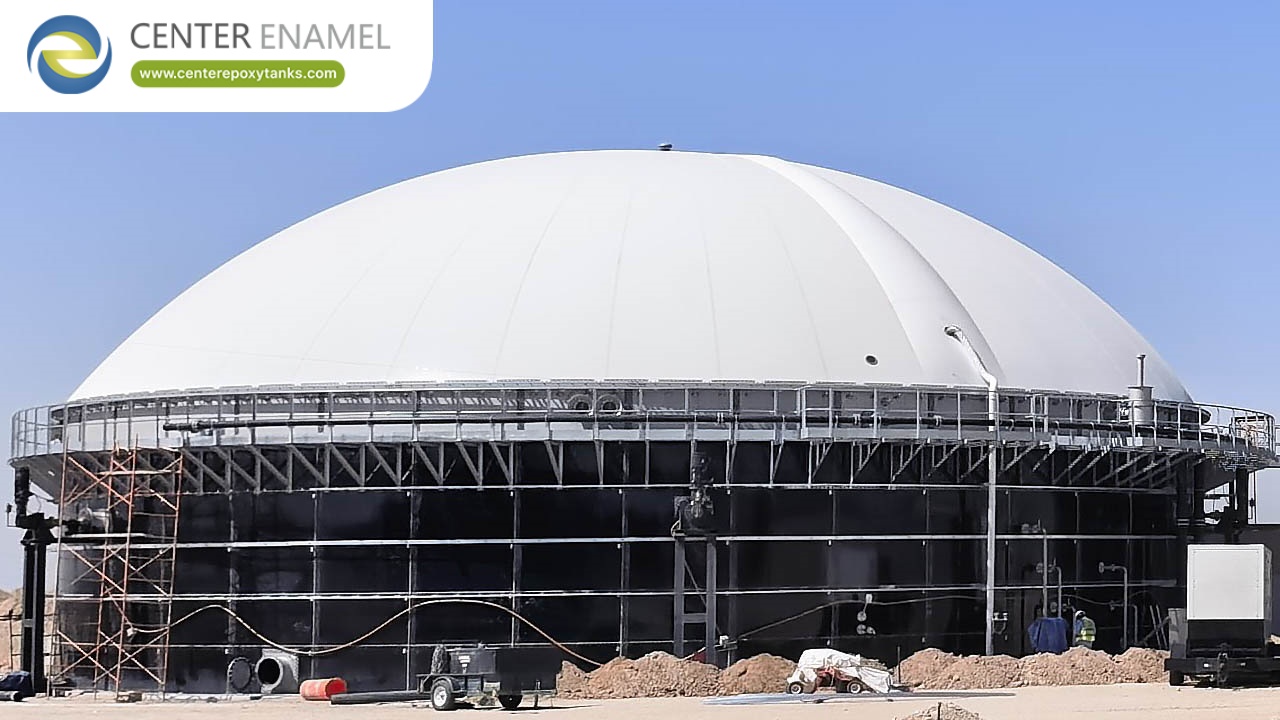
Biomass to Biogas Conversion Project: Maximizing Energy Yield Through Biogas Holder Integration
As global industries and municipalities race toward aggressive decarbonization targets, accelerating the transition from organic waste to dispatchable green energy is paramount. A biomass to biogas conversion project transforms complex organic matrices—including agricultural crop residues, livestock manure, food processing byproducts, and municipal organic waste—into methane (CH4) rich renewable energy via anaerobic digestion (AD).
However, biological methanogenesis is an organic, continuous microbial process that reacts dynamically to feedstock variability, temperature shifts, and organic loading spikes. Without engineered infrastructure to buffer production curves, renewable energy projects frequently suffer from gas flaring during peak output or unexpected generator shutdowns during production troughs. Maximizing overall energy yield requires more than an efficient digester reactor; it demands seamless integration with advanced biogas holder technology.
The Core Mechanics of Biomass-to-Biogas Conversion
To appreciate the critical role of gas holder integration, one must examine the multi-stage biological breakdown occurring within the anaerobic digestion core:
Hydrolysis & Acidogenesis: Complex carbohydrates, proteins, and lipids are broken down by extracellular enzymes into soluble sugars, amino acids, and volatile fatty acids (VFAs).
Acetogenesis: Acid-forming bacteria convert VFAs into acetic acid, hydrogen, and carbon dioxide, establishing the primary substrate for final methanogenic conversion.
Methanogenesis: Strict anaerobic archaea consume acetate and hydrogen to yield raw biogas, typically composed of 55% to 70% methane (CH4), 30% to 45% carbon dioxide (CO2), and trace impurities like hydrogen sulfide (H2S).
Because biological gas production rarely matches the steady fuel demand profile of downstream combined heat and power (CHP) engines, boilers, or biomethane upgrading systems, raw gas surges must be captured and managed without pressure bottlenecks.
Why Biogas Holder Integration Maximizes Energy Yields
Integrating a dedicated, high-capacity gas holder—such as a double-membrane biogas storage system mounted directly on the digester or installed as an independent pad-mounted unit—unlocks critical operational efficiencies:
Volumetric Buffering & Peak Shaving: Gas holders act as elastic pneumatic buffers that absorb daily production spikes. This prevents over-pressurization safety flares, ensuring 100% of generated methane is captured and routed to revenue-generating energy equipment.
Constant Delivery Pressure Stabilization: Downstream utilization units require stable gas input pressures. Advanced double-membrane holders utilize an automated inter-membrane air pressure control system that exerts a uniform downward force, guaranteeing consistent fuel flow regardless of current storage volume.
Operational Flexibility for Co-Digestion: Modern projects frequently co-digest high-energy food wastes with agricultural slurry. This practice dramatically increases gas yields but introduces severe production volatility. A flexible gas holder absorbs these high-strength loading fluctuations effortlessly.
Technical Performance Matrix: Biogas Storage Integration Options
Technical Parameter | Integrated Double-Membrane Gas Holder | Rigid Fixed-Volume Steel Gasholder | Unbuffered Direct-Feed Configuration |
Volumetric Storage Elasticity | High; dynamic inner membrane expands and contracts smoothly to accommodate variable gas yields | Rigid physical volume limit; requires complex high-pressure compressors to store excess gas | Zero storage buffer; system must consume gas at the exact rate it is biologically generated |
Pressure Regulation & Stability | Automated air-side pressure control delivers a perfectly constant operating pressure to CHP engines | Pressure fluctuates widely based on mechanical piston movement or gas volume displacement | Highly erratic supply pressure; causes frequent generator tripping and efficiency loss |
Capital & Footprint Efficiency | Compact footprint; can be mounted directly on top of anaerobic digester tanks to save land | Heavy, bulky structural footprint requiring intensive foundational engineering | Lowest initial capital cost, but incurs massive economic losses via continuous gas flaring |
Corrosion & Chemical Resilience | Superior; engineered with specialized PVC/FPP fabrics resistant to moisture and high H2S | Vulnerable to internal acid condensation and pitting without expensive alloy linings | High maintenance overhead due to erratic condensation and moisture slugging |
Frequently Asked Questions (FAQ)
Q: How does a biogas holder directly increase the energy yield of a biomass conversion project?
A: A biogas holder eliminates the need for gas flaring during peak biological production periods. By storing excess methane safely instead of burning it off, the project captures 100% of the energy potential, supplying a continuous, uninterrupted fuel feed to power generators or grid-injection upgrading units.
Q: What is the ideal storage capacity for a biogas holder in an agricultural AD plant?
A: Typically, biogas holder capacity is engineered to store between 30% to 50% of the plant's total daily biogas production volume. This provides sufficient buffer capacity to handle feeding surges, scheduled CHP maintenance windows, and daily operational fluctuations.
Q: How do double-membrane gas holders handle corrosive components like hydrogen sulfide (H2S)?
A: Modern double-membrane gas holders are manufactured using chemically inert, multi-layered polymer fabrics (such as specialized PVC-coated polyester or FPP) that resist moisture, ultraviolet radiation, and high concentrations of hydrogen sulfide (tested up to 8000 ppm), preventing structural degradation.
Q: Can a biogas holder be retrofitted onto an existing operational anaerobic digester?
A: Yes. Many facilities upgrade their existing infrastructure by mounting a custom-engineered double-membrane roof cover directly onto the rim of existing concrete or steel tanks, or by installing a standalone ground-mounted gas holder connected via utility piping.


