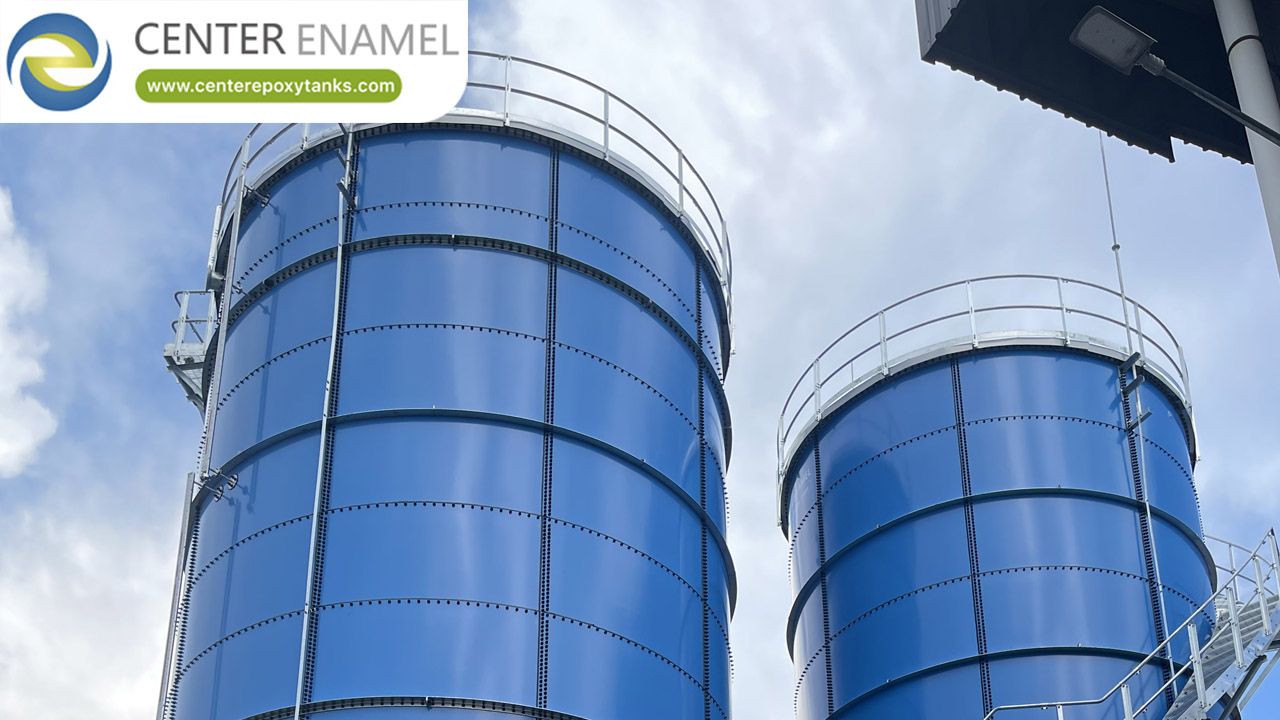
Epoxy Coated Steel Drinking Water Tanks: Advanced Engineering for Municipal and Industrial Potable Water Security
In the management of municipal water distribution networks, community utility grids, and industrial processing complexes, maintaining a secure, hygienic, and long-lasting potable water supply is a top priority. As regulatory guidelines become more stringent and urban populations expand, traditional water storage options—such as deteriorating concrete basins or rust-prone unlined carbon steel structures—often fall short of modern structural and sanitary requirements.
To achieve superior asset longevity and absolute water safety, epoxy coated steel drinking water tanks have become the preferred choice for engineers and municipal authorities worldwide. By combining high-tensile steel structural strength with advanced factory-applied Fusion Bonded Epoxy (FBE) technology, these tanks provide a durable, non-porous barrier that protects drinking water reserves for decades.
Material Science and The Fusion Bonded Epoxy (FBE) Advantage
The exceptional performance of epoxy-coated drinking water reservoirs originates from a precise factory-controlled application and thermal cross-linking process:
Strict Surface Preparation: Steel plates undergo automated abrasive blasting to achieve an optimal anchor profile, removing all surface impurities to ensure maximum coating adhesion.
Electrostatic Powder Spraying: Thermoset epoxy resin powder is uniformly applied across all surfaces, ensuring complete edge coverage and uniform thickness across bolt holes, corners, and flat panels.
High-Temperature Thermal Curing: Coated panels are baked in specialized industrial ovens where the epoxy melts, flows, and undergoes a permanent chemical cross-linking reaction. This fuses the coating into a hard, chemically inert, non-porous protective layer.
Guaranteed Potable Water Safety: Fully cured FBE coatings comply strictly with health standards like NSF/ANSI 61, ensuring that stored drinking water remains completely free from heavy metals, toxic chemical leaching, or unpleasant odors.
Technical Performance Matrix: Potable Water Storage Solutions
Technical Parameter | AWWA D103 Epoxy Bolted Steel Tanks | Traditional Cast-in-Place Concrete Tanks | Field-Welded Carbon Steel Tanks |
Water Purity & Safety Compliance | High; inert thermoset FBE certified to NSF/ANSI 61 and WRAS | Moderate; porous concrete can leach minerals and harbor bacterial micro-cracks | Low unless paired with expensive, periodic internal field-applied linings |
Corrosion Resistance & Lifespan | Excellent; high-grade industrial/marine rating with a 30 to 50+ year design life | Moderate; vulnerable to carbonation, freeze-thaw spalling, and joint seepage | Low to moderate; prone to rust flaking and pitting without constant upkeep |
Installation Speed & Modularity | Rapid bolted modular assembly; erected in weeks without heavy wet trades | Slow civil construction requiring extensive formwork and multi-week curing | Labor-intensive field welding and overhead coating application |
Governing Engineering Standards | Engineered strictly to AWWA D103 and ISO 28765 | Governed by local civil masonry standards with variable site quality | Governed by standard steel fabrication codes with variable field quality |
Compliance and Quality Assurance Benchmarks
For municipal water projects, regulatory compliance and rigorous quality verification are non-negotiable:
NSF/ANSI 61 Certification: Validates that interior contact surfaces are entirely safe for human consumption and potable water storage.
AWWA D103 Standard: Governs the structural engineering, tank shell plate taper, hydrostatic hoop stress calculations, and seismic resilience of bolted steel tanks.
High-Voltage Holiday Testing: Every coated panel undergoes rigorous spark testing (often at 1100V or higher) prior to factory dispatch to verify absolute coating continuity and eliminate microscopic pinholes.
Frequently Asked Questions (FAQ)
Q: What makes epoxy coated steel tanks ideal for drinking water storage?
A: Epoxy coated steel tanks combine the high structural strength of industrial steel with a factory-applied Fusion Bonded Epoxy (FBE) barrier. This creates an inert, corrosion-resistant, and non-porous interior that prevents rust, stops bacterial growth, and complies with strict health standards like NSF/ANSI 61.
Q: Do epoxy coated water tanks comply with AWWA D103 standards?
A: Yes. High-quality epoxy-coated bolted steel water tanks are engineered and manufactured in strict compliance with the AWWA D103 standard, ensuring they withstand maximum hydrostatic pressures, seismic loads, and extreme weather.
Q: How does modular bolted construction compare to traditional welded tanks?
A: Modular bolted tanks are prefabricated under controlled factory conditions and assembled rapidly on-site using high-tensile bolts. This eliminates the lengthy field welding, weather-dependent coating delays, and complex non-destructive testing required for traditional welded steel tanks.
Q: What maintenance is required for epoxy coated drinking water tanks over their lifecycle?
A: These tanks require minimal routine maintenance. Due to the smooth, chemically inert FBE surface that resists mineral buildup and biological colonization, standard municipal upkeep typically involves routine exterior inspections, valve checks, and perimeter evaluations.


