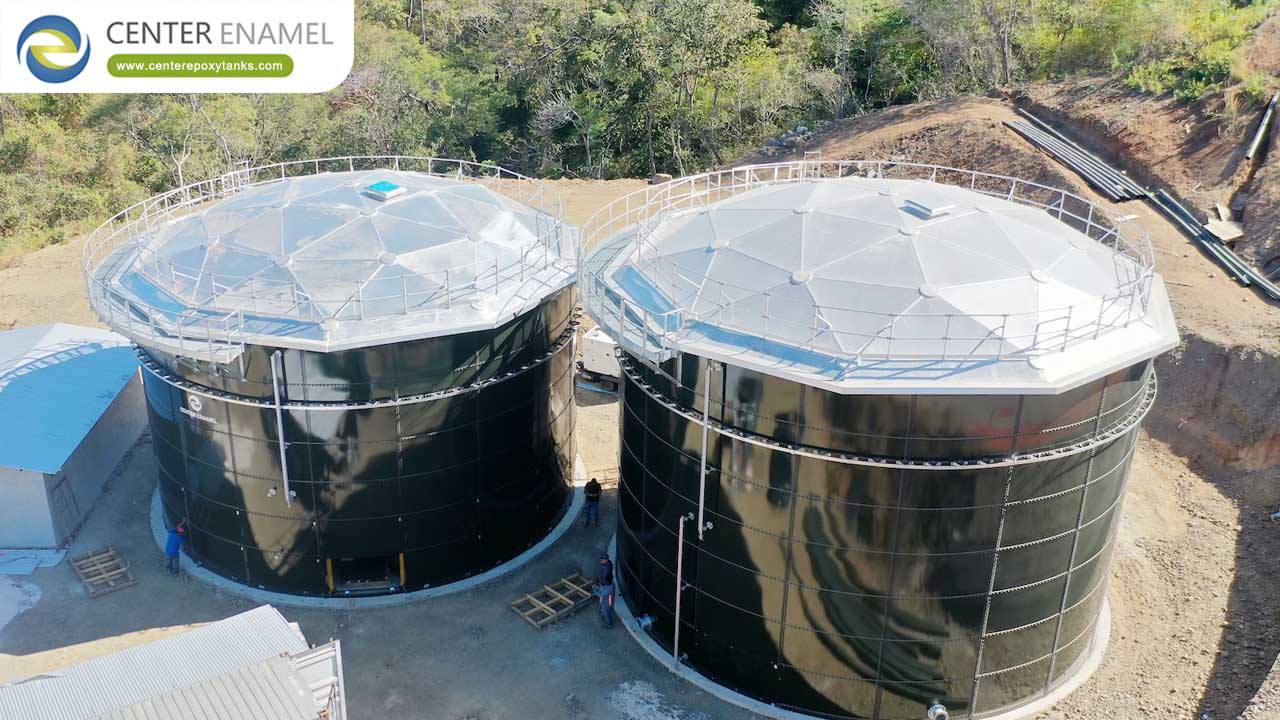
Aluminum Geodesic Domes for Floating Roof Tanks: A Performance Guide
An aluminum geodesic dome is a self-supporting, triangulated structural roof system used to cover large-diameter aboveground storage tanks. In the petrochemical and fuel storage industry, these domes are frequently installed over Internal Floating Roofs (IFR) or converted External Floating Roofs. They act as a high-integrity, "second skin" that protects the stored product from environmental elements like wind, rain, and snow. By eliminating the vapor space and providing a maintenance-free, clear-span cover, aluminum geodesic domes significantly reduce Volatile Organic Compound (VOC) emissions, minimize water contamination, and prevent the rapid corrosion associated with traditional fixed-roof steel systems.
The Engineering Synergy: Dome + Floating Roof
The combination of an aluminum geodesic dome and an internal floating roof (IFR) is widely considered the "Gold Standard" for modern atmospheric tank storage.
1. VOC Emission Control
The dome serves as a permanent weather shield. By preventing wind from whipping across the top of the floating roof, the dome eliminates the "wind-driven evaporation" that occurs in open-top tanks. This stabilization of the vapor space, combined with the IFR's liquid-contact seal, drastically lowers VOC emissions, helping facilities meet tightening environmental regulations.
2. "Clear Span" Advantage (No Columns)
Traditional fixed steel roofs often require internal support columns, which act as points of potential leakage or corrosion where they penetrate the floating roof. A geodesic dome is self-supporting; it relies entirely on the tank shell for edge support. This "clear span" design removes internal obstructions, making the IFR system smoother, safer, and easier to inspect.
3. Corrosion Resistance & Lifecycle
Unlike carbon steel roofs that require expensive internal and external coatings (and repetitive painting cycles), aluminum is naturally corrosion-resistant. It forms a passive oxide layer that thrives in marine and vapor-rich environments. This effectively eliminates "roof rot," protecting the purity of the stored product and reducing the facility's long-term maintenance expenditure.
Technical Specifications & Compliance
When specifying an aluminum dome, engineers must ensure strict adherence to international standards to guarantee structural integrity.
API 650 Appendix G: This is the primary standard governing the design, fabrication, and installation of aluminum dome roofs. It includes requirements for wind and snow loads, structural analysis, and material certification.
Weight Efficiency: The dome’s weight is typically a fraction of a steel cone roof. This reduces the structural load on the tank foundation and shell, making it the preferred choice for retrofitting aging assets that were originally designed for heavier, steel-based infrastructure.
Modular Assembly: The geodesic geometry consists of prefabricated triangular panels and hubs. This allows for rapid site assembly—often using a modular crane lift—which significantly reduces tank downtime during retrofits or new builds.
Comparative Analysis: Dome vs. Traditional Steel Roof
Feature | Aluminum Geodesic Dome | Fixed Steel Cone Roof |
Internal Support | Clear Span (No Columns) | Columns/Rafters Required |
Corrosion Resistance | Excellent (Inherent) | Poor (Requires Painting/Coating) |
VOC Containment | Superior (with IFR) | Moderate |
Installation Speed | Fast (Bolted/Modular) | Slow (Site-Welded) |
Maintenance | Negligible | High (Periodic Coating) |
Foundation Load | Low (Lightweight) | High |
Frequently Asked Questions (FAQ)
Q: Can aluminum geodesic domes be retrofitted onto existing tanks?
A: Yes. Because they are lightweight and self-supporting, they are frequently used to replace degraded steel roofs on older tanks without the need for foundation modifications. They can often be installed while the tank remains in service (depending on site conditions and safety protocols).
Q: How does the dome handle heavy snow or high wind loads?
A: The geodesic design is inherently aerodynamic and incredibly rigid. Panels and struts are engineered to handle site-specific loads as per local building codes and API 650 requirements. The triangulated structure distributes stress evenly across the entire frame.
Q: Are these domes suitable for chemical or hazardous product storage?
A: Aluminum is chemically inert to many common hydrocarbons. However, for highly specialized chemical services, the material compatibility (e.g., specific aluminum alloys and sealing materials) should be verified by an engineer against the product's MSDS.
Q: Do these domes require regular cleaning or painting?
A: No. Aluminum geodesic domes are maintenance-free in terms of surface treatment. They do not require painting, and the triangular panel design is largely self-cleaning due to precipitation runoff.
Are you currently evaluating a tank farm upgrade, or are you in the design phase for a new storage facility? If you share the tank diameter and local environmental load requirements, we can assist with a technical assessment of your infrastructure needs.


