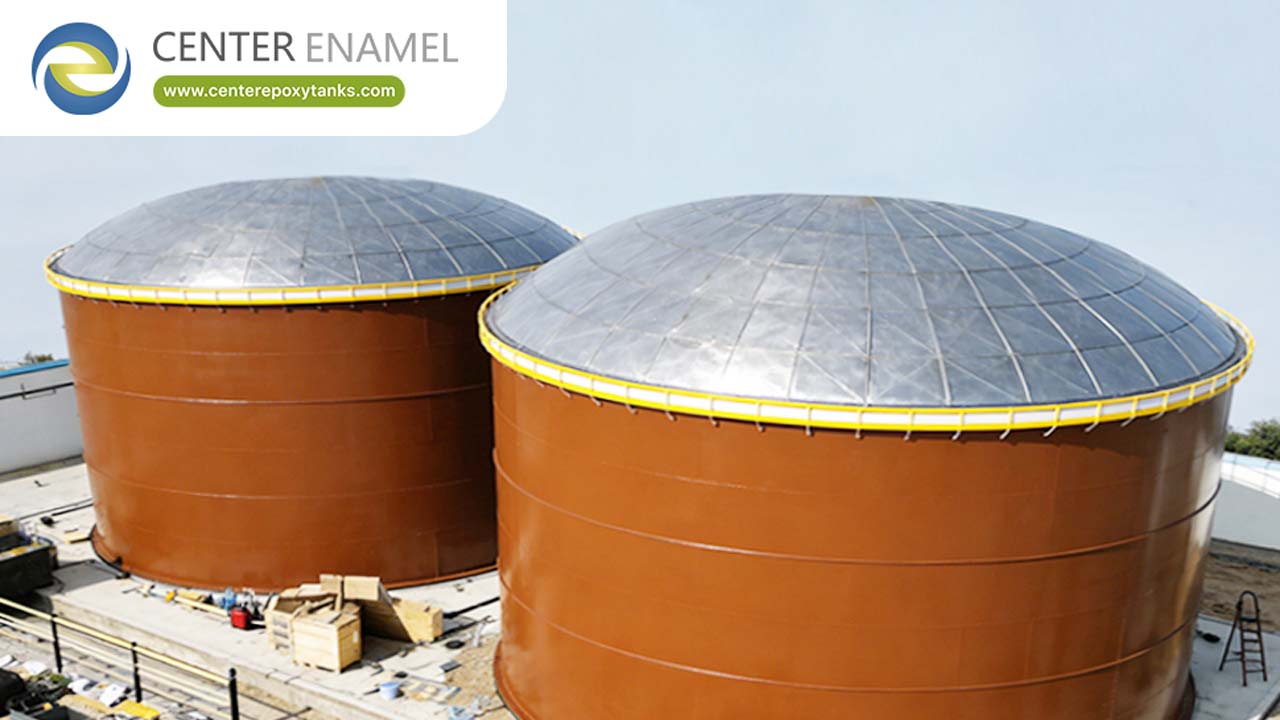
Aluminum Dome Roof For Oil Storage: Maximizing Safety And Efficiency
Covering an oil storage tank is usually argued on emissions and economics, but the decision is made on safety. The dome changes the fire scenario, contains the vapor path, and excludes the rain and thermal cycling that age the tank — and every one of those changes must be engineered rather than assumed. A cover specified without the fire and vapor analysis is a cover that improves one number and worsens another.
This article covers the safety and efficiency case for covering oil tanks: the fire protection implications, vapor containment, asset life and the inspection access the cover must preserve.
Covering As A Safety Decision
A closed dome changes the tank’s fire scenario in both directions. It excludes rainwater — which open tanks rely on for roof cooling in a fire — and it contains vapor that an open tank disperses. The fire protection system must be re-specified for the covered configuration, and the dome structure must survive credible fire exposure long enough for protection to act.
This is why the cover decision belongs in the safety review, not the capital review: the cover changes the protection basis, and the protection basis changes the cost.
Fire Scenario Element | Open Tank | Covered Tank |
Roof cooling | Rain assist (uncontrolled) | Applied cooling system required |
Vapor dispersion | Disperses to atmosphere | Contained — routed path |
Foam application | Direct to surface | Chamber/pourer route engineered |
Dome survival | N/A | Must survive credible exposure |
Fire Protection Under A Dome
Covered tanks rely on applied protection: foam chambers or pourers sized for the covered configuration, cooling systems for adjacent exposures and the shell, and detection tied to the plant emergency system. The dome must accommodate the foam application route without compromising its structure.
Seals and penetrations take on added significance in the fire scenario: they must maintain integrity through the exposure, which is a design requirement for the seal material and detail.
Vapor Containment
The dome closes the vapor space, which supports emission control directly: reduced breathing losses, a controlled vent path, and compatibility with vapor recovery where the terminal operates one. For volatile products, the dome plus internal floating roof combination is the standard configuration.
Containment also changes the operational picture: the headspace atmosphere is known and managed rather than dispersed, which simplifies emission accounting and leak response.
Asset Life
Rain and thermal cycling are the two aging mechanisms a cover removes. Excluded rain means no water bottoms from ingress and no roof corrosion from ponding; damped thermal cycling means smaller pressure excursions and less shell fatigue. The cover pays part of its cost in extended tank life.
The extension is measurable in coating life and inspection intervals: tanks that stay dry outside and stable inside age at the rate their internal environment dictates, not the rate the weather imposes.
Aging Mechanism | Open Tank | Covered Tank |
Rain ingress | Water bottoms from ingress | Excluded |
Roof ponding corrosion | Present | Excluded — dome sheds |
Thermal cycling | Full diurnal swing | Damped headspace |
Pressure excursions | Frequent, full rate | Less frequent, smaller |
Inspection Access
A covered tank must remain inspectable: internal roof and top-course inspection, vent and seal maintenance, and foam system service all require access. The dome provides it through engineered hatches sized for equipment, positioned for the internal walk, with fall-arrest anchors for external work.
The access provisions are safety equipment in their own right — they are what allow the inspection regime that keeps the covered tank a known asset rather than an unknown one.
Emission Accounting
Covering changes the emission inventory: breathing losses fall, and the terminal’s reporting follows the covered configuration. For regulated terminals this is a compliance benefit with a direct economic value, and it must be reflected in the vent and recovery system sizing.
The accounting also drives the sealing specification: a dome that leaks at the perimeter undermines the emission claim it was installed to support.
Product Quality
For products sensitive to water and oxidation — jet fuel, some distillates — the closed headspace is a quality system. Excluded rainwater and stabilized temperature reduce water bottoms and oxidation rates, which shows up in specification test results and shelf life.
The quality benefit is frequently the strongest economic argument for covering in refined product service, and it is the argument that survives the capital review.
Retrofit Covering
Covering an existing tank is a standard upgrade: the engineering work is the interface — shell capacity for the new loads, ring beam design, the seal detail and the fire protection re-specification. Aluminum’s light weight makes the retrofit practical on shells never designed for a steel roof.
The retrofit scope must include the fire protection re-specification: the cover changes the protection basis, and the protection basis must be re-engineered, not carried over.
The Efficiency Case
Efficiency arguments support the safety case: reduced breathing losses are recovered product, excluded rain is reduced water management, damped cycling is extended inspection intervals, and the closed headspace supports the emission accounting that regulated terminals need.
None of these arguments stands alone — they compound, and together they usually repay the cover within the asset’s first decade.
Efficiency Argument | Mechanism | Value |
Breathing loss reduction | Damped thermal cycling | Recovered product |
Rain exclusion | Closed headspace | Reduced water management |
Extended inspection intervals | Stable internal environment | Reduced downtime cost |
Emission accounting | Controlled vent path | Regulatory compliance value |
Standards And Certification
A dome on an oil storage tank is specified against three families of requirement at once: the structural fabrication standards the dome itself must meet, the venting and emission standards the covered tank must satisfy, and where the site is regulated, the vapor management program that the cover enables. The buyer’s interest is in the certification set that proves all three — material certificates, fabrication records, erection survey and venting setpoint documentation.
For emission accounting in particular, the cover is only valuable if its condition is documented: a dome that is part of a regulated inventory needs an as-built record and a periodic re-inspection regime, because the emissions claim depends on the enclosure remaining closed.
Center Enamel Oil Cover Capability
Center Enamel delivers oil and gas cover projects with safety-driven detailing: fire-scenario-aware design, vapor containment engineering and inspection access provisions. Our aluminum domes are engineered for site load cases and documented with erection surveys that support the tank’s integrity file.
For oil storage covering, the standard we hold is the one the hazard demands: engineer the fire scenario, contain the vapor path, and keep the tank inspectable.
About Company
Shijiazhuang Zhengzhong Technology Co.,Ltd(Center Enamel) is a professional manufacturer dedicated to the design and fabrication of bolted storage tanks since 2008. Our products range includes Glass-Fused-to-Steel (GFS) tanks, fusion bonded epoxy tanks, stainless steel tanks, galvanized steel tanks and aluminum geodesic dome roofs. With professional enameling R&D team and nearly 200 enameling patents, Shijiazhuang Zhengzhong Technology Co.,Ltd has become the leader in bolted tanks industry of Asia. Our products are certified to ISO9001, NSF61, EN1090, ISO28765, WRAS ,FM, LFGB, BSCI, IS0 45001 and other international standards.
Shijiazhuang Zhengzhong Technology Co., Ltd is not only the first manufacturer in China which produces Glass-Fused-to-Steel tanks, but also the most experienced professional bolted tanks manufacturer in Asia.The engineering & design, product testing and quality system of Center Enamel Glass-Fused-to-Steel tanks is in strict accordance with AWWA D103-09, OSHA, ISO 28765, NSF/ANSI 61, NFPA and other international standards. Until 2023, Center Enamel bolted tanks have been exported to more than 100 countries including USA, Australia,Canada, Malaysia, Indonesia, Russia, UAE, Panama,Brazil and South Africa etc., the superior tank quality and prompt service gains us worldwide recognition.
As an outstanding containment and cover system provider with decades of industry experience, Shijiazhuang Zhengzhong Technology Co., Ltd sincerely expects to establish long-term cooperation with the local partners throughout the world and make continuous contribution to the development of the industry.
Suggested CTA
Center Enamel delivers aluminum dome engineered for oil storage covering duty, with oil and gas cover projects, safety-driven detailing. Contact our engineering team for engineering guidance on your next aluminum dome roof for oil storage project — including sizing, standards compliance and delivery scheduling.
Frequently Asked Questions
Q: Why is covering an oil tank a safety decision?
A: Because the dome changes the fire scenario — it excludes rain from the protection picture and contains vapor that an open tank dispersed. The fire protection system must be re-specified for the covered configuration, and the dome must survive credible fire exposure.
Q: How does a dome reduce emissions?
A: By closing the vapor space and damping the thermal cycling that drives breathing losses, with a controlled vent path. For volatile products, the dome plus internal floating roof is the standard emission-control configuration.
Q: What fire protection changes under a dome?
A: Foam application routes must accommodate the dome, cooling systems cover the covered shell, and seals and penetrations must maintain integrity through fire exposure. The protection basis is re-engineered, not carried over from the open configuration.
Q: Does covering extend tank life?
A: Yes — by excluding rain (no ingress water bottoms, no roof ponding corrosion) and damping thermal cycling (smaller pressure excursions). The extension shows up in coating life and inspection intervals.
Q: Can a dome be retrofitted to an existing oil tank?
A: Yes. The scope is the interface: shell capacity for new loads, ring beam design, perimeter seal detail — plus the fire protection re-specification, because the cover changes the protection basis.
Q: What access must a covered oil tank retain?
A: Internal roof and top-course inspection, vent and seal maintenance, and foam system service — through engineered hatches sized for equipment with fall-arrest anchors for external work. Access provisions are safety equipment, not conveniences.


