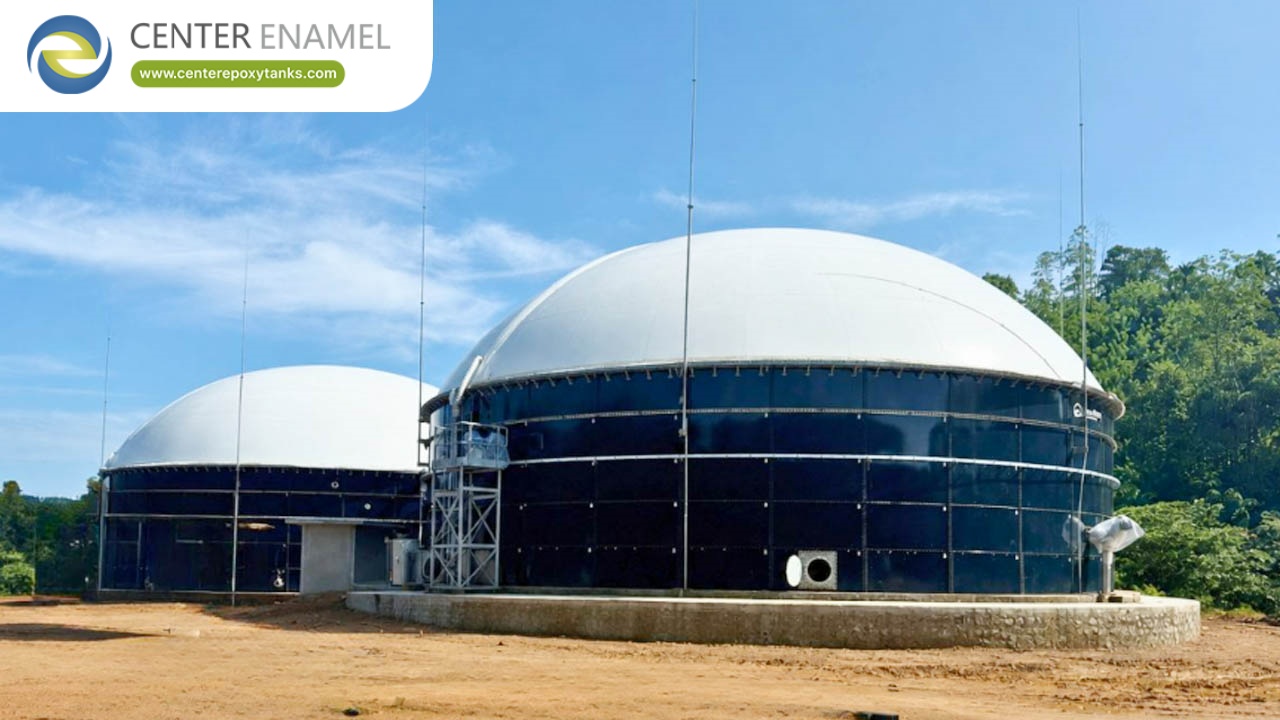
Advanced Double Membrane Roofs for Sustainable Agricultural Biogas Production: Optimizing Methane Containment and Energy Recovery
As global agriculture pivots toward circular bioeconomy models, anaerobic digestion (AD) has emerged as a cornerstone technology. By converting agricultural residues, livestock manure, energy crops, and organic processing waste into high-grade renewable energy, modern farms reduce their carbon footprint while generating valuable baseload electricity and nutrient-rich organic fertilizer. However, the commercial and environmental viability of any agricultural biogas facility relies heavily on one critical component: the gas containment and storage system.
Traditional fixed-roof configurations, such as heavy concrete slabs or unlined carbon steel plates, fail to accommodate the dynamic fluctuations inherent in biological gas generation. To overcome these performance bottlenecks, modern agricultural engineering increasingly standardizes on advanced double membrane roofs for sustainable agricultural biogas production, integrating flexible gasholder technology directly atop anaerobic digester tanks.
The Core Mechanics of Double Membrane Biogas Systems
An advanced double membrane roof functions as a sophisticated pneumatic gasholder engineered as an integral part of the anaerobic digestion reactor. Comprising three primary functional layers, the system harmonizes structural wind and snow protection with active gas volume management:
Inner Membrane (Gas Containment Layer): Formulated from specialized, high-density thermoplastic polymers (such as PELD and specialized PVC/FPP alloys), the inner membrane sits directly above the fermenting biomass. It expands and contracts dynamically in response to real-time biological gas generation and withdrawal, serving as an elastic buffer that absorbs volume swings without generating hazardous pressure spikes.
Outer Membrane (Weather & Structural Shield): Crafted from heavy-duty, UV-stabilized, flame-retardant polyester fabrics (DIN 4102 B1 compliance), the outer shell is kept under constant, intelligent positive air pressure by a dedicated blower system. This creates an aerodynamic dome that shields the inner storage chamber from driving rain, snow loads, solar radiation, and extreme wind.
Inter-Membrane Air Space & Regulation: The pressurized air cushion between the inner and outer layers maintains constant structural rigidity and supplies uniform operating pressure to downstream combined heat and power (CHP) engines or biomethane upgrading equipment.
Technical Performance Matrix: Agricultural Biogas Storage Solutions
Technical Parameter | Advanced Double Membrane Roofs | Traditional Fixed Concrete Slabs | Fixed Carbon Steel Dome Roofs |
Gas Storage Capability | Integrated variable-volume storage; functions as an active gasholder | Zero gas storage capacity; requires expensive standalone external gasholders | Zero gas storage capacity; susceptible to dangerous internal gas pocket accumulation |
Corrosion & Chemical Defense | High-grade thermoplastic foils completely immune to hydrogen sulfide (H2S) and moisture | Vulnerable to biogenic sulfuric acid attack and concrete structural spalling | Prone to rapid internal oxidation, pitting, and sulfur degradation |
Operational Flexibility | Dynamic expansion supports flexible, on-demand peak power generation (CHP) | Rigid fixed-volume operation requiring constant flare or immediate burn-off | Fixed volume layout with zero adaptability to variable biological output |
Installation Speed & Footprint | Compact, single-tank integration; rapid modular deployment | Heavy civil formwork, lengthy concrete pouring, and multi-week curing | Heavy field welding, crane mobilization, and extensive labor overhead |
Driving Agricultural Sustainability and Circular Efficiency
The integration of advanced double membrane roofs directly aligns with the core tenets of sustainable agricultural development:
Elimination of Methane Slip: By achieving exceptional gas-tightness through high-frequency welded seams and secure perimeter clamping rails, these systems prevent fugitive methane emissions, protecting local air quality and maximizing carbon credit generation.
Synergy with Modular Farm Infrastructure: When mounted on top of modern bolted steel tanks (such as Glass-Fused-to-Steel anaerobic digesters), double membrane roofs deliver a completely unified, corrosion-proof, and easily expandable biogas infrastructure.
Optimized Energy Dispatch: The variable volume buffer allows farm operators to store excess biogas produced during low-demand windows and deploy it strategically during peak electricity pricing periods, maximizing farm revenue.
Frequently Asked Questions (FAQ)
Q: How does a double membrane roof support sustainable agricultural biogas production?
A: It integrates active gas storage directly onto the digester tank, capturing 100% of generated methane without needing a separate gasholder. Its variable volume allows farms to store and dispatch energy flexibly, turning organic waste into reliable baseload power while eliminating fugitive greenhouse gas emissions.
Q: How do these membrane materials handle corrosive hydrogen sulfide (H2S) and moisture?
A: The inner gas-contacting membranes are engineered from specialized, chemically inert thermoplastics that exhibit complete resistance to hydrogen sulfide, moisture, and organic acids generated during anaerobic digestion, ensuring a long operational lifespan.
Q: What happens to the roof structure during a power outage or blower failure?
A: Modern systems are equipped with automated backup power supplies, emergency pressure relief valves, and intelligent sensor monitoring to ensure the outer membrane maintains structural stability until normal power is restored.
Q: Can double membrane roofs be retrofitted onto existing farm digesters or concrete silos?
A: Yes. Using specialized stainless steel clamping rails and custom-engineered anchoring systems, double membrane roofs can be securely mounted onto existing concrete or steel tank crowns to upgrade legacy facilities.


