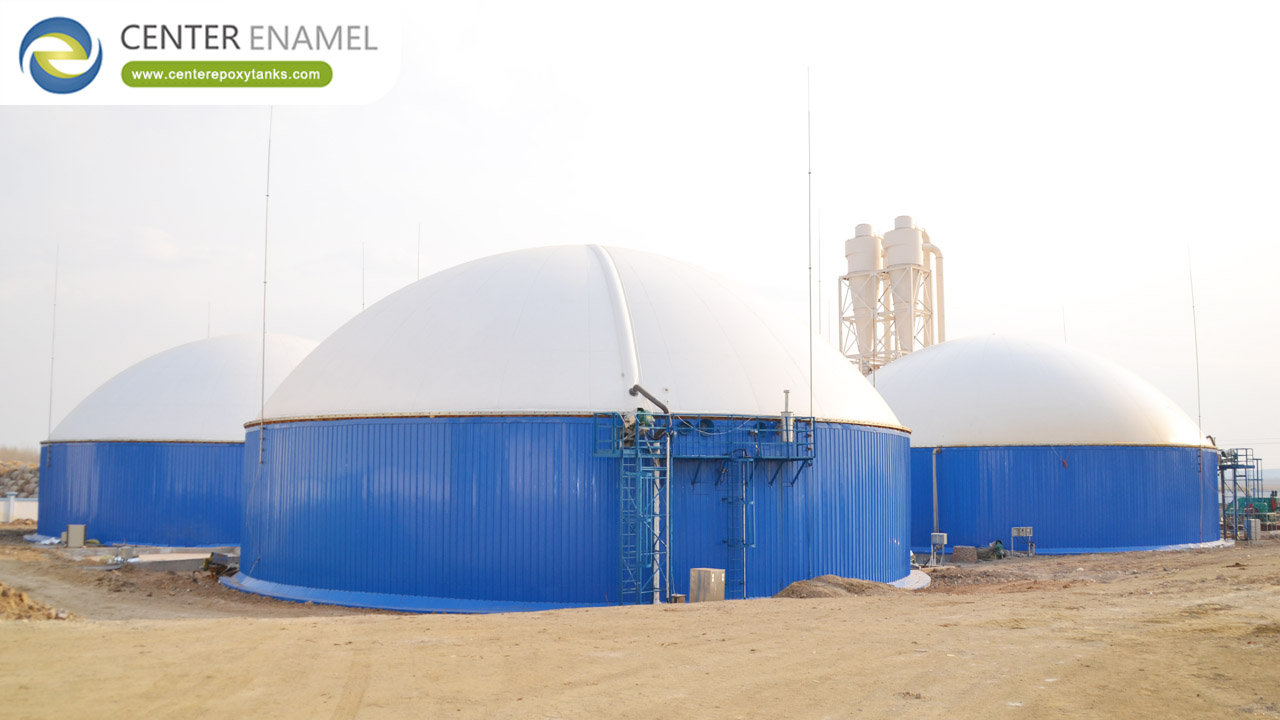
Advanced Double Membrane Roofs: Engineering Efficiency for Biodigester Septic Tanks
How do advanced double membrane gas holders solve the dual challenges of precise pressure regulation and biogenic corrosion in modern anaerobic digestion? In the global shift toward a circular economy, Biodigester Septic Tanks are the primary infrastructure for converting organic waste into renewable methane. However, the efficiency of these systems is often limited by traditional rigid covers that are prone to cracking and chemical degradation.
Shijiazhuang Zhengzhong Technology Co., Ltd (Center Enamel), a premier Double Membrane Roofs Manufacturer, provides high-performance biogas containment solutions. Engineered to withstand the aggressive H2S (Hydrogen Sulfide) environments of wastewater and agricultural waste, our roofs ensure maximum energy recovery and operational safety in over 100 countries.
1. The Mechanics of Anaerobic Digestion in Septic Systems
A Biodigester Septic Tank operates as a biological engine. Through anaerobic digestion, microorganisms break down organic matter—municipal sludge, food waste, and agricultural effluent—resulting in two high-value outputs:
● Biogas: A methane-rich fuel source for heating, electricity, or vehicle fuel.
● Digestate: A nutrient-dense biofertilizer that replaces synthetic chemical alternatives.
For this process to remain sustainable, the containment system must address the corrosive headspace and pressure fluctuations inherent in biogas production.
2. Why Double Membrane Roofs are Indispensable
Traditional rigid covers (concrete or carbon steel welded roofs) are static and vulnerable to the biogenic sulfuric acid formed in biodigesters. Advanced Double Membrane Roofs offer a dynamic, flexible alternative:
● Dual-Layer Gas Storage: The inner membrane acts as the primary gas-tight seal, while the outer membrane creates a protective envelope maintained at a constant positive pressure by an air blower.
● Corrosion Immunity: Constructed from high-strength, PVC/PVDF-coated polyester fabrics, these roofs are chemically inert to H2S, UV radiation, and extreme weather, outlasting traditional steel or galvanized tank covers.
● Automatic Pressure Regulation: The flexible inner membrane expands and contracts based on gas production rates, while integrated safety valves prevent over-pressurization without gas loss.
● Thermal Insulation: The air gap between the two membranes acts as a thermal buffer, maintaining the stable mesophilic or thermophilic temperatures required for optimal microbial activity.
3. Comparison: Double Membrane vs. Rigid Tank Covers
Feature | Concrete Slab / Rigid Steel | Center Enamel Double Membrane |
H₂S Resistance | Low (Corrodes/Cracks) | High (Inert Synthetic Fabric) |
Gas Storage | None (Requires external holder) | Integrated Variable Storage |
Weight | Extremely Heavy | Lightweight/Prefabricated |
Installation | Slow/Cranage Intensive | Rapid/Modular Assembly |
Life Cycle Cost | High (Repairs/Linings) | Low (Minimal Maintenance) |
4. Center Enamel: A Premier Double Membrane Roofs Manufacturer
As a global leader in bolted tank and covering technology, Center Enamel integrates decades of engineering expertise into every biogas project.
● Material Excellence: We utilize multi-layered synthetic fabrics with high tensile strength and superior gas-barrier properties (low permeability rates).
● Structural Compatibility: Our roofs are designed for seamless integration with various infrastructure, including Glass-Fused-to-Steel (GFS), stainless steel, and even existing concrete digesters.
● Global Certification: Our manufacturing processes are certified under ISO 9001 and EN 1090, ensuring every roof meets international structural and safety mandates.
● Integrated Safety Systems: Every unit includes specialized biogas inlets/outlets, inspection hatches, and high-performance flame arrestors.
5. Strategic Engineering for Global Infrastructure
Center Enamel’s approach focuses on the Total Cost of Ownership (TCO) for municipalities and agricultural firms:
● Advanced FEA Modeling: We use Finite Element Analysis to ensure roofs can withstand local wind and snow loads.
● High-Voltage Seam Verification: Automated welding ensures 100% gas-tight seams, verified by pressure testing.
● Rapid Deployment: Prefabricated components minimize on-site labor and allow for commissioning in a fraction of the time required for traditional covers.


