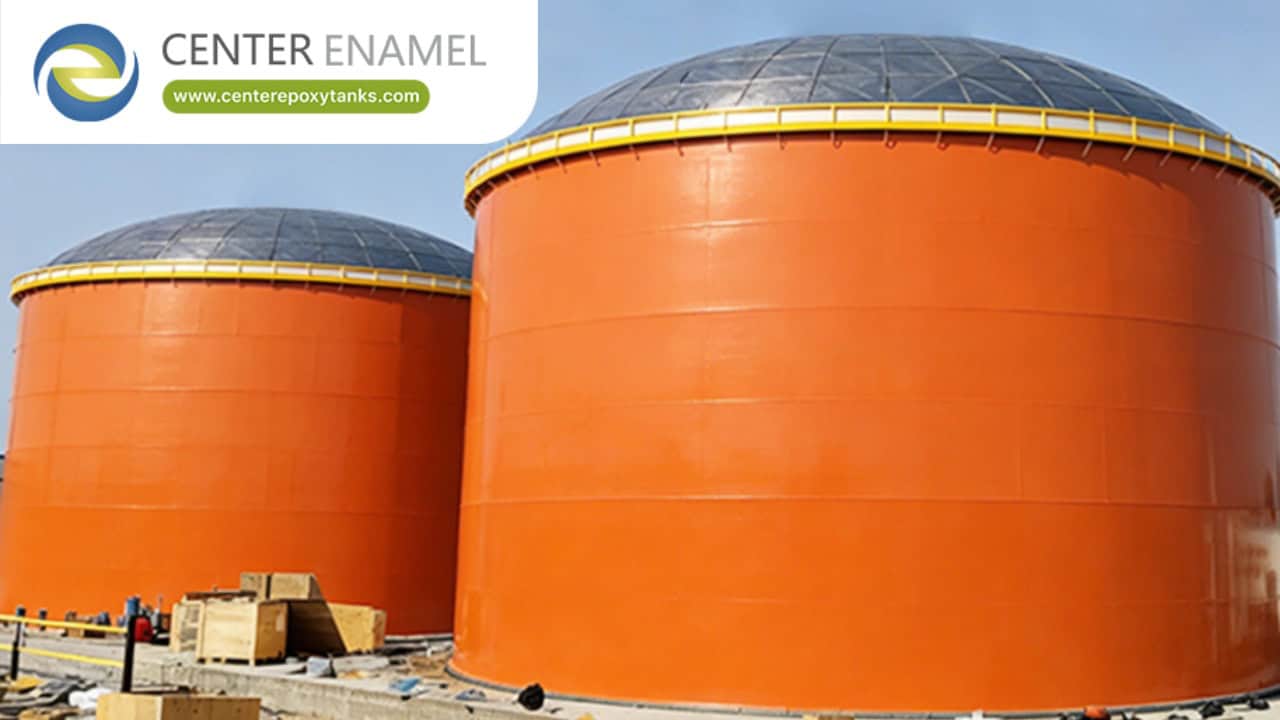
Shijiazhuang Zhengzhong Technology Co., Ltd (Center Enamel) is a recognized global leader in containment solutions, operating as a premier Above-Ground Cylindrical Fuel Storage Tanks Manufacturer. These ubiquitous vessels are the backbone of the energy distribution network, storing everything from gasoline and diesel to aviation fuel and crude oil. Above-ground cylindrical tanks (ASTs) are favored for their ease of inspection, operational visibility, and capacity for massive volumes. Their successful deployment, however, demands vessels engineered for uncompromising structural integrity against external forces (wind, seismic loads), rigorous defense against corrosion, precision fluid handling to manage contamination, and unwavering adherence to the most stringent international safety and environmental codes (primarily API 650, UL, and NFPA standards).
Our expertise is concentrated on fabricating customized Above-Ground Cylindrical Fuel Storage Tanks that set the industry benchmark for durability and operational performance across terminals, refineries, power plants, and distribution centers. We focus on delivering solutions that integrate superior structural strength (calculated according to specific seismic zones and wind loads), advanced corrosion protection systems for both the interior and exterior, specialized features for vapor control (such as floating roofs), and strict adherence to major international construction codes. Through rigorous quality control, mastery of automated welding techniques, and internal design specialization, our tanks are essential assets of maximum reliability, safety, and long-term service life, safeguarding the critical supply chain of global energy infrastructure.
The exposed nature of Above-Ground Cylindrical Fuel Storage Tanks (ASTs) subjects them to a unique set of operational and environmental stresses that must be meticulously addressed by the manufacturer.
Structural Resilience to External Forces: Unlike underground tanks, ASTs must directly withstand wind loads, hydrostatic pressure, and seismic forces over their entire exposed surface. This requires precise engineering calculations based on the tank's location, ensuring proper shell thickness, wind girder placement, and robust anchoring systems. The design must rigorously follow the API 650 standard, the global benchmark for such structures.
Corrosion Control (Atmospheric and Internal): ASTs face dual corrosion threats: atmospheric exposure (weather, moisture) on the exterior, and internal corrosion from water settlement and contaminants within the fuel. The tank structure requires high-performance external coating systems and internal features, like sloped floors, to mitigate these threats effectively.
Vapor and Emission Management: For volatile fuels (like gasoline or crude oil), ASTs must control evaporation losses for both economic and environmental compliance reasons. This often necessitates the complex fabrication and integration of Internal or External Floating Roofs (IFRs or EFRs) to minimize the vapor space. .
Fluid Purity and Contamination Control: Maintaining fuel quality requires tanks designed to manage and remove water and sediment. The tank base design—including sloped bottoms and sumps—is critical for preventing the microbial growth and corrosion that compromise fuel purity.
Compliance and Inspection: ASTs are subject to frequent regulatory inspection. The design must include compliant access points, platforms, and monitoring nozzles to facilitate easy, safe inspection and maintenance procedures, simplifying long-term regulatory compliance.
Our engineering approach centers on providing this combination of structural endurance, environmental safety, and verifiable quality assurance through our mastery of Welded Steel Tanks fabrication.
The manufacturing process for Above-Ground Cylindrical Fuel Storage Tanks is defined by large-scale fabrication, adherence to rigorous dimensional tolerances, and the flawless execution of critical welds.
The vast majority of our tanks are designed and fabricated in strict accordance with the American Petroleum Institute (API) Standard 650, the global industry gold standard for atmospheric storage tanks.
Calculated Shell and Roof Design: We utilize certified, high-grade carbon steel plates, with material and thickness precisely determined using advanced engineering software to withstand the enormous hydrostatic pressure and anticipated external loads (wind, seismic). The tank shell is typically fabricated in multiple, incrementally thicker courses towards the base.
Automated Welding and Precision: Our facility employs advanced, automated welding systems (including submerged arc welding) for both the critical shell seams and floor plates. This automation guarantees a consistent, full-penetration, defect-free weld, creating a unified, monolithic structure that can reliably contain vast volumes of liquid over decades.
Non-Destructive Testing (NDT): Every critical weld on the Welded Steel Tanks is subjected to exhaustive Non-Destructive Testing (NDT)—including methods such as magnetic particle inspection, ultrasonic testing, and radiographic examination—to confirm structural integrity and provide the verifiable quality documentation required for regulatory and insurance purposes.
For high-volatility fuels, managing the vapor space is essential for safety, environmental protection, and loss prevention.
Floating Roof Integration: As an Above-Ground Cylindrical Fuel Storage Tanks Manufacturer, we specialize in the fabrication and integration of Internal Floating Roofs (IFRs) and External Floating Roofs (EFRs). These complex systems float directly on the fuel surface, drastically reducing the vapor space and minimizing evaporative losses. The seals and supports for these roofs require precision engineering and welding within the tank structure.
Fixed Cone Roof Design: For less volatile products or smaller capacities, we fabricate fixed-cone roofs that must be engineered to withstand internal pressure fluctuations and safely support internal components, while integrating compliant venting systems (P/V valves).
Venting and Pressure Relief: All tanks are fitted with precision-calibrated pressure/vacuum (P/V) relief valves and emergency vents. These critical safety devices prevent tank rupture or collapse due to internal pressure fluctuations caused by rapid temperature changes or operational dynamics.
The tank must be an active participant in maintaining fuel quality and preventing environmental contamination.
Precision Sloped Bottom Design: The tank floor is engineered with a gentle but consistent slope, either towards the center (cone-up or cone-down) or to the perimeter, leading to a dedicated low-point sump or water draw-off boot. This crucial feature ensures that any free water and sediment are efficiently channeled for removal, which is the primary defense against internal corrosion and microbial growth.
Corrosion Protection Systems: The exposed exterior surfaces receive multi-layered, industrial-grade external coating systems selected for their resistance to atmospheric corrosion, UV degradation, and chemical splash. The tank bottom may also incorporate specialized under-tank cathodic protection or liner systems to protect the steel from the underside soil/foundation environment.
Access and Platform Integration: The tank structure is fabricated with integrated, structurally sound supports for perimeter stairways, gangways, and top-of-tank platforms, providing compliant, safe access for personnel conducting gauging, inspection, and maintenance of valves and vents.
The versatility, capacity, and ease of maintenance of Center Enamel’s Above-Ground Cylindrical Fuel Storage Tanks make them the storage solution of choice across the global energy infrastructure:
Petroleum Refineries and Depots: Massive tanks used for storing crude oil feedstock, intermediate refinery products, and final finished fuels (gasoline, diesel, jet fuel) before pipeline or maritime transport.
Pipeline Terminals: Large storage buffer tanks situated along major pipelines, used to manage inventory and operational surges, requiring high volume and continuous throughput capability.
Power Generation Plants: Storage of various liquid fuels (diesel, residual oil) for use in base load, peaking, and emergency power generation facilities.
Aviation Fuel Farms: Centralized storage of jet fuel at major airports, demanding the highest quality standards, robust safety features, and often the use of Internal Floating Roofs for vapor control.
Bulk Chemical and Petrochemical Storage: Tanks utilized for storing non-corrosive industrial liquids and chemical feedstocks derived from petroleum, requiring specialized fitting and nozzle configurations.
Our capability as a specialized Above-Ground Cylindrical Fuel Storage Tanks Manufacturer is founded on a total commitment to global standards, advanced fabrication technology, and a deep understanding of energy sector requirements.
API 650 Mastery: Our engineering, design, and welding protocols are built around strict adherence to the API 650 standard, guaranteeing that every Welded Steel Tank is built to the toughest global structural and safety benchmarks. This simplifies the certification and insurance process for our clients worldwide.
Advanced Fabrication and Scale: We employ cutting-edge automated welding technology, ensuring the integrity and consistency of every seam, which is crucial for containment reliability in large-scale vessels. Our manufacturing scale allows us to handle complex, large-diameter, and high-volume tank projects efficiently.
Corrosion and Life Cycle Management: We integrate customized corrosion mitigation strategies—from sophisticated external coating selection to internal sloped floors and optional cathodic protection—ensuring the tank achieves its projected multi-decade service life with minimum maintenance overhead.
Vapor Control Expertise: Our manufacturing capability extends to the precise fabrication and structural integration of complex internal and external floating roof systems, providing clients with the necessary tools to meet stringent environmental regulations regarding volatile organic compound (VOC) emissions.
Verifiable Quality: Our rigorous application of NDT testing provides documented, verifiable proof of the tank's monolithic structural integrity. This is the ultimate assurance against containment failure, a non-negotiable requirement for storing large volumes of combustible and flammable liquids.
For energy companies, refinery operators, and terminal managers who rely on the safe, long-term, and compliant containment of their vital fuel assets, Center Enamel is the definitive Above-Ground Cylindrical Fuel Storage Tanks Manufacturer.
Our Welded Steel Tank solutions offer:
Unrivaled Structural Integrity: API 650 compliant design and NDT-verified welding ensure leak-proof, multi-decade performance against all external and hydrostatic loads.
Enhanced Safety and Compliance: Integration of advanced vapor control (Floating Roofs) and fire safety provisions meets stringent international regulations.
Optimized Product Quality: Sloped bottoms and robust corrosion defense systems actively preserve fuel purity and minimize contamination risks.
We invite you to partner with Center Enamel to secure your energy reserves with Above-Ground Cylindrical Fuel Storage Tanks built for the highest standard of safety, durability, and operational efficiency.


