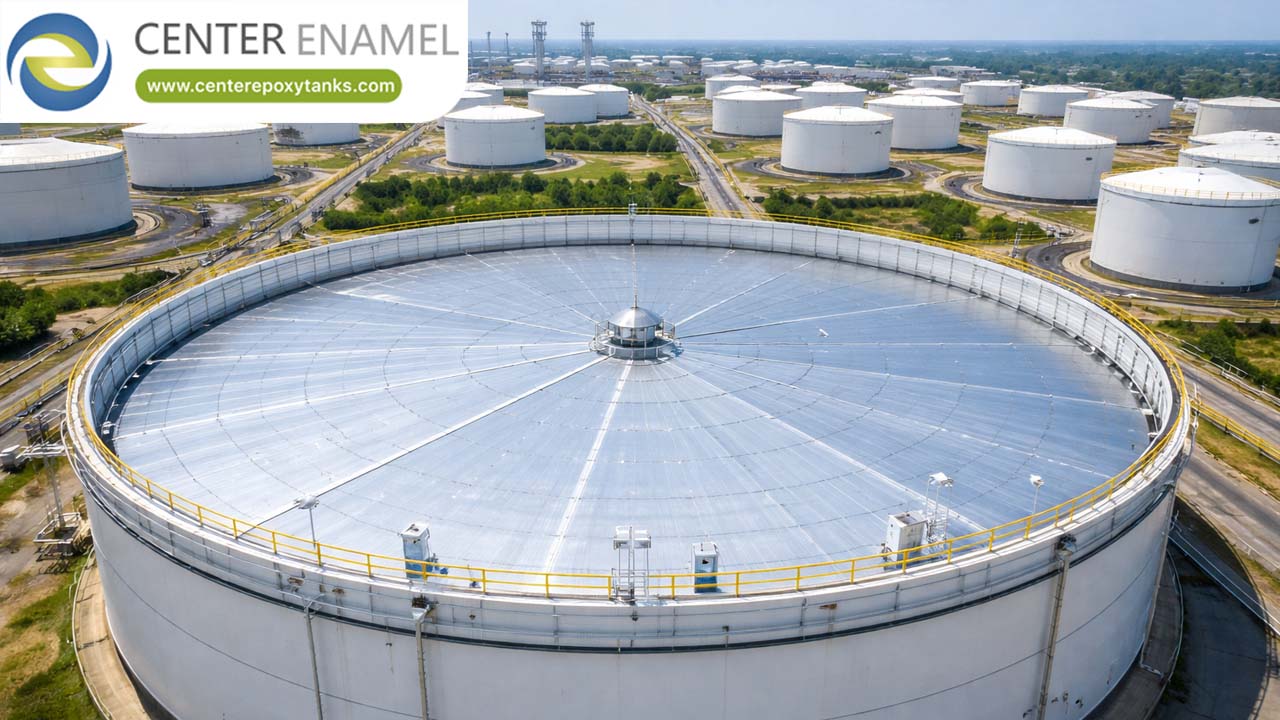
External Floating Roof Tanks (EFRT): Engineering Excellence & Selection Guide
External Floating Roof Tanks (EFRT) are the industry standard for the safe, large-scale storage of volatile petroleum products such as crude oil, gasoline, and naphtha. Unlike fixed-roof designs, the EFRT features a roof that rests directly on the liquid surface, effectively eliminating the vapor space and reducing product evaporation by over 90%. For industrial facilities, selecting a premier manufacturer requires prioritizing adherence to global standards, precise structural integrity, and advanced sealing technology.
1. Why External Floating Roof Tanks?
The primary engineering objective of an EFRT is volatility management. By removing the gas pocket above the liquid, these tanks solve several critical industrial challenges:
● Evaporation Control: Minimizes the loss of expensive, high-vapor-pressure products.
● Emission Compliance: Drastically lowers Volatile Organic Compound (VOC) emissions, helping facilities meet strict environmental regulations.
● Fire & Explosion Mitigation: By eliminating the vapor-air mixture space, EFRTs inherently reduce the risk of ignition compared to conventional fixed-roof tanks.
● Operational Efficiency: The roof rises and falls automatically with product levels, ensuring a continuous seal regardless of inventory volume.
2. Engineering Standards: The API 650 Benchmark
When sourcing an EFRT, compliance with API 650 is the non-negotiable baseline. This standard governs:
● Material Integrity: Specifies the use of high-grade carbon steel or stainless steel, with corrosion allowances tailored to the specific product (e.g., sweet vs. sour crude).
● Structural Load Calculations: Design must account for regional wind, snow, and seismic loads, which are particularly critical for open-top EFRT structures.
● Seal Technology: The "rim seal" is the most vital component of an EFRT. Premier manufacturers utilize primary and secondary mechanical shoe seals or liquid-filled seals to ensure a gas-tight fit against the shell wall.
● Drainage Systems: EFRTs require sophisticated central drainage systems (e.g., articulated pipe or flexible hose) to safely remove rainwater from the roof surface without compromising the floating mechanism.
3. Selecting a Premier Manufacturer
In the Chinese market, top-tier EFRT manufacturers distinguish themselves through advanced fabrication and quality control:
Evaluation Metric | Key Considerations for Procurement |
Manufacturing Capability | Ability to handle large-scale API 650 shell fabrication and precise pontoon welding. |
Quality Assurance | Commitment to Non-Destructive Testing (NDT) such as X-ray, Ultrasonic, and Vacuum box testing for all welds. |
Design Flexibility | In-house engineering teams capable of custom-designing drainage systems and rim seal configurations for specific climate conditions. |
Project History | Proven track record in supplying refineries, petrochemical plants, and major oil terminals. |
4. Frequently Asked Questions (FAQ)
Q: When should I choose an EFRT over an Internal Floating Roof Tank (IFRT)?
A: EFRTs are typically selected for very large-diameter storage (often >10,000 m³) where the structural costs of a fixed outer roof become prohibitive. If your site has extreme weather (heavy snow/sand) or requires the highest possible purity for sensitive chemicals, an IFRT ("all-weather" tank) is often preferred.
Q: What is the most critical maintenance aspect of an EFRT?
A: The rim seal system and the drainage system. The seal must be monitored for gaps to prevent emissions, and the roof drainage must be kept clear to prevent excessive water weight from sinking or damaging the floating deck.
Q: Can these tanks be built in seismic zones?
A: Yes. Modern EFRT designs incorporate seismic anchorage systems and robust shell stiffeners to ensure stability during tectonic events, calculated according to the specific seismic data of your project site.
Engineering Your Storage Strategy
The decision to invest in EFRT technology is a commitment to safety, environmental responsibility, and long-term operational savings. Whether you are planning a greenfield tank farm or upgrading existing infrastructure, prioritize manufacturers who offer complete documentation, from material test reports (MTRs) to validated structural performance models.
Are you currently in the conceptual design phase for a new storage terminal, or are you looking to optimize existing assets for better emission control?


